 Shennongjia
 Fengjie
 Fuling & Zhongxian
 Wushan
 Shibao
 Badong
 Yichang
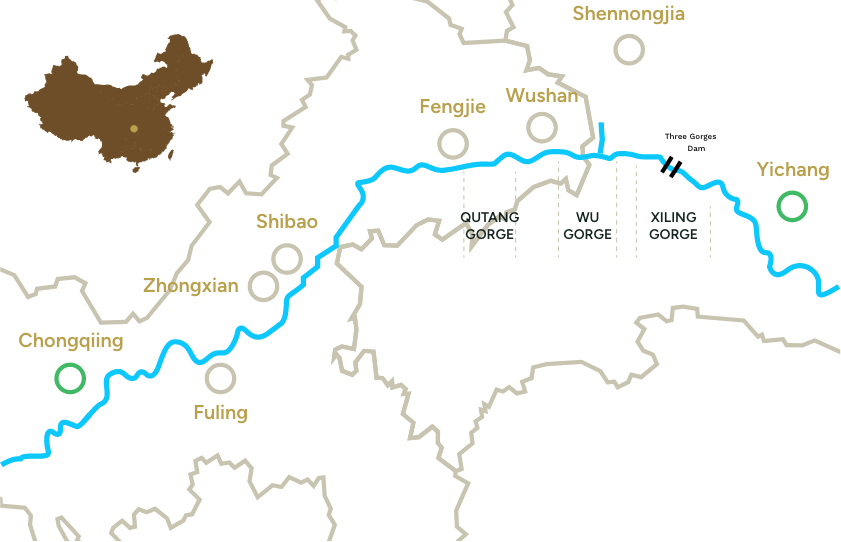
Yichang - Chongqing - Yichang via Shennongjia
Yangzi Explorer Itineraries
Upstream Journey
Yichang - Chongqing - Yichang
The definitive journey for in-depth discovery. From Yichang, delve into the UNESCO Shennongjia wilderness and admire the Yangtze’s key sights, including the Three Gorges and the Ship Lift. The adventure culminates in a immersive Chongqing Cultural Day, offering a taste of the city’s famed spirit through a classic Hot Pot lunch.
Ports
 Shennongjia
FengJie
Shibao
Chongqing
Fuling
Zhongxian
Wushan
Yichang
Shennongjia
FengJie
Shibao
Chongqing
Fuling
Zhongxian
Wushan
YichangYour Arrival and Pre-Boarding Experience
From the moment you land in Yichang, you’re in our care. A Yangzi Explorer representative greets you at the airport or railway station. A private car takes you to the pier. Your luggage travels separately – and arrives in your suite before you do.
Three afternoon options are available. You may choose one.
Option A: Three Gorges Dam – VIP Experience
This excursion requires you to arrive at the Yichang city meeting point before 3:00 PM. We recommend train arrivals before 1:30 PM, or flights before 1:00 PM.

Day 1
Yichang | Embarkation
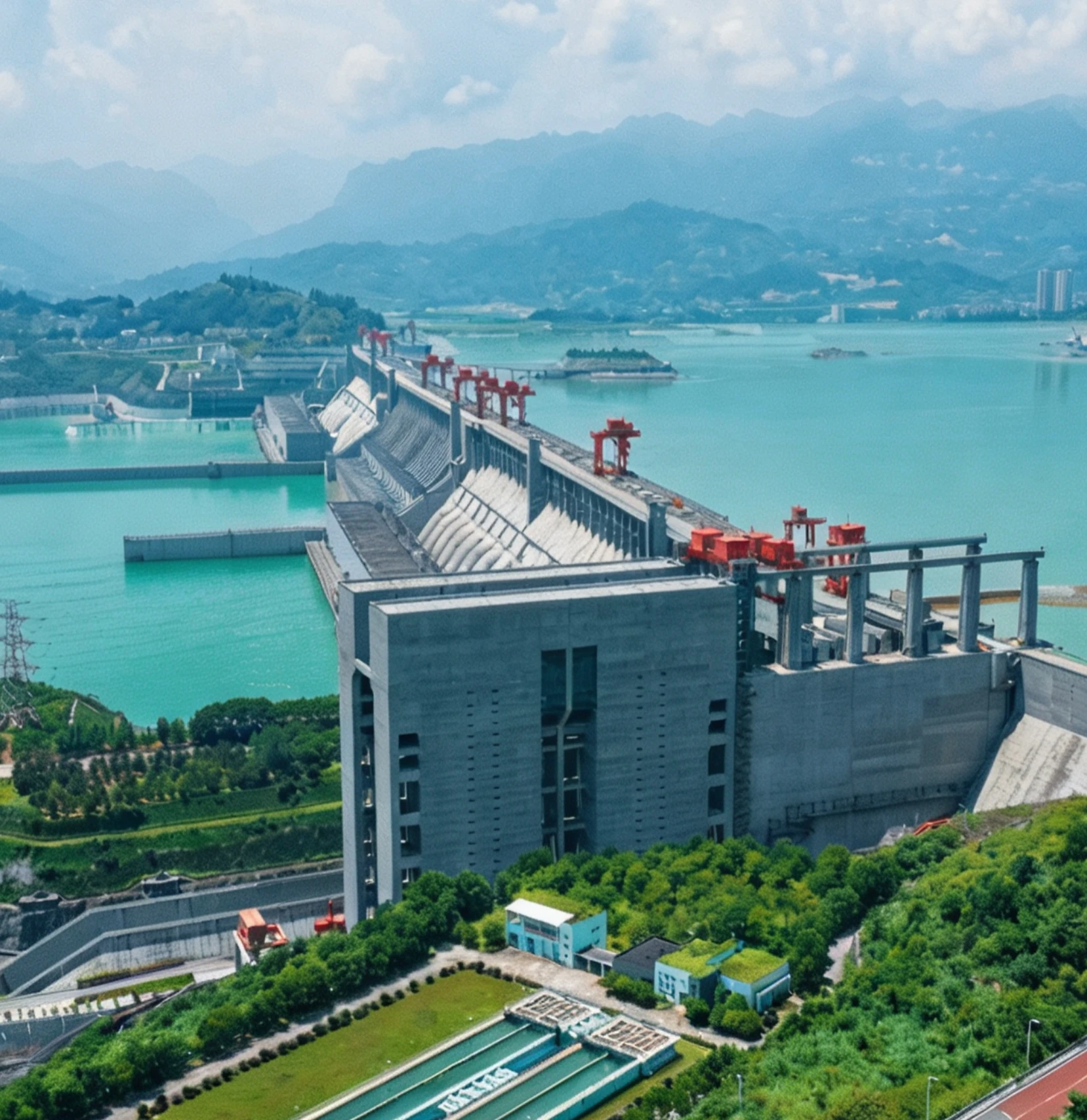
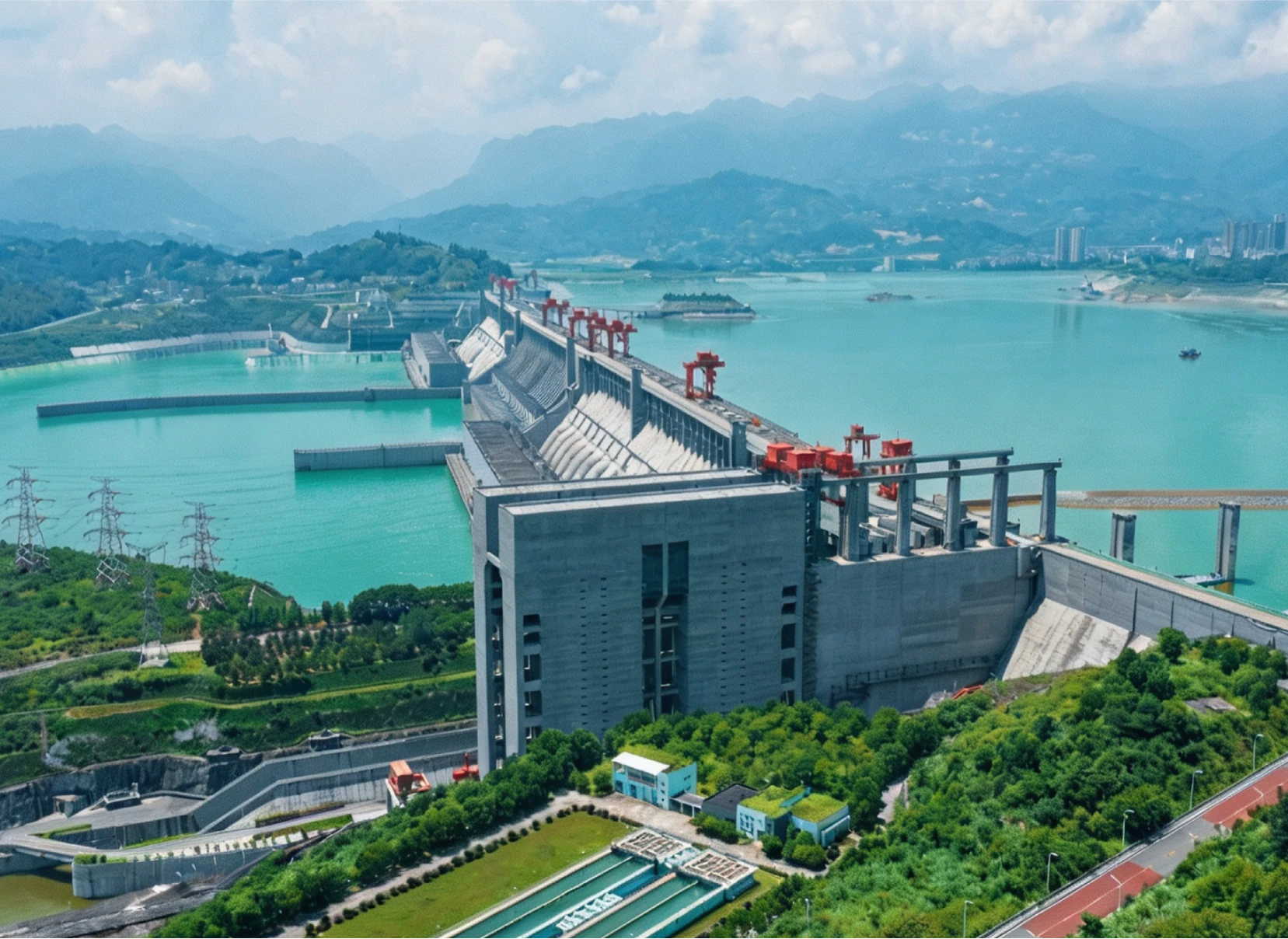
The Three Gorges Dam broke ground in the winter of 1994 – and changed the river forever. Thirty years on, it stands as the world’s largest hydroelectric project. Not just concrete and steel, but a dialogue between human ambition and natural force.
The River Closure Park sits directly before the dam, where the colossal wall holds the river in check. The site preserves remnants from the construction era: coarse gravel walls, tetrahedral concrete blocks, and the 77-tonne trucks and flat-throwing vessels that once dominated the worksite. These iron titans rest in the river breeze, forming an open-air industrial epic.
The Three Gorges Project Museum – one of the world’s largest hydropower-themed museums – commands one of the finest panoramic views of the dam. Within its walls lie the complete chronicles of the project, from conception to completion. Rare artefacts, intricate models, historical footage, and immersive digital archives trace its planning, construction, and operation. Walking through its corridors, you grasp not only the engineering marvel but also the deeper narratives: the million relocated residents, the ancient heritage, and the river itself – forever changed.
Option B: Eastern Xiling Gorge – Onboard
This option departs from Yichang’s Yemingzhu Pier before 4:00 PM. We recommend train arrivals before 2:30 PM, or flights before 1:00 PM.
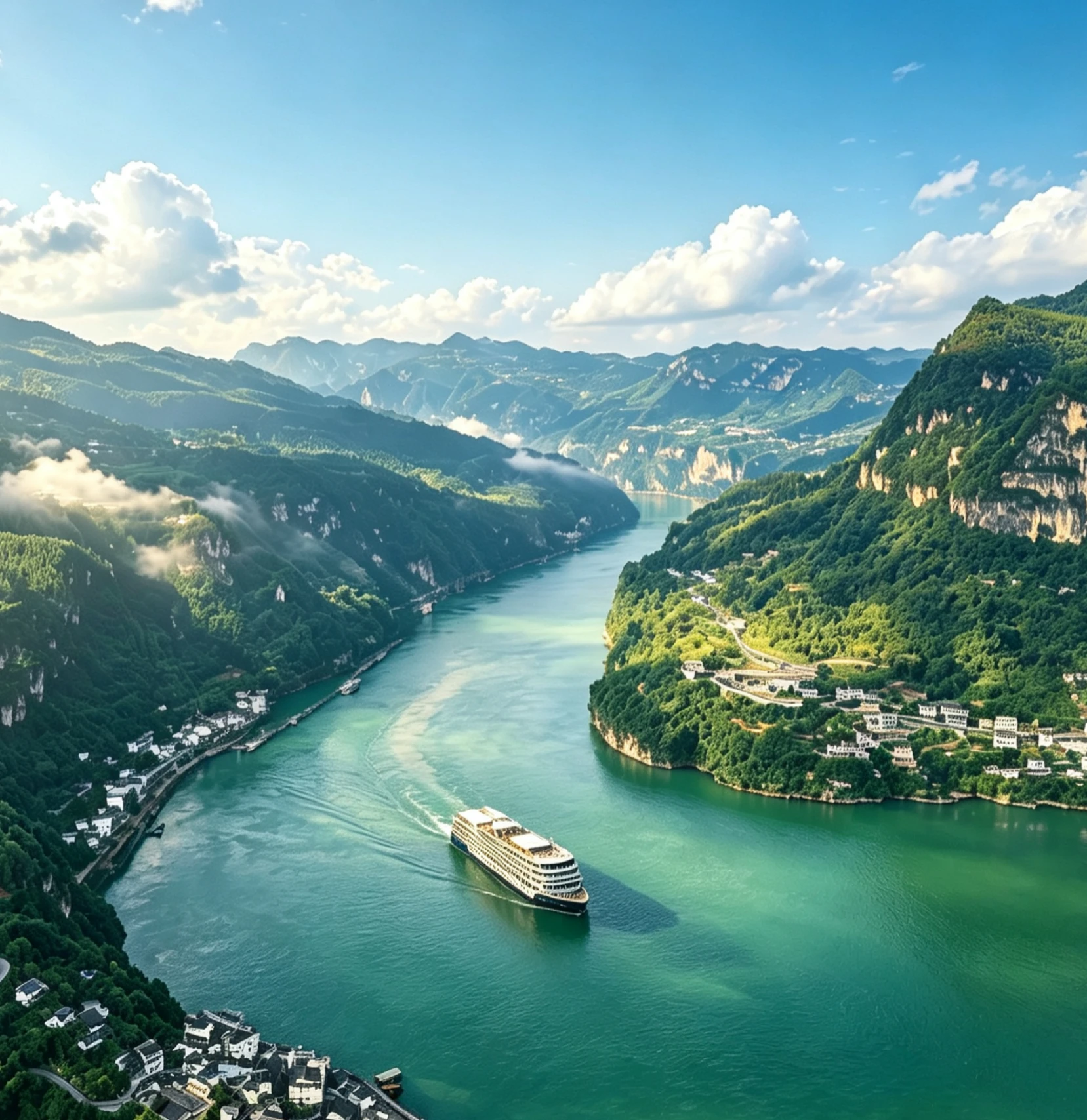
Departing from Yemingzhu Pier near the Gezhou Dam, the river opens wide. After 3,000 kilometres of carving through mountains, the Yangtze finally breaks free – widening from 300 metres to over 2,000. This is Nanjin Pass, the eastern gateway of the Three Gorges. The ancient name of Yichang – “Yiling” – captures it perfectly: “mountains become hills, waters become calm.”
Eastern Xiling Gorge unfolds in three distinct stretches. Huangmao Gorge narrows to a throat-like passage, emerald waters bursting through. In Dengying Gorge, four rocks along the riverbank cast shadow-puppet silhouettes at sunset – locals say they are the stone forms of the Tang Monk and his disciples. Huangniu Gorge rises to the cloud-piercing Huangniu Rock, said to be the divine ox turned to stone. An ancient folk song captures its winding waters: “Set out at dawn by Huangniu, rest at dusk by Huangniu.” The waters are calm now, but the cliffs still stand.
Option C: Direct Embarkation at Huangling Temple Pier
The ship is scheduled to dock at Huangling Temple Pier at 6:00 PM. If you prefer a relaxed start, join us directly on board. You may take a shuttle directly to Huangling Temple Pier.
During opening hours, you are welcome to visit Huangling Temple – simply register at the ship’s reception.
Beneath Huangniu Rock, Huangling Temple has stood on the riverbank for over a thousand years – one of the oldest and best-preserved ancient complexes in the Three Gorges region. Legend has it that the temple was built to honour the divine ox that helped Yu the Great tame the floods. Inside, the nanmu pillars of the Yuwang Hall still bear two distinct flood-level marks from the Qing Dynasty – data that later proved invaluable for the dam’s design. The ancient temple speaks in silence, its weathered pillars recording the river’s forgotten heights.
Dinner
As dusk settles, dinner is served aboard. The lights along the river slip through the windows – an unspoken first course. The whistle sounds.
Captain’s Welcome Reception
The Captain’s Welcome Reception sets the tone for the voyage. Join the captain and fellow guests in a glass raised to the journey ahead – to the river, and to the days that will unfold upon it.
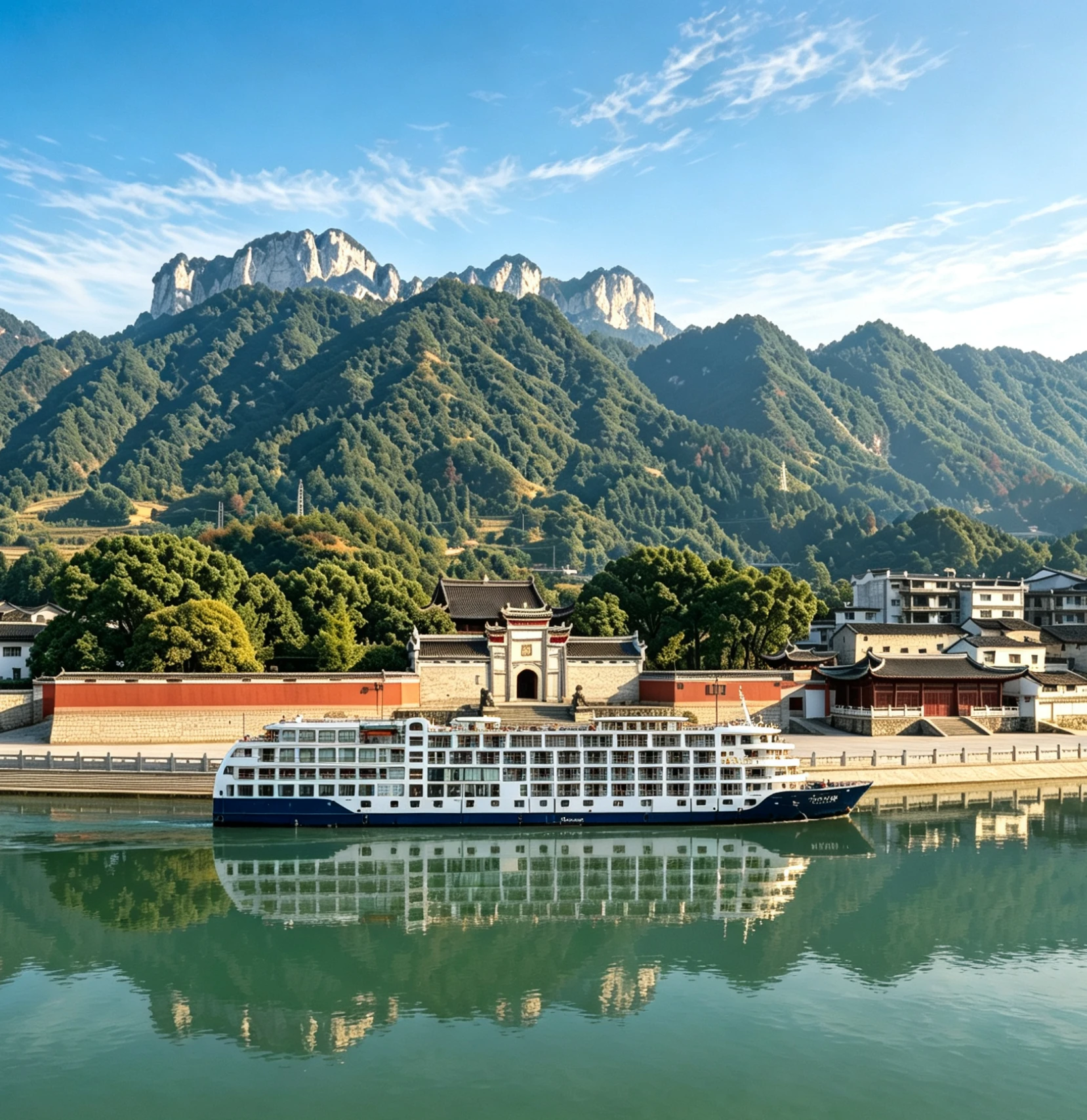
Welcome aboard the Yangzi Explorer!
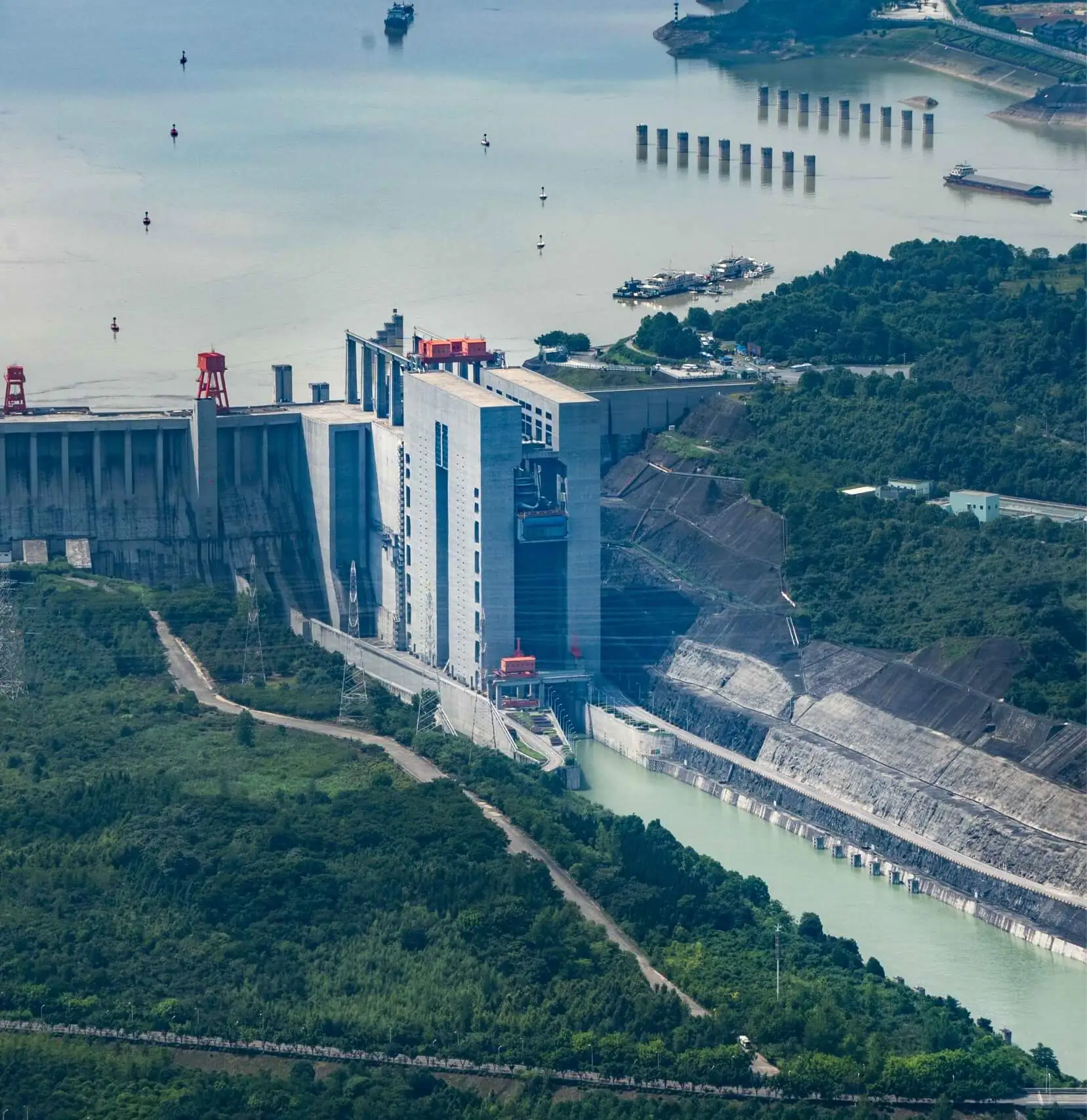
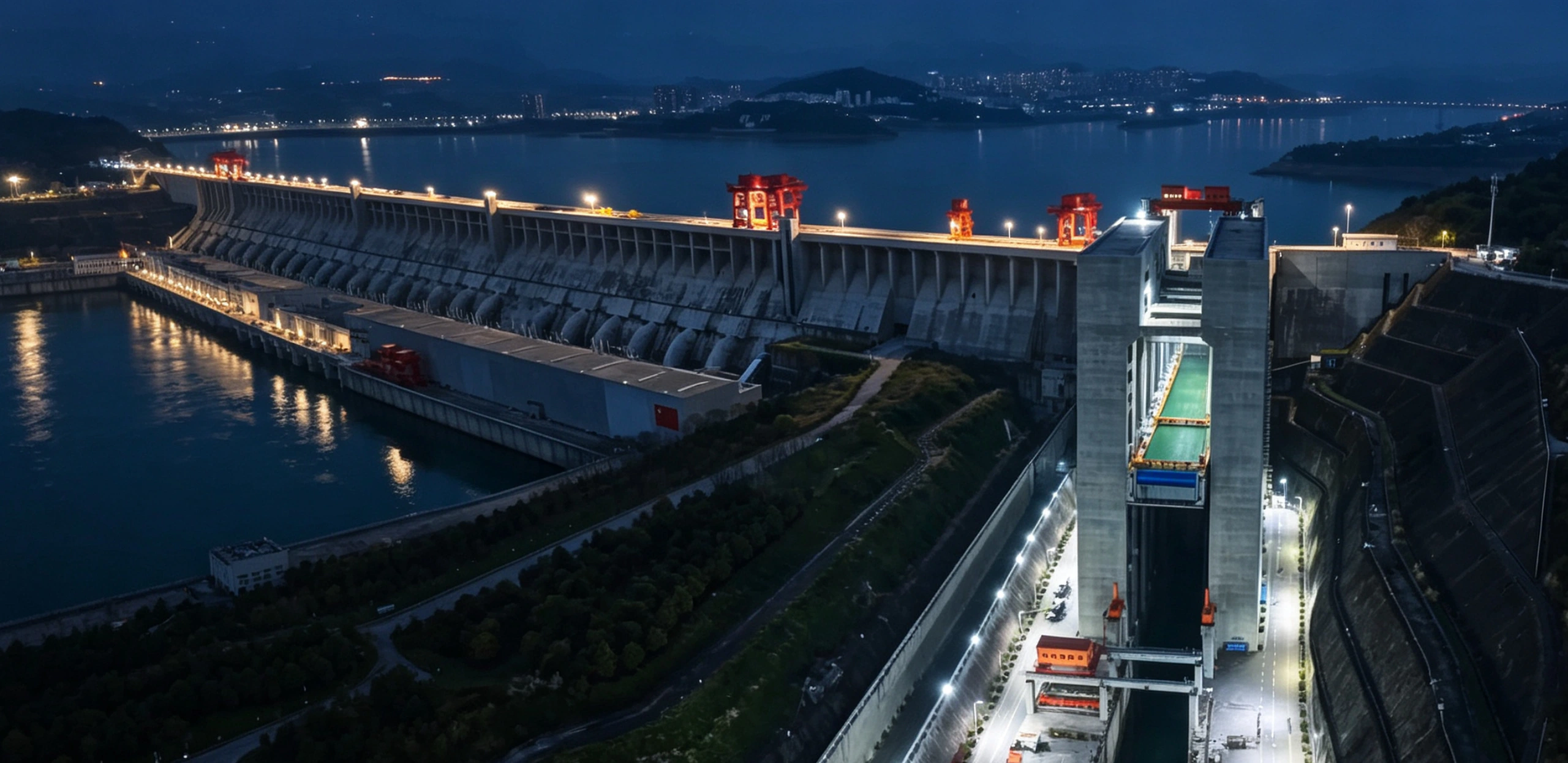
In the late evening, Yangzi Explorer transits the Three Gorges Dam Ship Lift (subject to operational schedules and maintenance periods). Known as the world’s largest ship lift, it is an engineering marvel – capable of lifting 15,500 tonnes to a vertical height of 113 metres, the equivalent of hoisting a 40-storey building into the air. Its scale and complexity are without parallel.
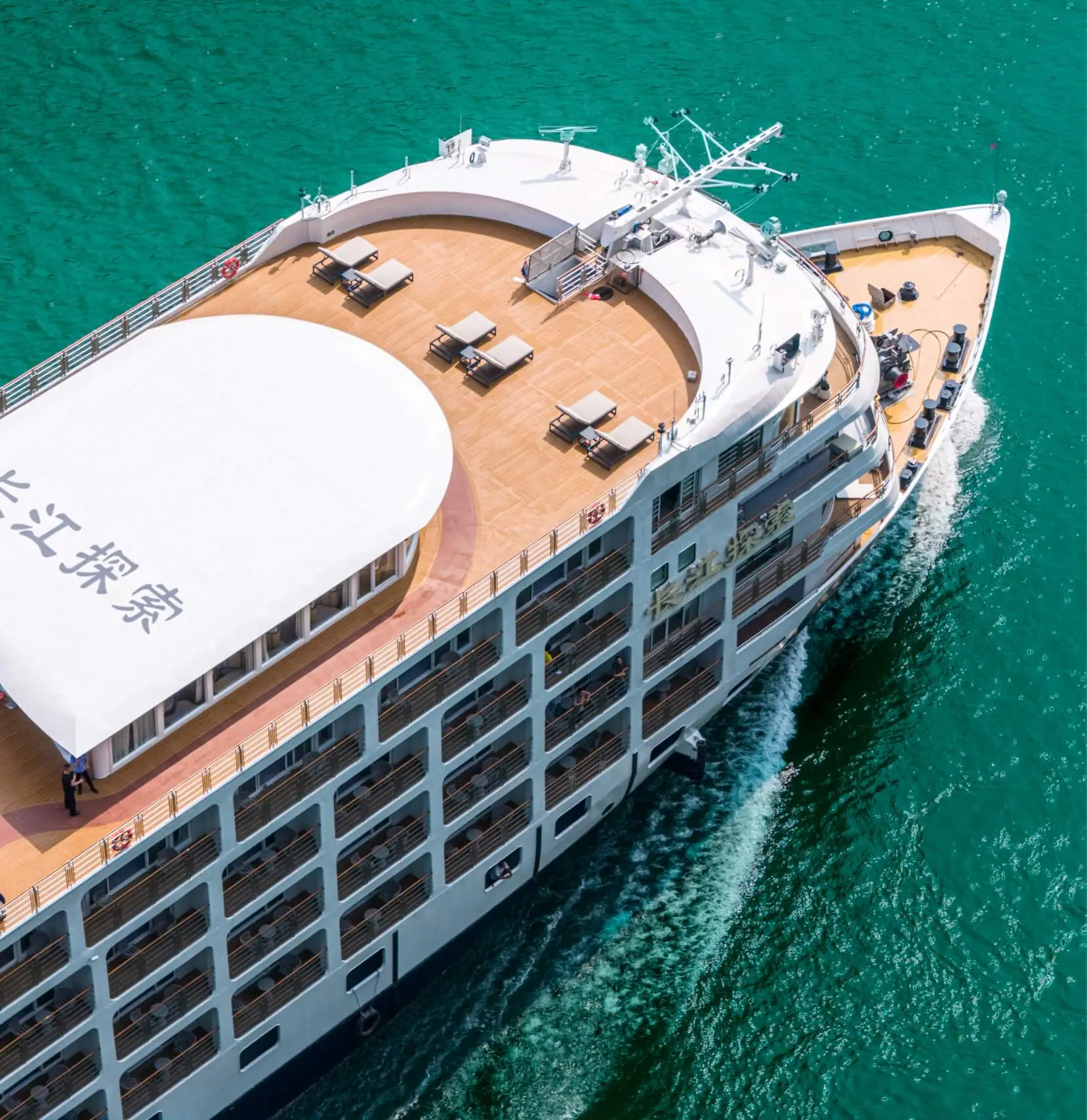
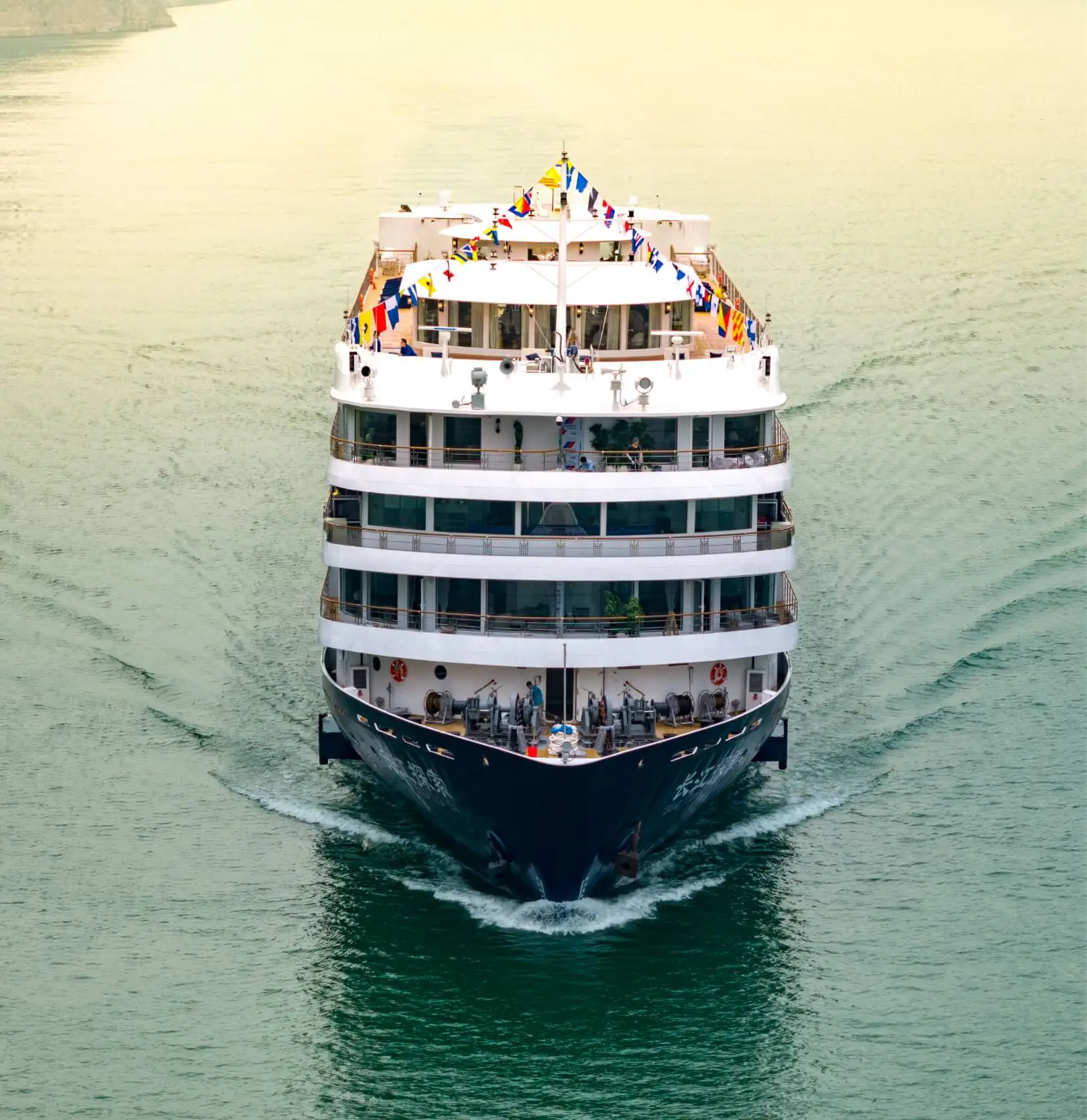
Yangzi Explorer, engineered to the Ship Lift’s maximum specifications, is the world’s first and largest cruise ship capable of making this transit. Her hull aligns with the lift chamber with near-surgical precision, as if she were born for this legendary passage. Unlike conventional tours – which require transferring to smaller sightseeing boats – aboard Yangzi Explorer, you simply step onto your private balcony or the open deck. From there, you witness the entire spectacle in unhurried comfort: the massive chamber rising, the cliffs descending beyond the ship’s rails, the river falling away beneath you – as though the world itself were being gently lifted.
During the suspension of the Ship Lift, the vessel may be unable to pass through the dam, or may be rerouted to traverse it via the Five-Stage Ship Lock, which is the largest ship lock system in the world.
Five-Stage Ship Lock
The Five‑Stage Ship Lock at the Three Gorges Dam is located on the left bank of the Three Gorges Dam. Construction began in April 1994 and was fully completed in May 2007.
With a total length of approximately 6.4 kilometres and a main lock section of 1.6 kilometres, the system features a double-line, five-step layout.
Each lock chamber is 280 metres long and 34 metres wide, with a maximum single-step lift of 45.2 metres. It is capable of accommodating vessel fleets of up to ten thousand tons and is recognized as the largest inland ship lock system in the world.
UNESCO World Natural Heritage
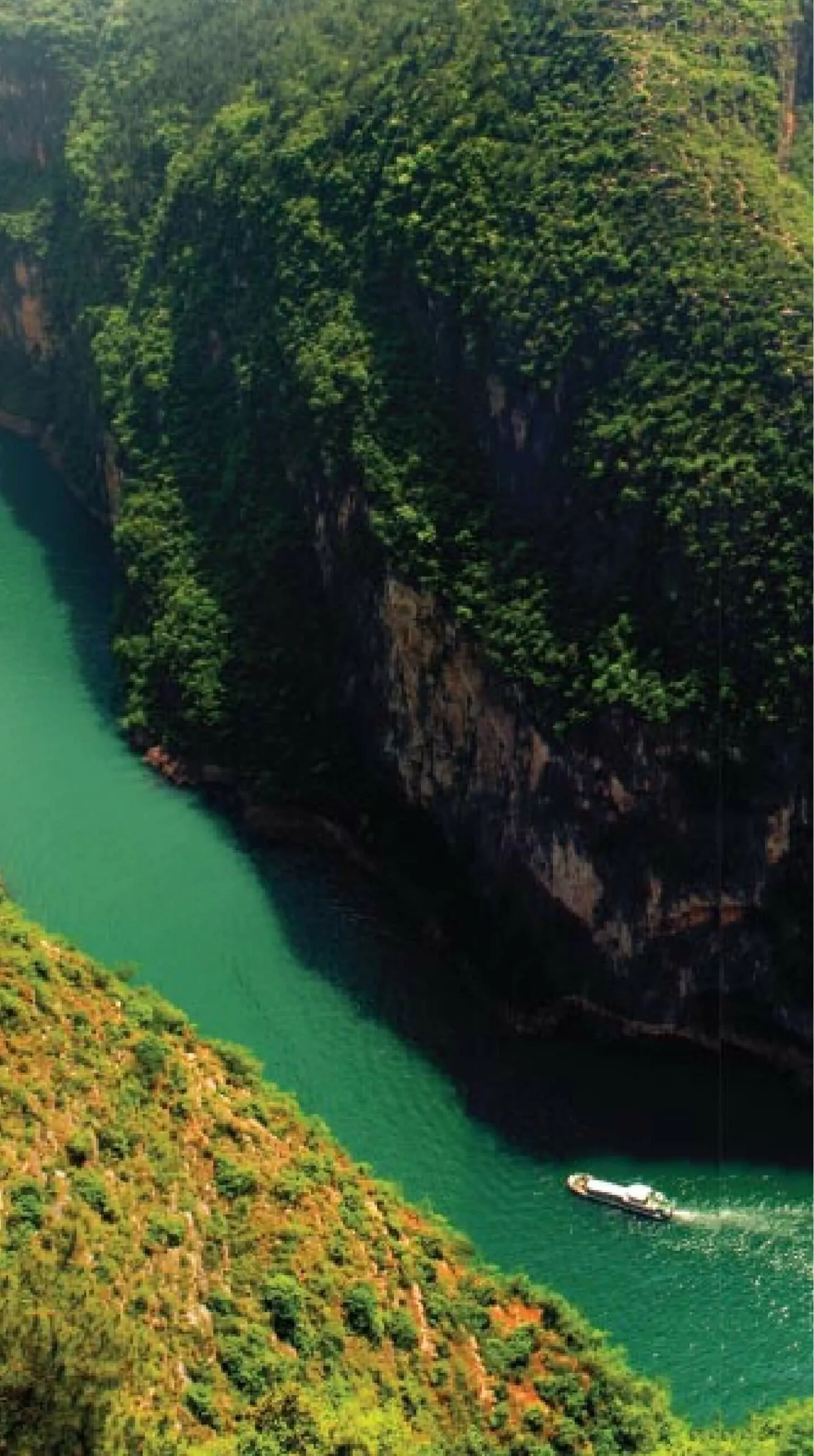
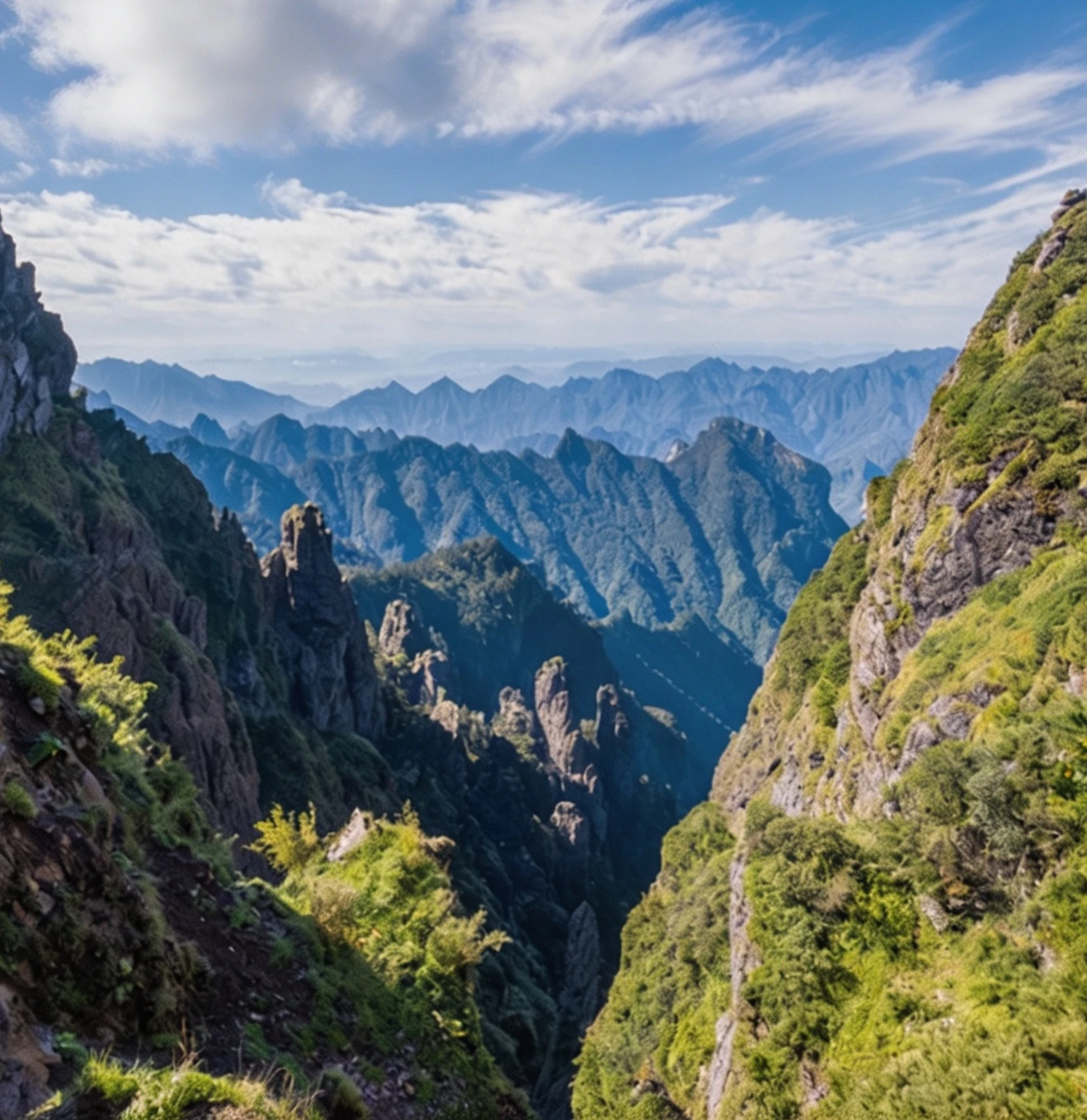
We dock at Xingshan Pier. After breakfast, we head into Shennongjia. Clouds hang low over green ridges. Wind moves through the treetops and carries away the city – here, freedom is not just a state of mind. It’s what you breathe.
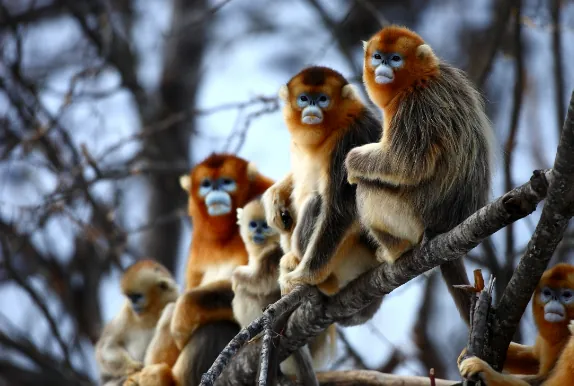
Shennongjia holds a rare distinction: China’s first UNESCO “Triple Crown” site – World Natural Heritage, Global Geopark, and World Biosphere Reserve all at once. In 2022, it was added to the IUCN Green List of best-managed protected areas.
Day 2
Shennongjia & Badong
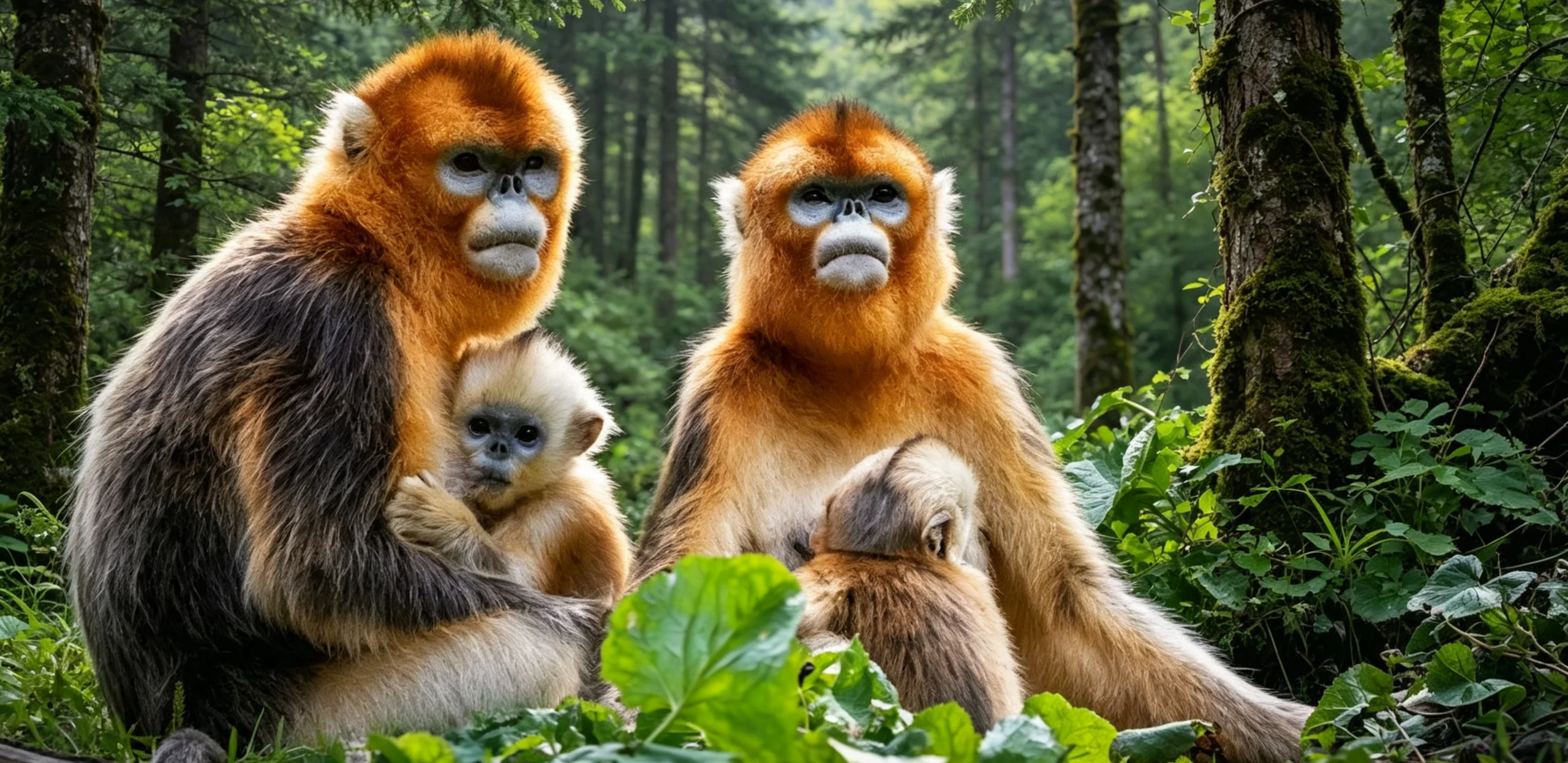
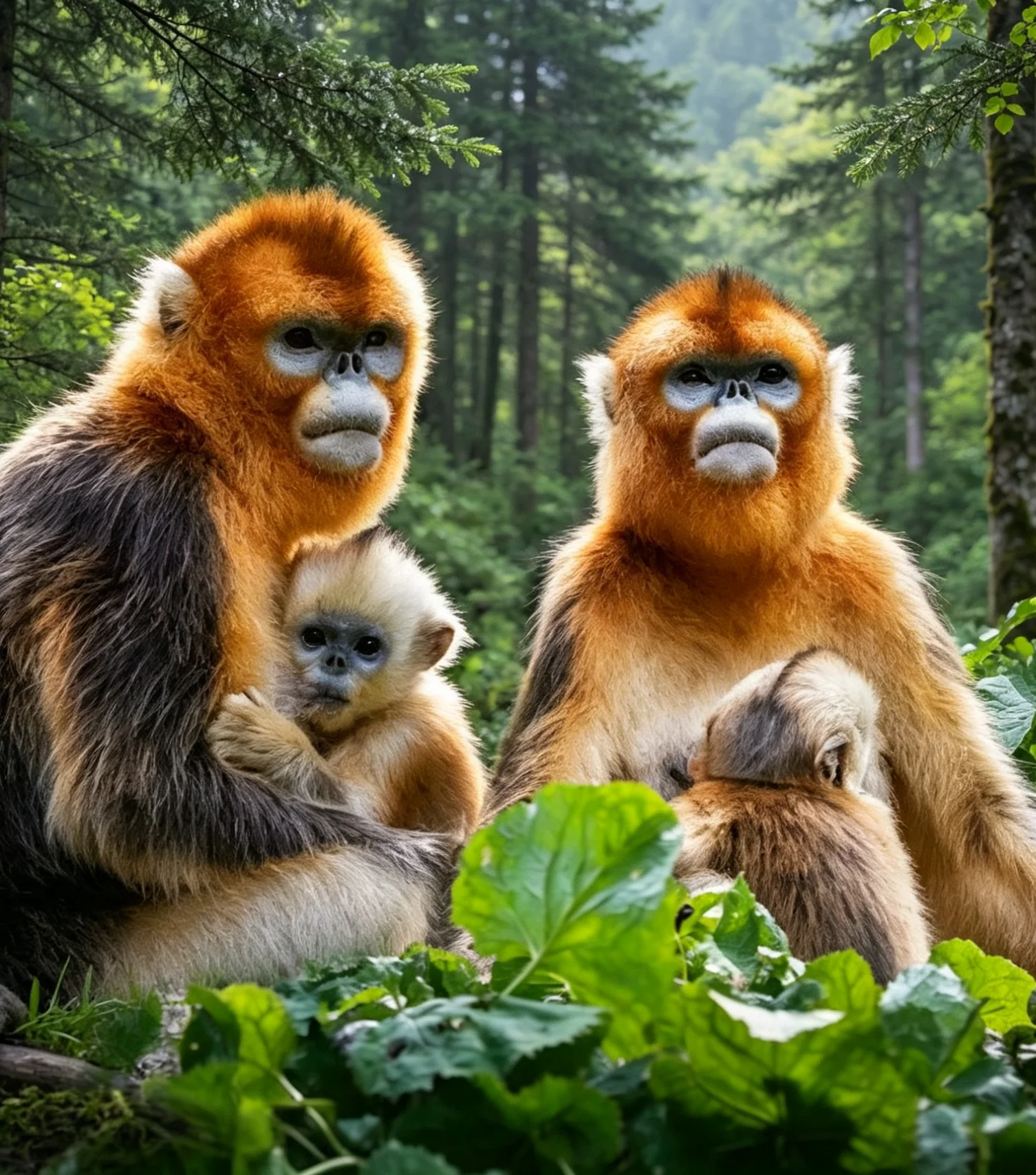
Guanmenshan is an open-air museum – a valley where geological time, rare wildlife, and entire ecosystems unfold as you walk. Giant pandas and giant salamanders live here. Thousands of beehives cling to the cliffs like ancient rock art. Walk through, and Shennongjia reveals itself layer by layer.
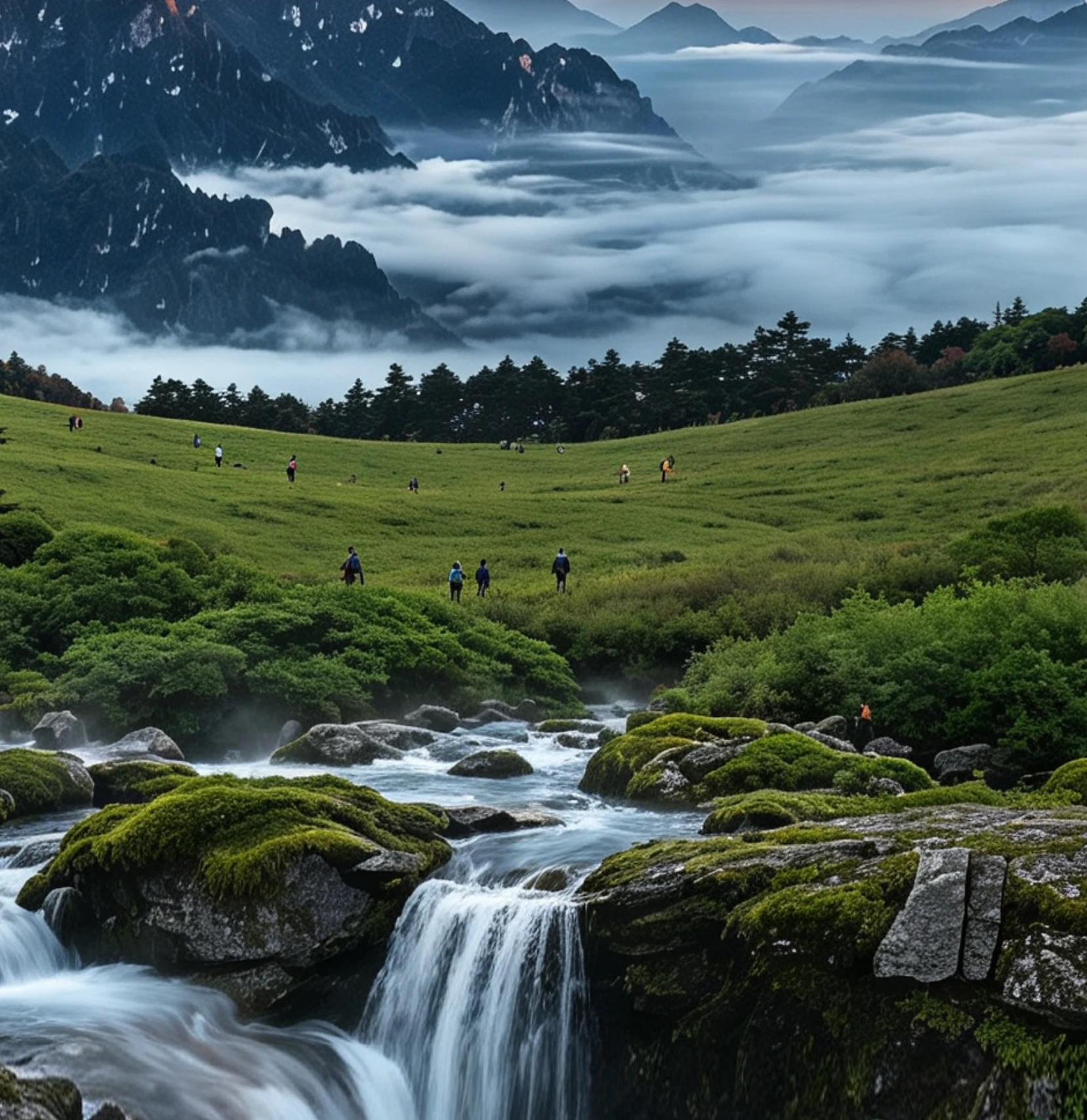
Shennong Valley is known for its “layered clouds.” From above, mist rises from the valley floor – shifting, flowing, veiling. Among the clouds, alpine rhododendrons bloom in pink and white, drifting between mist and green like a living ink painting.
Jinhouling is one of the best-preserved primeval forests in Shennongjia. Towering firs and pines rise above a sea of arrow bamboo. Waterfalls echo through the dense canopy, wildflowers and berries shifting with the seasons. Quiet and abundant – every tree holds moss; every stone carries the breath of deep time.
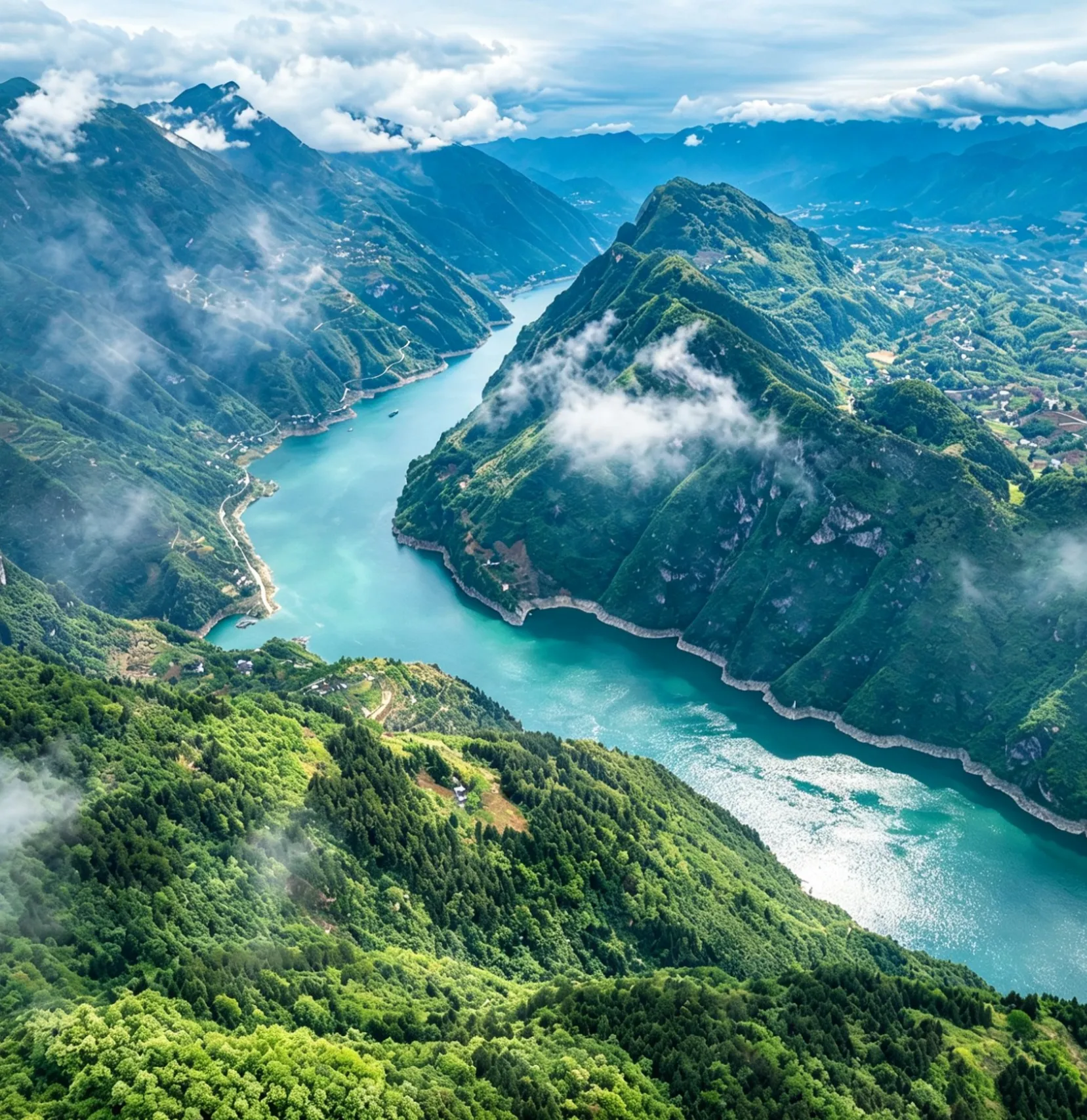
Morning Sailing through Wu Gorge & Qutang Gorge.
Morning light slips through the window as you wake to the gentle rhythm of the river. Drawing the curtains, you find the landscape has transformed – the rolling hills of yesterday now risen into sheer cliffs.
Wu Gorge is a realm of depth and endless turns – jagged peaks rise like swords and screens, range upon range veiled in drifting mist. The river coils and curves, revealing new vistas at every bend. The clouds here are not just scenery. They are part of the story, celebrated in verse for over a thousand years.
Sailing through, the green ramparts unfold like a landscape scroll. At times, a massive cliff seems to bar the way – then, with a turn, the view opens wide, sky and clouds mirrored in jade-green water. Such is the magic of this place: a shifting dreamscape where time itself seems suspended.
Day 3
Badong & FengJie
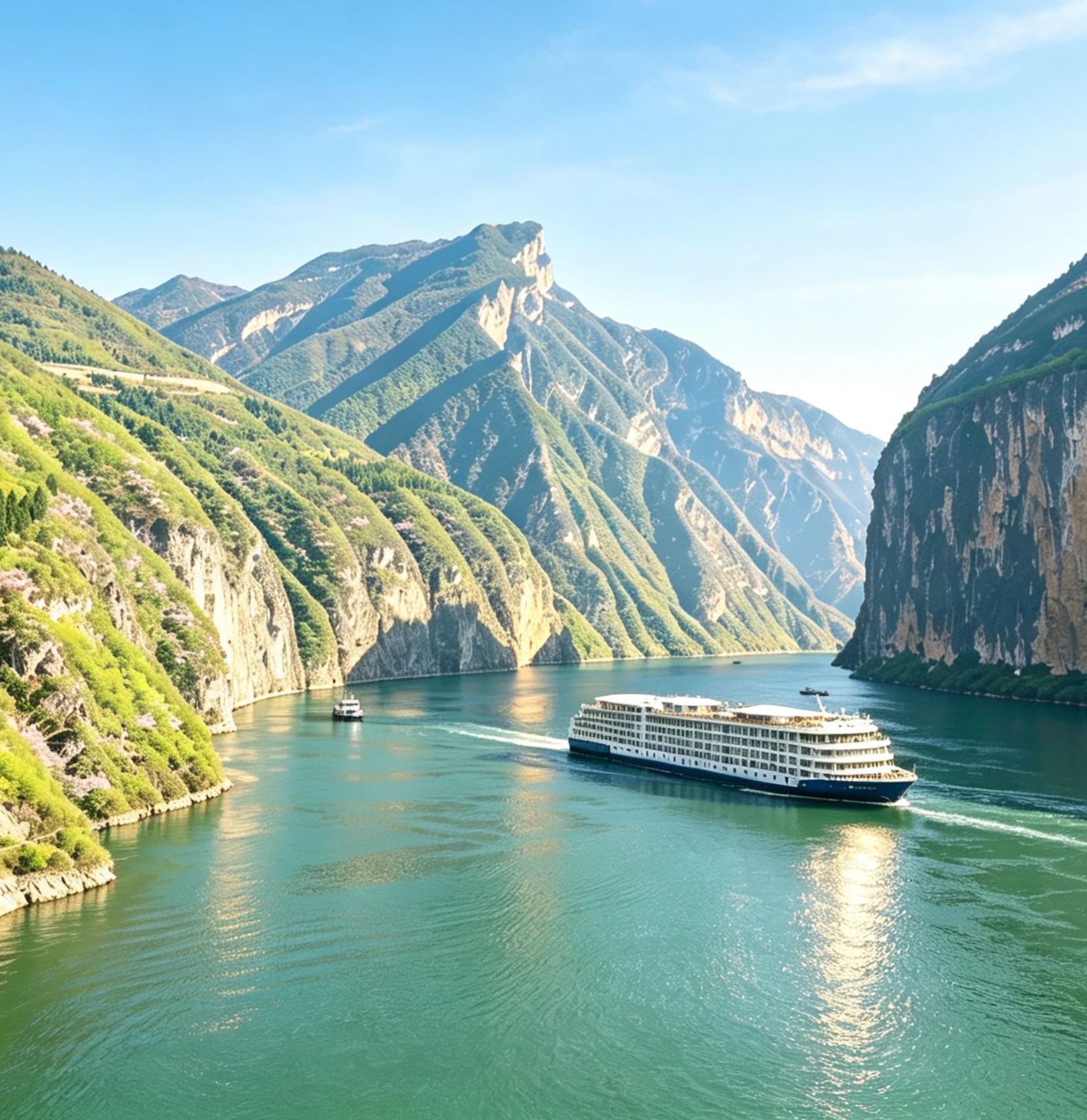
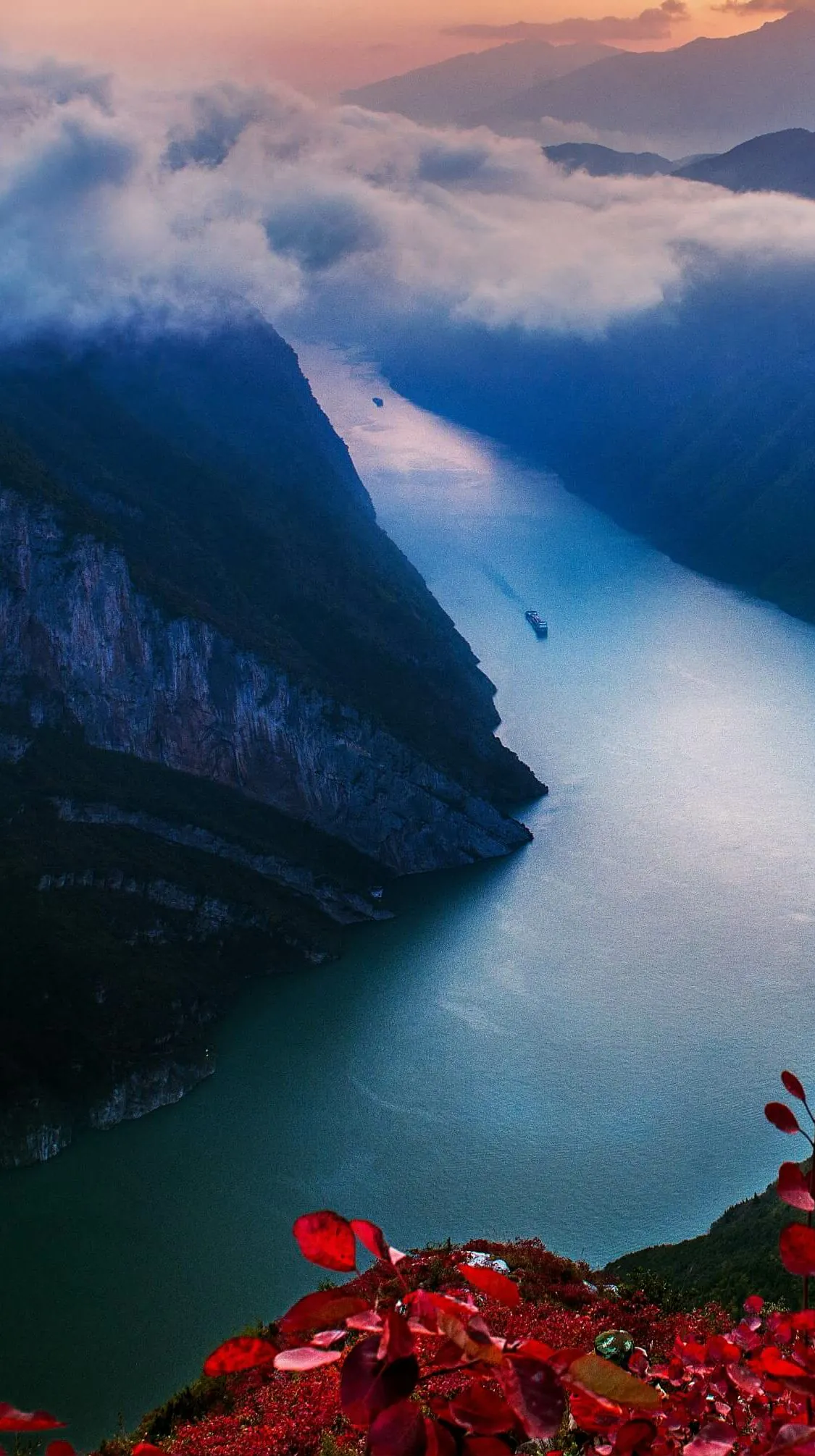
The ship pushes upstream, past Wushan, into Qutang Gorge. Waves crash against the hull – the river resisting. The cliffs close in, narrowing the passage. The mountains on either side face each other like colossal gatekeepers, their thousand-metre walls cleaving the river’s course. Then, as suddenly as it began, the gorge opens – and White King Town appears on the heights, its eaves emerging through mist and memory.
In the afternoon, we dock at Fengjie.
Fengjie – known in antiquity as Yufu and Yong’an – has over 2,300 years of history. In 649 AD, Emperor Taizong gave it its present name, meaning “preserve integrity and uphold honour.” Perched at the western gateway of the Three Gorges, it became a vital crossroads for trade and travel. For over a thousand years, poets came, and left behind more than 10,000 verses. Li Bai wrote here; Du Fu wrote here – they called it the “City of Poetry.”

LEAVING THE WHITE KING’S TOWN AT DAWN
Leaving at dawn the White King crowned with rainbow cloud,
I have sailed a thousand miles through Three Georges in a day.
With monkeys’ sad adieus the riverbanks are loud;
My boat has left ten thought mountains far away.
By Li Bai (Translated by Xu Yuanchong)
Option A: White King Town
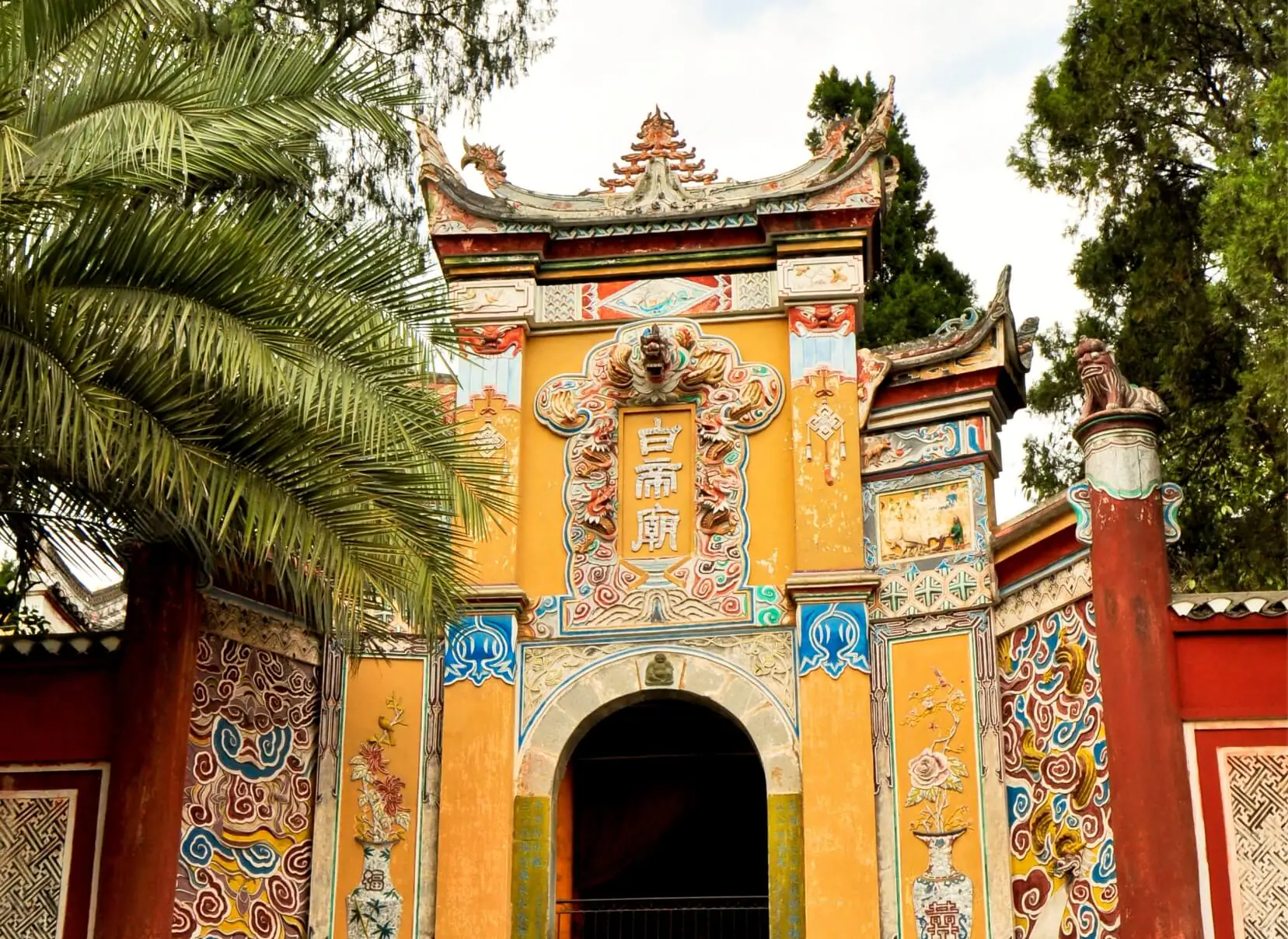
White King Town sits at the mouth of Qutang Gorge, on a hill surrounded by water. Red walls and grey tiles rise through the trees. To the east, Kui Men – the world-famed gateway where the Yangtze bursts between the mountains on either side. It’s the view on the back of China’s ten-yuan note. Stand on the city walls and watch – and you understand why poets wrote, why armies fought, why this place still commands the river.
Option B: Qutang Gorge – Light Hiking
From the ridge above the gorge, a trail climbs into the heart of Qutang. Moderate ups and downs – but the pace is yours.
The trail rises slowly, Kui Men opening beneath you – the same view printed on the ten-yuan note. On one side, cliffs drop straight to the river; on the other, the Yangtze flows east, ferries moving through the gorge like leaves. Across the water, ancient inscriptions are still visible on the rock face – poets from centuries ago, still speaking. Some views, you earn on foot.
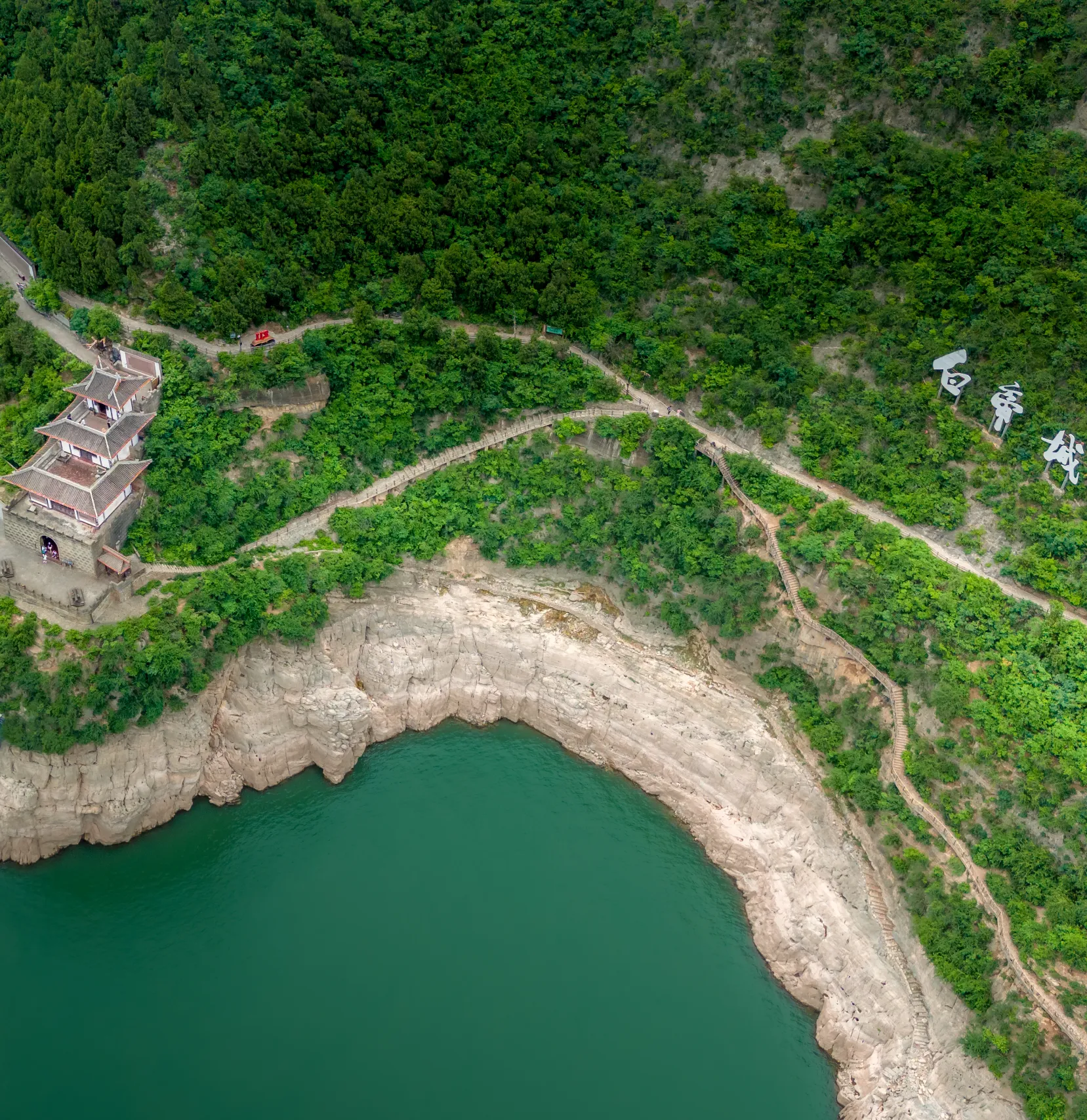
Option C: The Summit of the Three Gorges
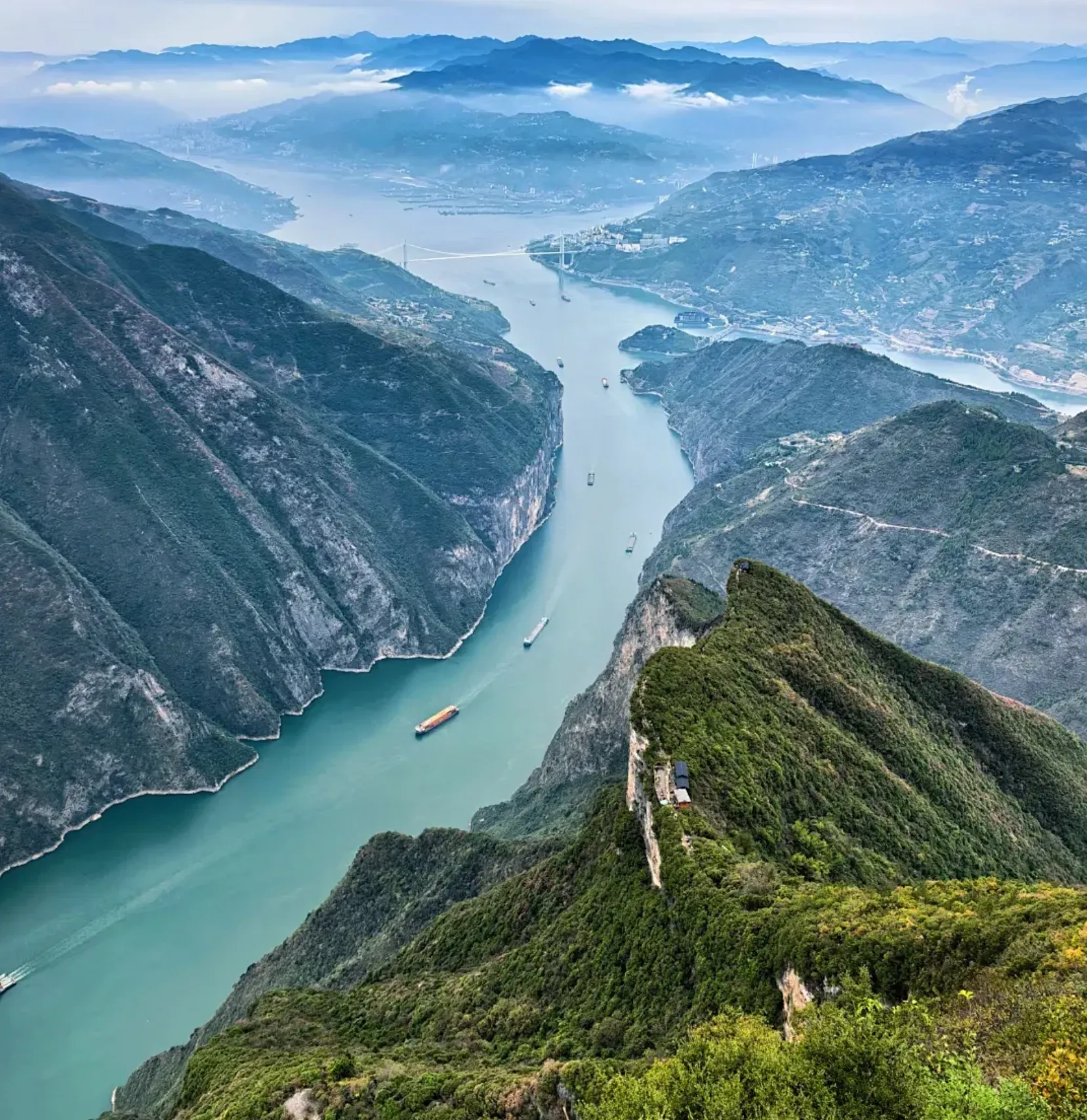
From the Summit of the Three Gorges, at 1,388 metres, the entire 8-kilometre sweep of Qutang Gorge lies before you. Clouds drift below; peaks roll like waves in every direction. Below, the river threads through the mountains – a silk ribbon against the stone. To the west, White King Town floats among the treetops. Beyond it, the silhouette of Wushan rises like a screen.
The view is never the same – spring rhododendrons, autumn red leaves, winter snow. On a clear day after rain, clouds roll in from the valley like a tide. Every season has its own face.
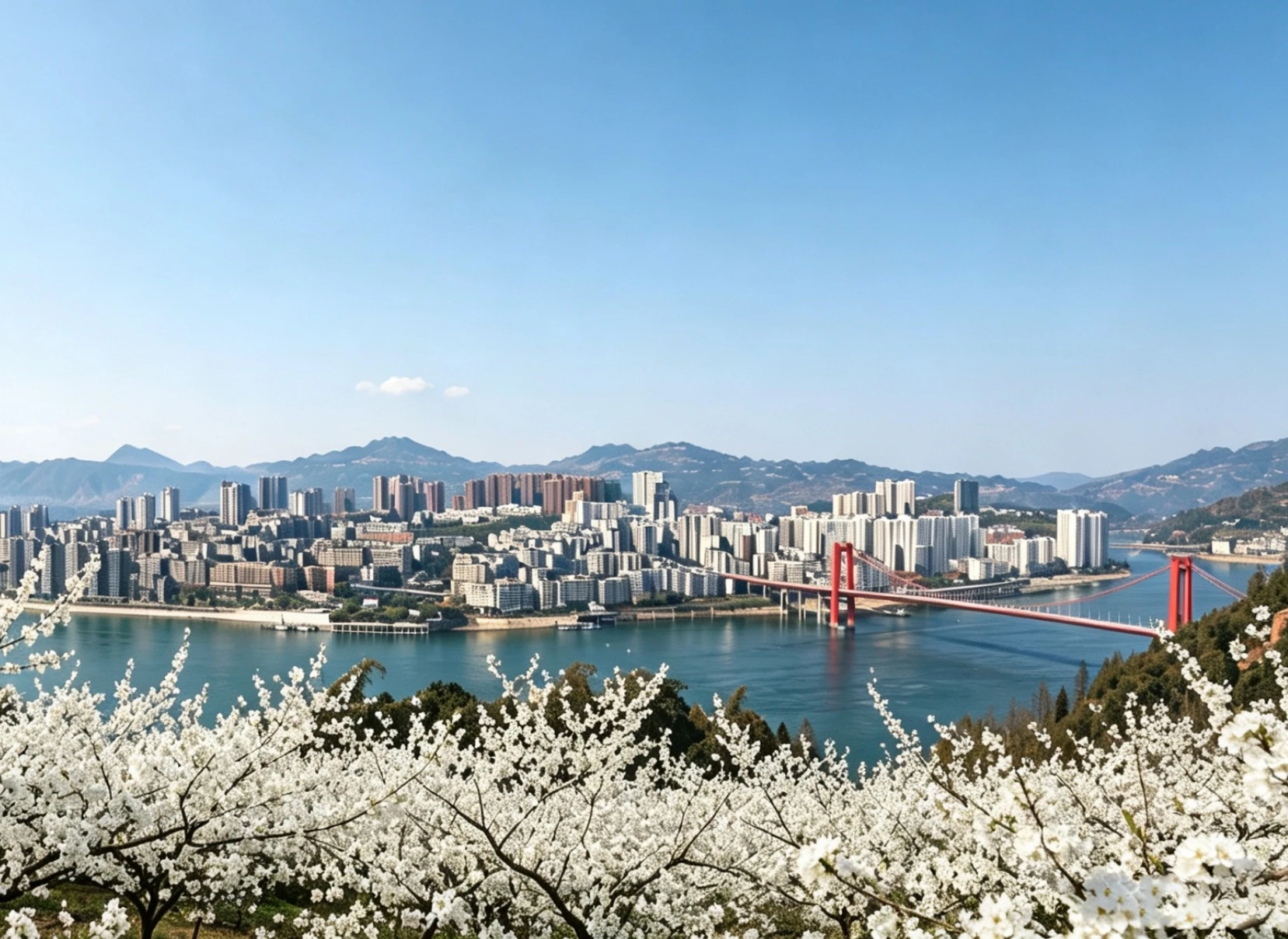
Zhongxian, known in antiquity as Linjiang, lies at the heart of the Three Gorges reservoir area. In 634 AD, Emperor gave it its present name – “Zhong” meaning loyalty – in honour of General Ba Manzi, who gave his life for his city. When the dam raised the waters, much of the old town went under. Zhongxian is one of the few half-submerged towns still standing.
Three shore excursions await you in Zhongxian.
Day 4
Shibaozhai (Zhongxian)
Option A: Shibao Village
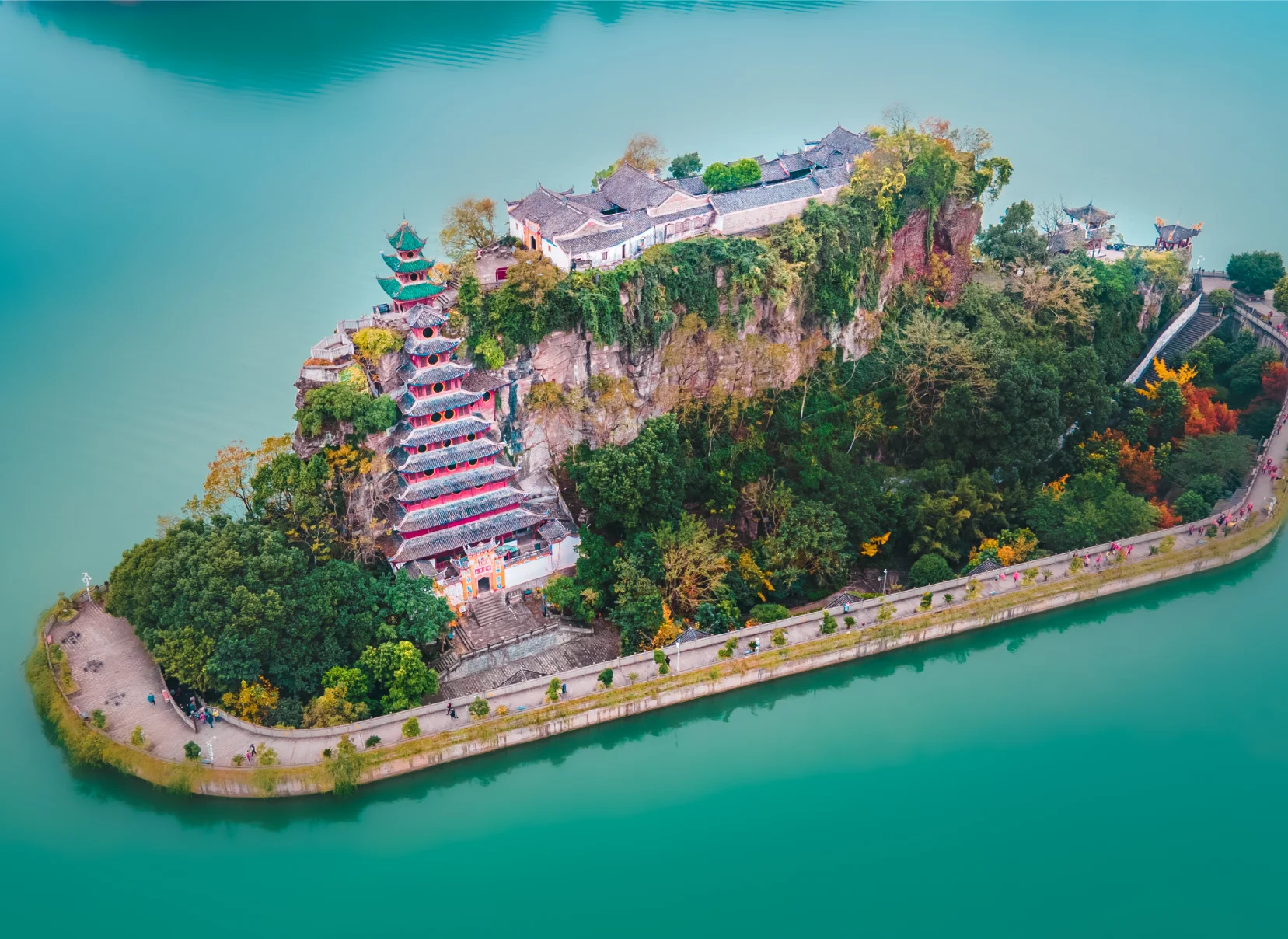
Shibao Village rises from the river – a wooden pagoda built against a solitary rock. Dating back to the Ming Dynasty, it clings to the cliff, tier upon tier, like a giant seal stamped in the water. Surrounded on all sides, it is known as one of the world’s eight most unusual buildings – and the largest “basin garden” on the river. Climb to the top. The wind comes off the water. Four hundred years of timber still stands.
Option B: Xituo Ancient Town
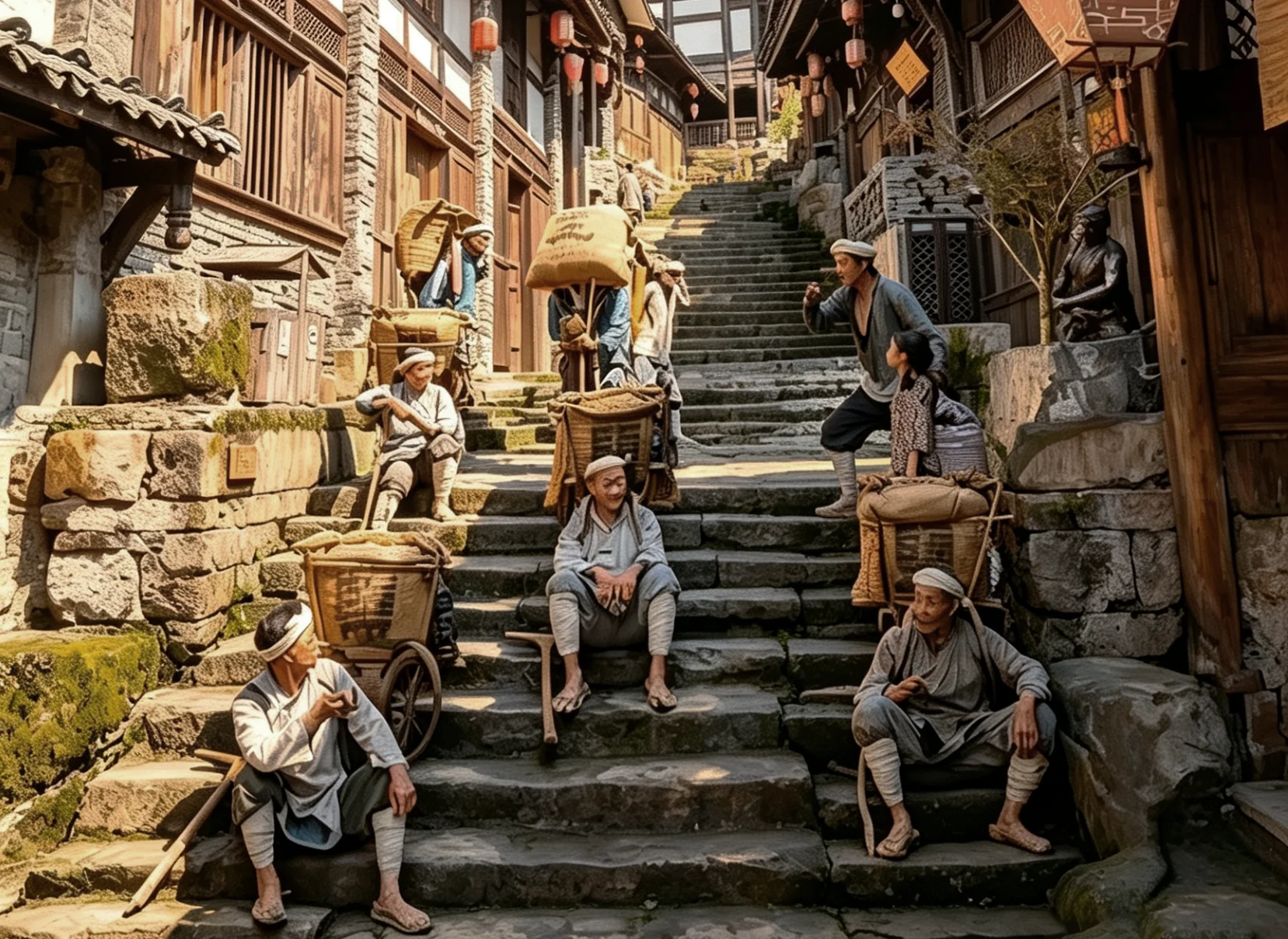
A local ferry carries you across the river – the same crossing locals have made for generations. On the other side, Xituo emerges through the mist. Stone steps rise from the riverbank all the way to the hilltop, like a ladder reaching for the sky.
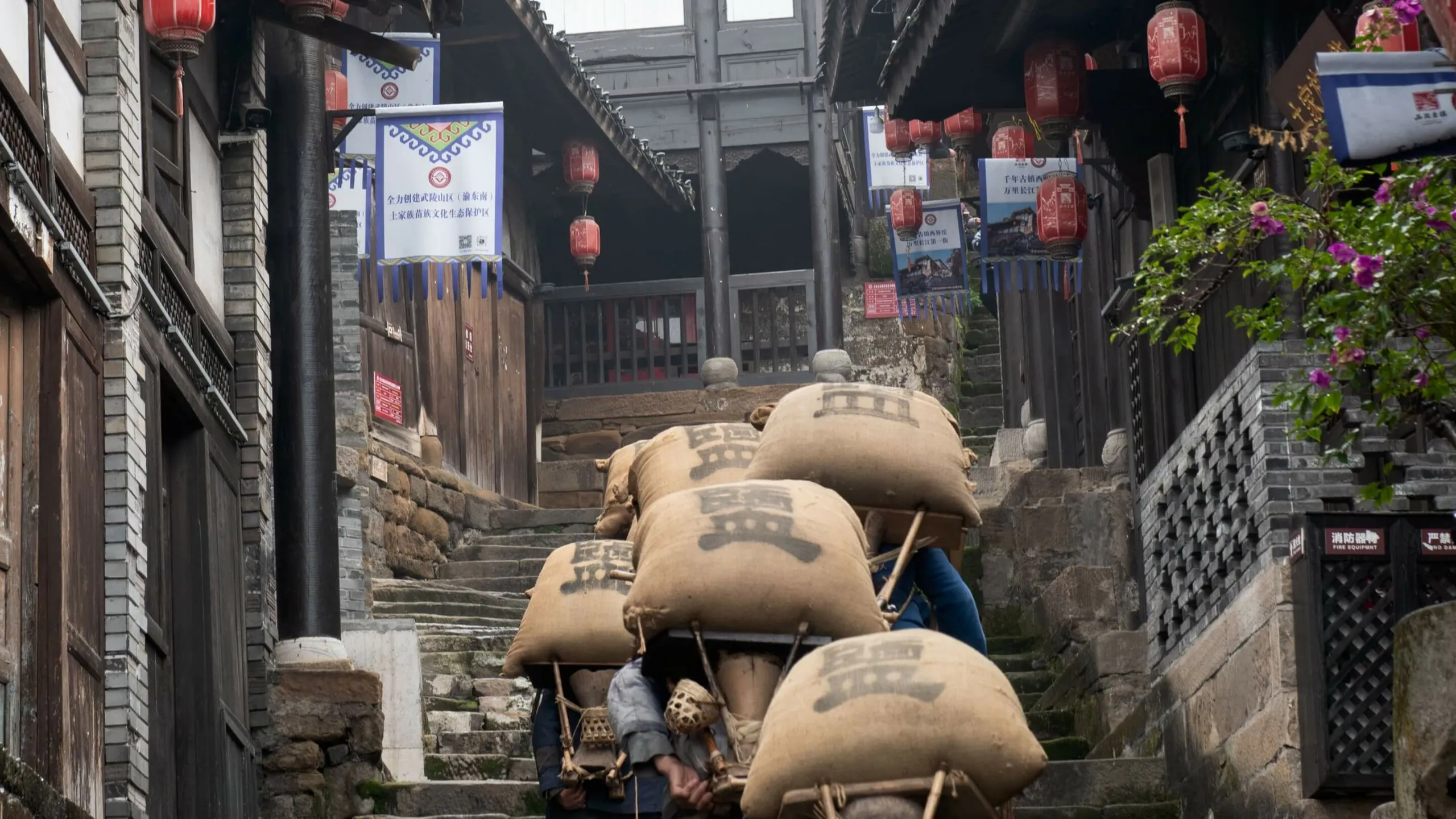
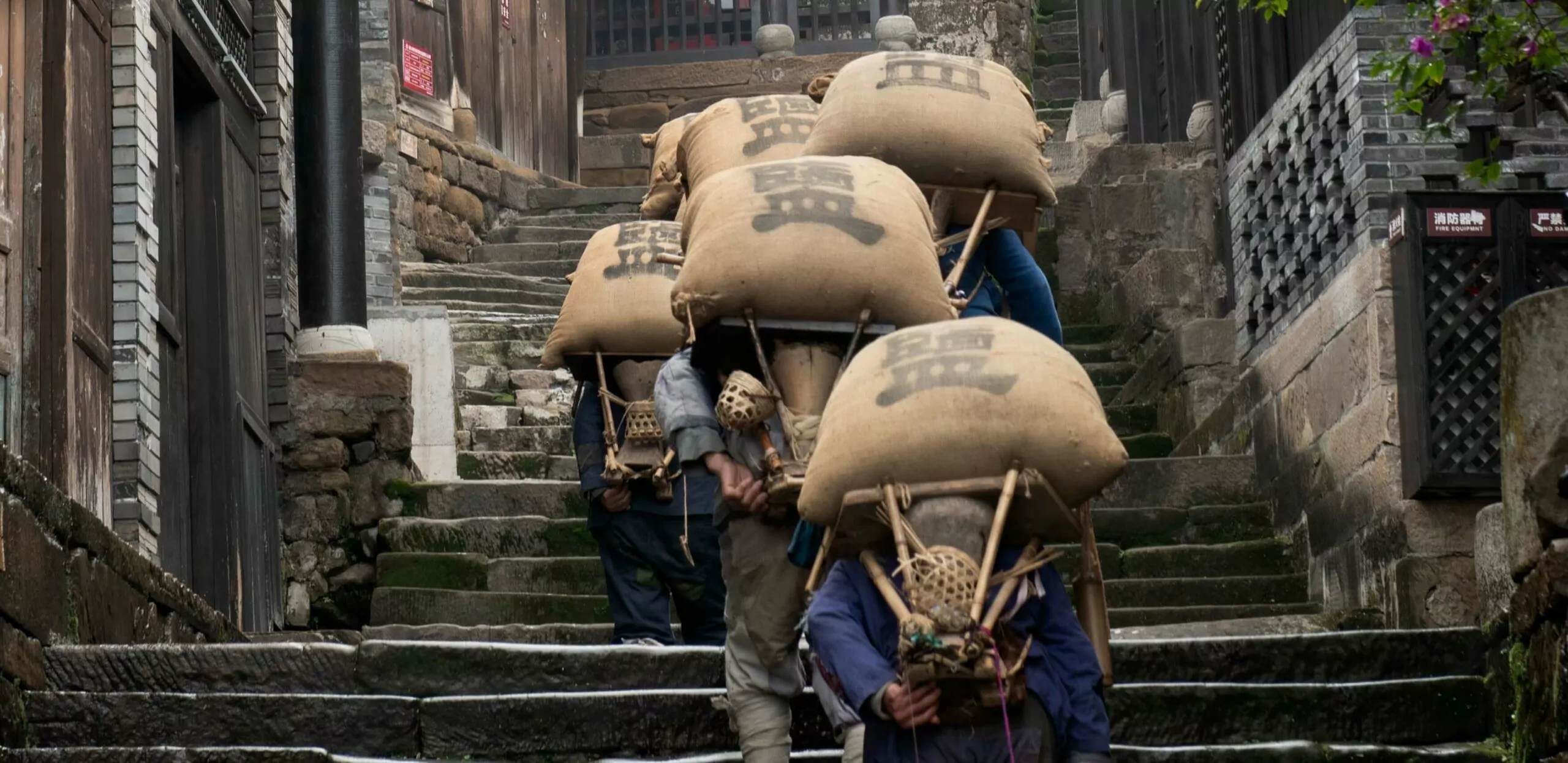
This is Xituo – the Thousand-Step Cloud Ladder, where the ancient Ba Salt Road begins. The stones are worn smooth by centuries of bare feet. Salt porters once walked this path, bent under heavy loads, their labour songs echoing through the street. Xituo grew wealthy on this trade – salt ferried across the river, then carried on foot across the mountains. The steps are still here. So are the stories.
Option C: Huanghua Island
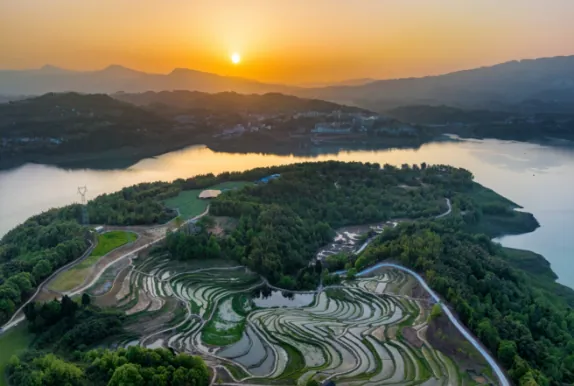
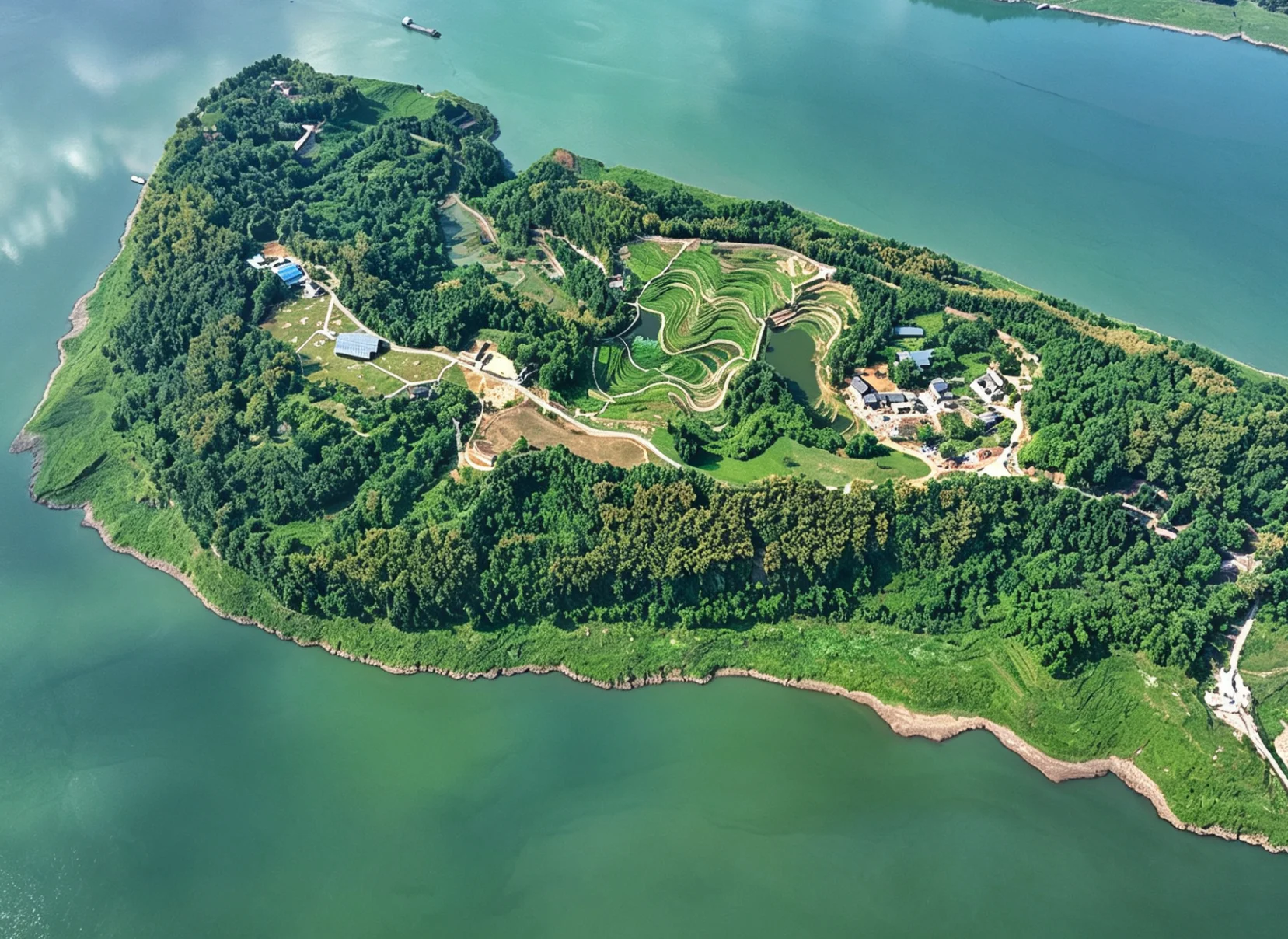
Huanghua Island lies at the geographic centre of the Three Gorges reservoir, surrounded by calm water. Fields and forests shift with the seasons. Rare plants grow here, including the “panda of the plant world” – the lotus-leaf fern. In 2016, the island became a national wetland park.
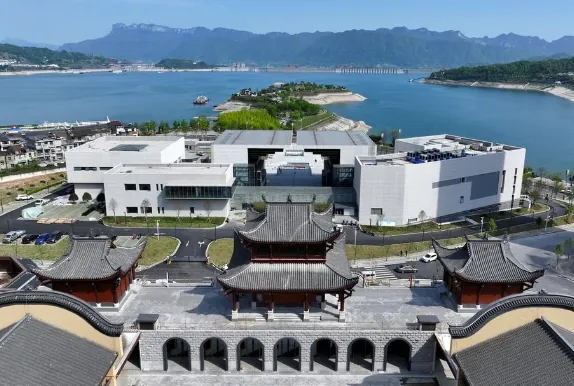
But Huanghua is more than trees and ferns. In the 13th century, it was a fortress – a rare island stronghold in a time of war. Most of it was destroyed. But the foundations, temple ruins, and cliff inscriptions remain beneath the soil, waiting. In 2026, a new museum opened, telling the story of that forgotten chapter.
We dock in Chongqing in the morning.
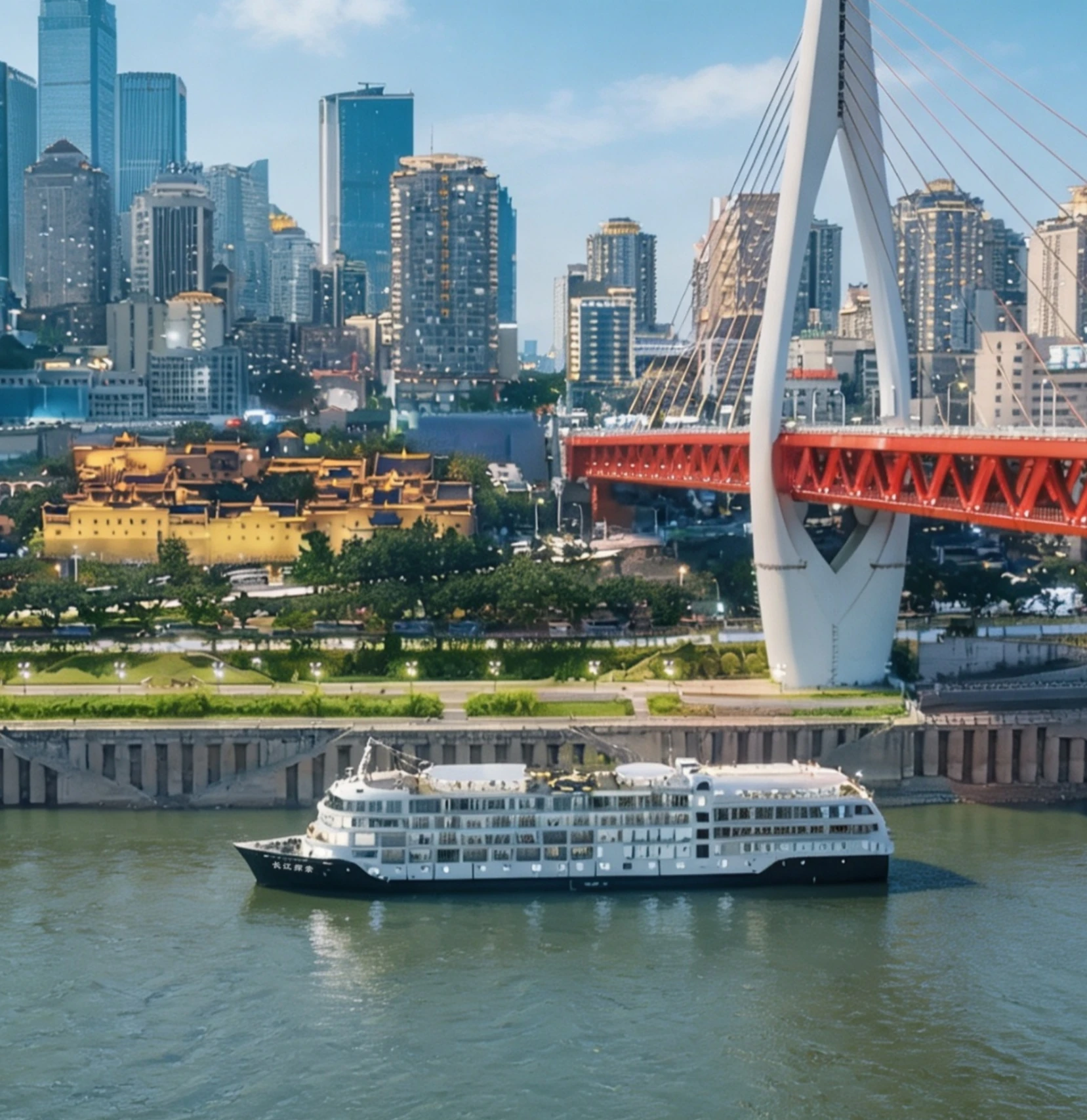
Chongqing is a city lifted by mountains and held by rivers — where the Yangtze, Jialing, and Fu rivers converge, and where mountain ranges gather and part. River and mountain have shaped each other here, cutting and carving until this singular three-dimensional city emerged — unlike any other in China.
It was once the birthplace of an emperor, and the place where the course of Eurasian history was rewritten — the battle at Diaoyu Fortress stopped the Mongol advance, and the world turned a different way. A thousand years of war have since faded. The mountains and rivers remain.
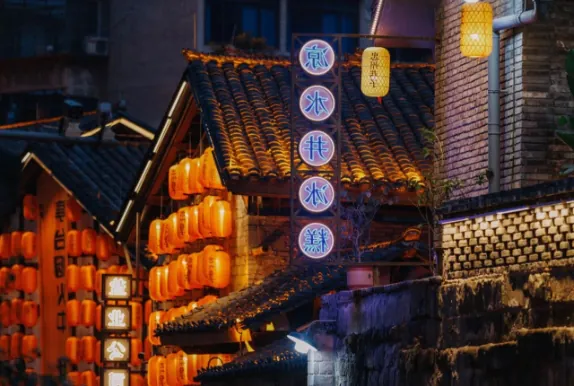
After breakfast, we go ashore for a Chongqing city walk. Watch the monorail thread its way through apartment buildings. Walk the hilly streets, feeling the city’s vertical rise and fall with every step. Visit the Three Gorges Museum, tracing the story of this region from ancient times to the dam. And sit down to a hotpot — the city’s signature dish, as bold and layered as Chongqing itself. Today’s Chongqing is a social media sensation, a hub of cross-continental trade, a skyline of neon-lit fantasy, and a bowl of steaming noodles on a street corner — all at once. This city has never had just one face.
As evening falls, dinner is served aboard. The city lights begin to flicker on along the river, and the skyline becomes part of the view from your table. Night deepens. Bridges arc across the water, stilt houses glow on the hillsides, and traffic threads through the city’s layers of elevated roads and tunnels. Lights rise and fall, bright and dim — a nightscape that belongs only to Chongqing. A whistle sounds, and the ship slips away from the pier, heading back onto the river.
Day 5
Chongqing
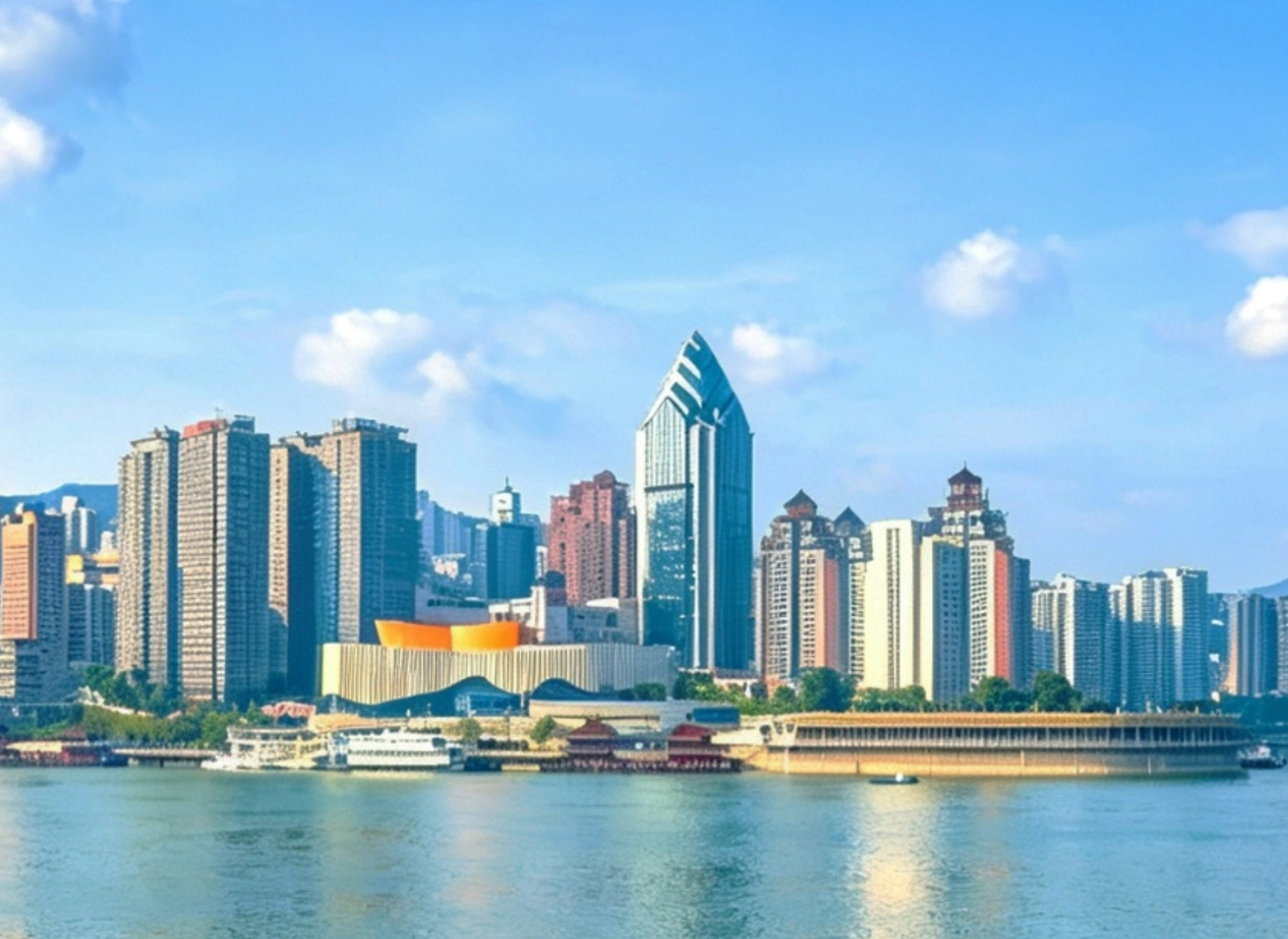
Morning finds us docked at Fuling, an ancient port city at the confluence of the Yangtze and Wu rivers. Known in antiquity as Fuzhou — a name that speaks of mountains and waters — it has been a vital waterway hub since ancient times and one of the cradles of Ba culture and the culture of southeastern Chongqing.
Two shore excursions are offered in Fuling. Each opens a different door into the city’s depths.
Day 6
Fuling & Zhongxian
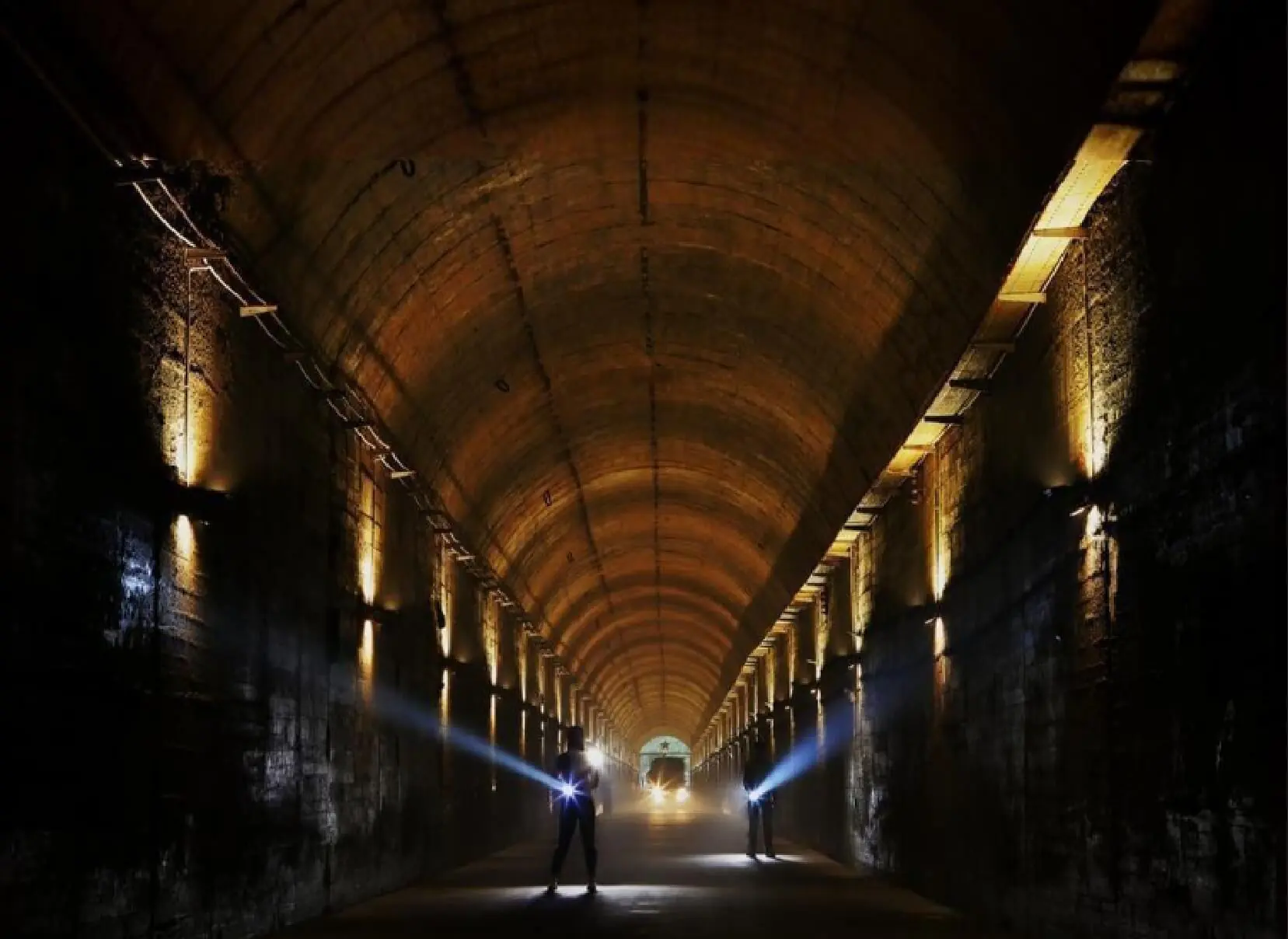
Option A: Project 816 – The Underground Nuclear Complex
- 20th-Century Architectural Heritage of China
- China Industrial Heritage Protection List
Project 816 is a top-secret Cold War relic carved into the mountains of Fuling — the largest man-made military cave ever built, and the world’s only nuclear facility that was 85% complete before being abandoned. For 18 years, 60,000 engineers worked in secrecy. Declassified in 2002, its 18 caverns and 130 tunnels form a labyrinth of concrete and silence. A place where history stopped mid-sentence.
Option B: White Crane Ridge Underwater Museum & Fuling Local Market
- National Cultural Heritage Site
- World Cultural Heritage (Tentative List)
The White Crane Ridge Underwater Museum is the world’s first underwater museum accessible without diving. For over 1,200 years, the ridge recorded 72 historical water-level observations, alongside inscriptions by generations of scholars. UNESCO has recognised it as the “world’s only well-preserved ancient hydrological station.” A conversation across centuries, carved in stone.
A walk through the local market immerses you in the city’s everyday rhythm — the calls of vendors, the aroma of freshly cooked snacks, the produce still glistening with morning dew. This is the city in its most unguarded, authentic moment.
ZHONGXIAN
By evening, we arrive at Zhongxian, nestled in the heart of the Three Gorges reservoir area. Its name is steeped in legends of ancient loyalty and valour — a place of enduring beauty, celebrated in verse through the ages. When the dam raised the waters, much of the old town went under. But Zhongxian was one of the lucky ones: enough remained to preserve the spirit of Ba-Yu culture and the raw character of the old Three Gorges.
Two evening activities await your choice. Each presents a different way to spend your night.
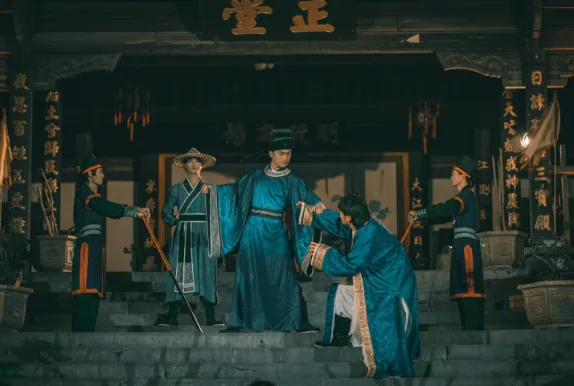
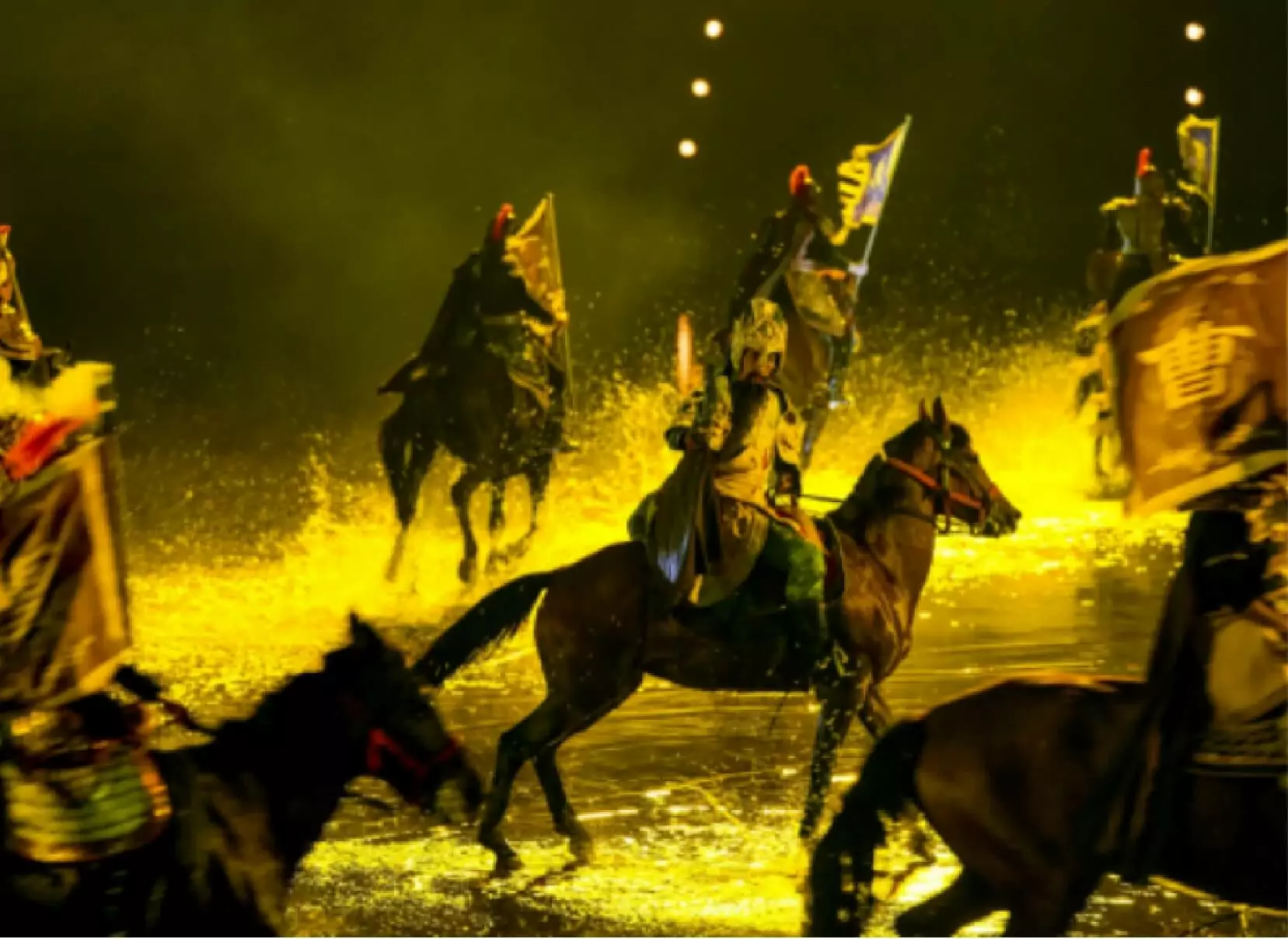
Option A: The Beacon of Three Kingdoms – Grand Live Performance
This epic spectacle brings the legend of Guan Yu to life, weaving through iconic episodes from the Three Kingdoms saga. A 35,000-square-metre water stage, 3,200-square-metre water-screen projections, 3D holographic effects, 300-metre high-speed wire-flying, over 300 performers, and more than 50 live horses deliver a breathtaking fusion of water, land, and aerial action. The 180-degree rotating seating follows the narrative, drawing you deep into the story. You are not a spectator. You are part of the story.
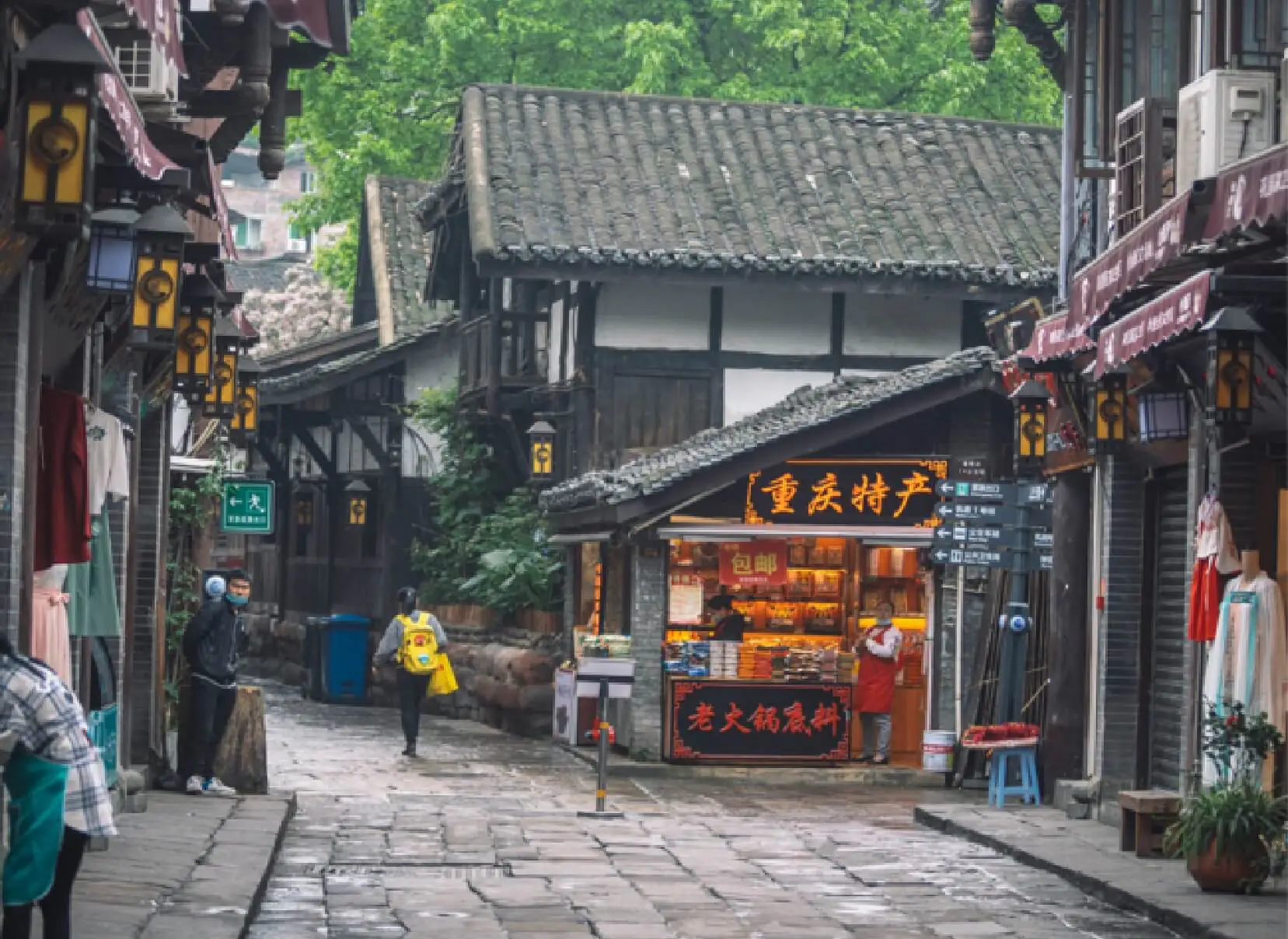
Option B: Zhongzhou Museum & Zhongzhou Old Alley
A museum by day is one thing; by night, it is quite another. An exclusive after-hours visit to Zhongzhou Museum offers an immersive journey through time. Over 20,000 artefacts, six of them national first-class treasures, come to life in the stillness of the night.
The river rose. Most of old Zhongxian went with it. What remains is Zhongzhou Old Alley — the only half-submerged street in the reservoir, the last memory of the old city. Ming and Qing courtyards still stand here: grand mansions, carved ancestral halls, moss-covered gates. The river laps at their walls, then recedes, leaving wet steps and waterlines. Half the street is underwater. The other half still echoes with footsteps. The river and the city have learned to live together. The stories remain.
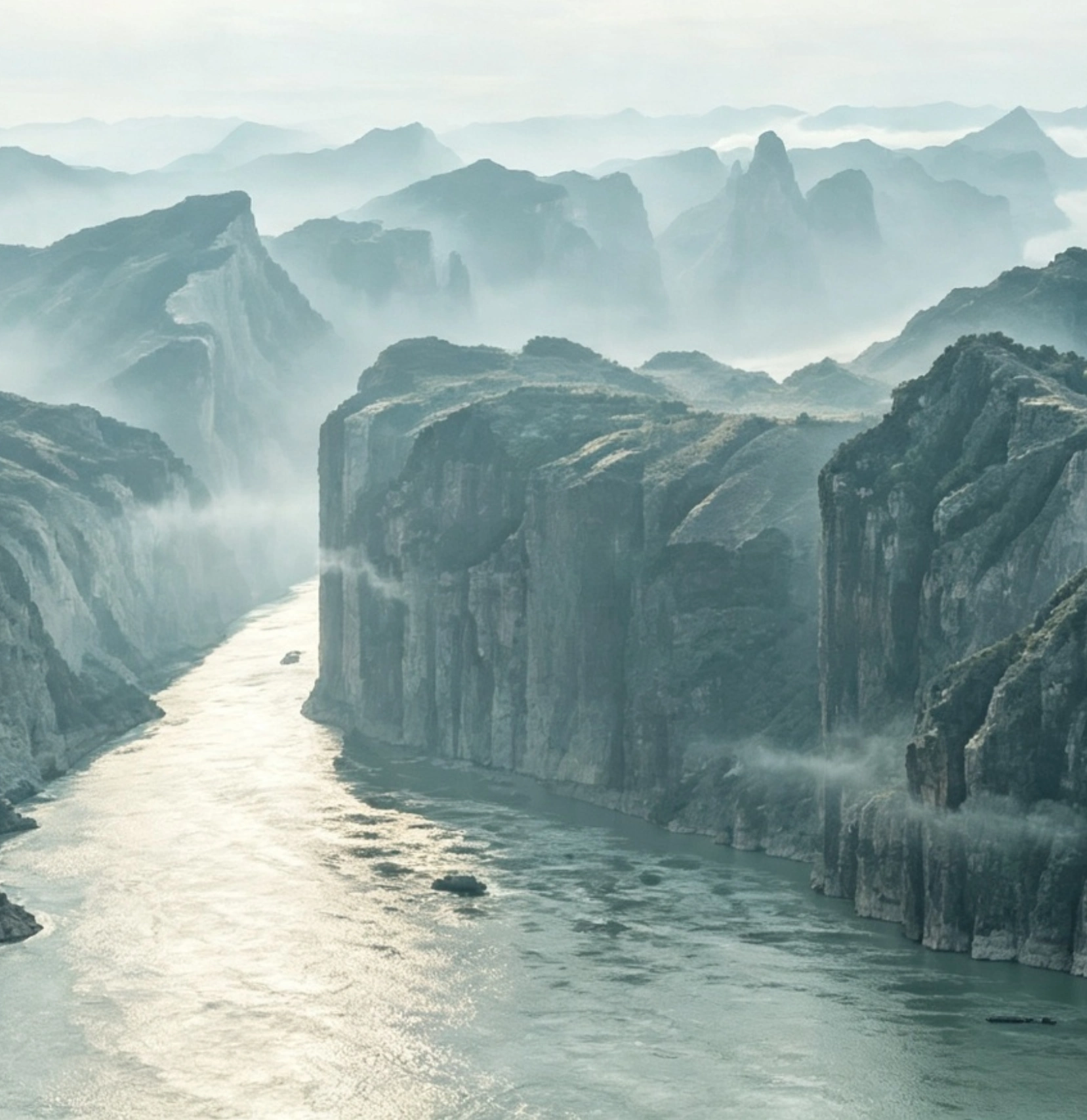
Morning Sailing through Qutang Gorge.
Morning light slips through the window as you wake to the gentle rhythm of the river. Drawing the curtains, you find the landscape has transformed — the rolling hills of yesterday now risen into sheer cliffs.
The ship glides into the misty precincts of White King Town, where history and legend converge. The river narrows. The mountains close in. This is Qutang Gorge — the first of the Three Gorges. At its entrance, two peaks stand like colossal gatekeepers, their thousand-metre cliffs cleaving the river’s course. This is the world-famed Kui Men, where the Yangtze gathers its might and surges eastward. A scene that has inspired poets and travellers for centuries. Now it unfolds before you.
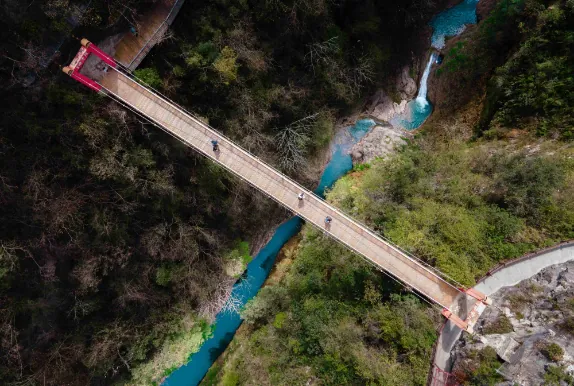
The morning brings us to Wushan, a thousand-year-old town cradled by the Yangtze and leaning against the Ba Mountains in the northeastern corner of Chongqing. Long known as the “Gateway to Eastern Chongqing”, it commands the strategic passage where the river cuts through the mountains. A place where history and landscape are inseparable.
You’ll have your pick of two excursions in Wushan. Each reveals a different face of this timeless landscape.
Day 7
Wushan & Yichang
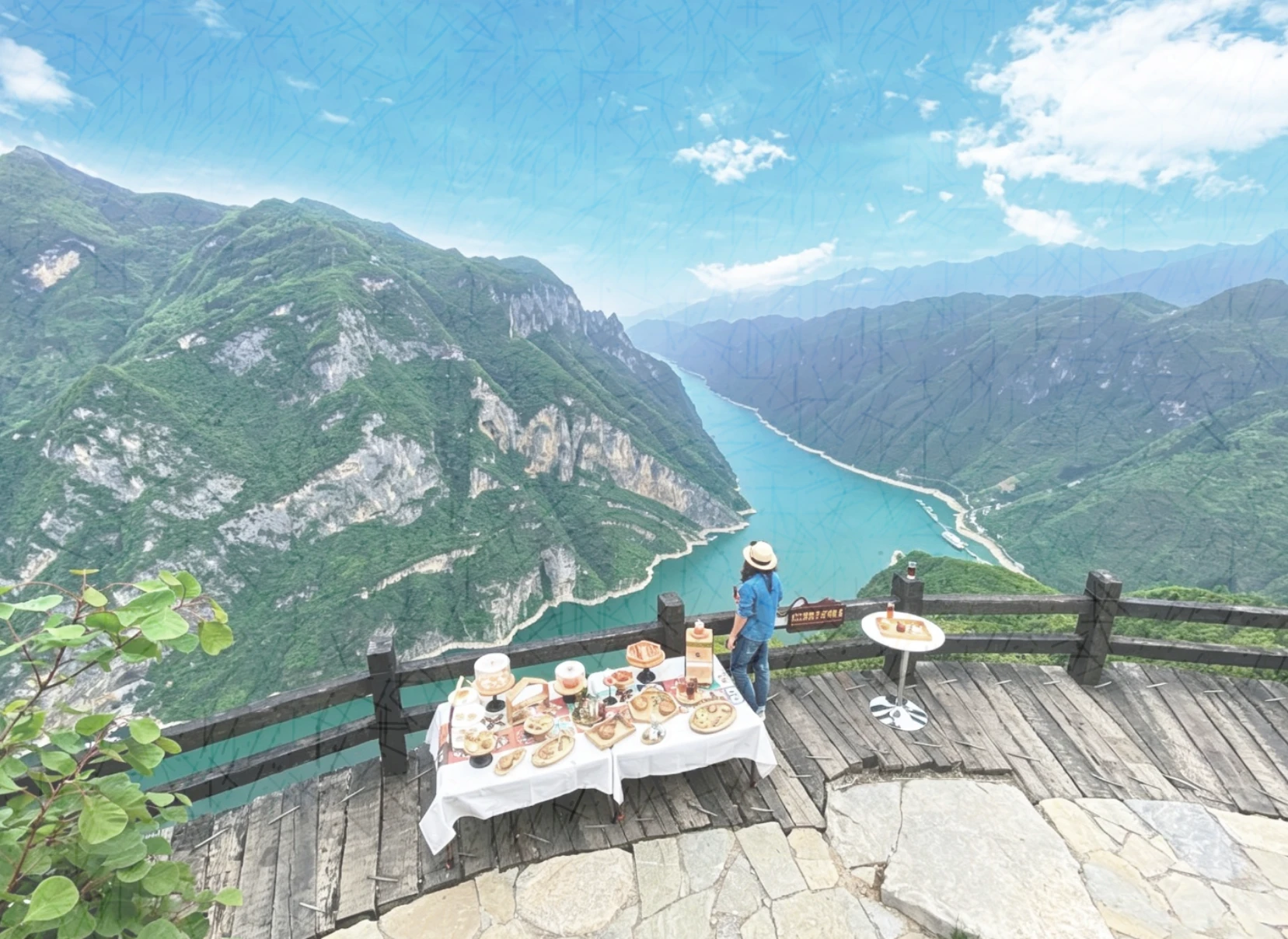
Option A: Goddess Sky Road
Step onto the Yangzi Explorer Trail — a cliffside path named after our ship, winding along the edge of thousand-metre precipices. Gaze into the distance, where a legendary peak keeps its eternal vigil, watching the river turn and flow eastward.
Deeper along the trail, a viewing platform offers an unobstructed panorama of the Twelve Peaks — their ethereal forms emerging through mist and cloud, facing the legendary peak across the river. It feels as if the goddess of legend herself stands waiting, veiled in dawn’s glow, inviting you to raise your glass to the river and lose yourself in the morning mist and evening light of Wushan.
For those with the energy and a sense of adventure, a guided hike takes you through ancient mountain villages and along little-used trails. You walk through rock folds formed millions of years ago —
a silent chronicle written in stone. Along the way, you pass terraced fields that change with the seasons, a tea plantation where leaves are still picked by hand. You might stop at a farmhouse, exchange a few words with the people who live there — not a planned visit, just something that happens. And that moment stays with you.
Option B: Lesser Three Gorges & Mini Three Gorges
The Lesser Three Gorges and Mini Three Gorges are hidden gems along the Daning River, a northern tributary of the Yangtze. Where the main gorges impress with grandeur, these waterways offer a more intimate beauty. Quieter. Gentler. No less unforgettable.
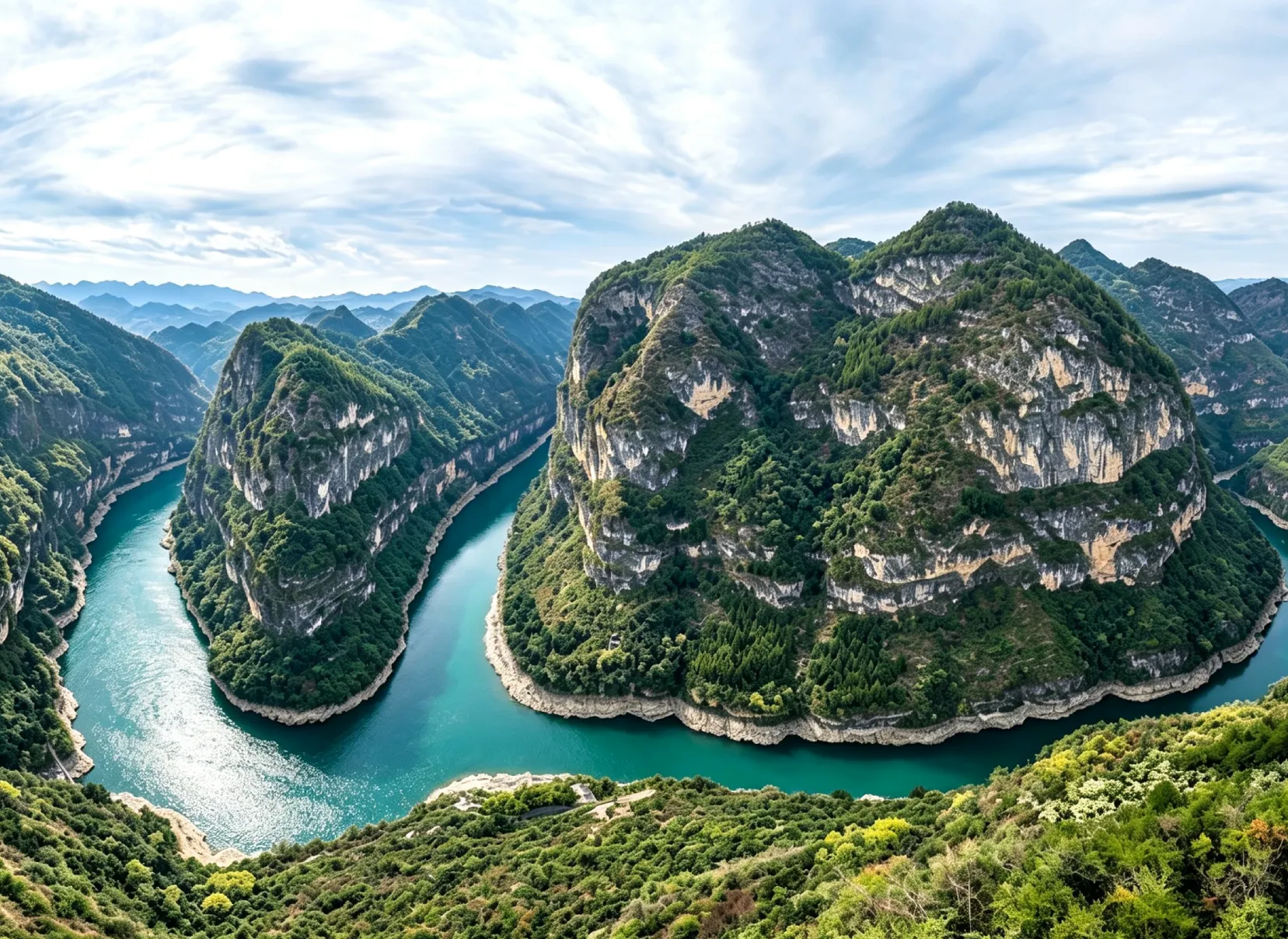
The Lesser Three Gorges string together three distinct valleys. Longmen Gorge presents a dramatic gateway where cliffs face each other like parted curtains; Bawu Gorge is shrouded in mist, its stalactites forming a gallery of fantastic shapes, with ancient hanging coffins suspended on the cliffs above; Dicui Gorge, the longest and most poetic, unfolds in layers of emerald green.
A small boat then carries you into the Mini Three Gorges — an even narrower five-kilometre waterway. Here, the cliffs press closer, the peaks grow more dramatic, and the silence is broken only by the gentle lap of water. A landscape that feels untouched, unhurried, and entirely its own.
Return to the ship for lunch as we sail into Wu Gorge, the second of the Three Gorges. All restaurants aboard Yangzi Explorer feature floor-to-ceiling windows, so the scenery comes to you as you dine. A meal accompanied by cliffs and clouds.
Wu Gorge is a realm of depth and endless turns — jagged peaks rise like swords and screens, range upon range veiled in drifting mist. The river coils and curves, revealing new vistas at every bend. The clouds here are not just scenery. They are part of the story, celebrated in verse for over a thousand years.
Sailing through, the green ramparts unfold like a landscape scroll. At times, a massive cliff seems to bar the way — then, with a turn, the view opens wide, sky and clouds mirrored in jade-green water. Such is the magic of this place: a shifting dreamscape where time itself seems suspended.
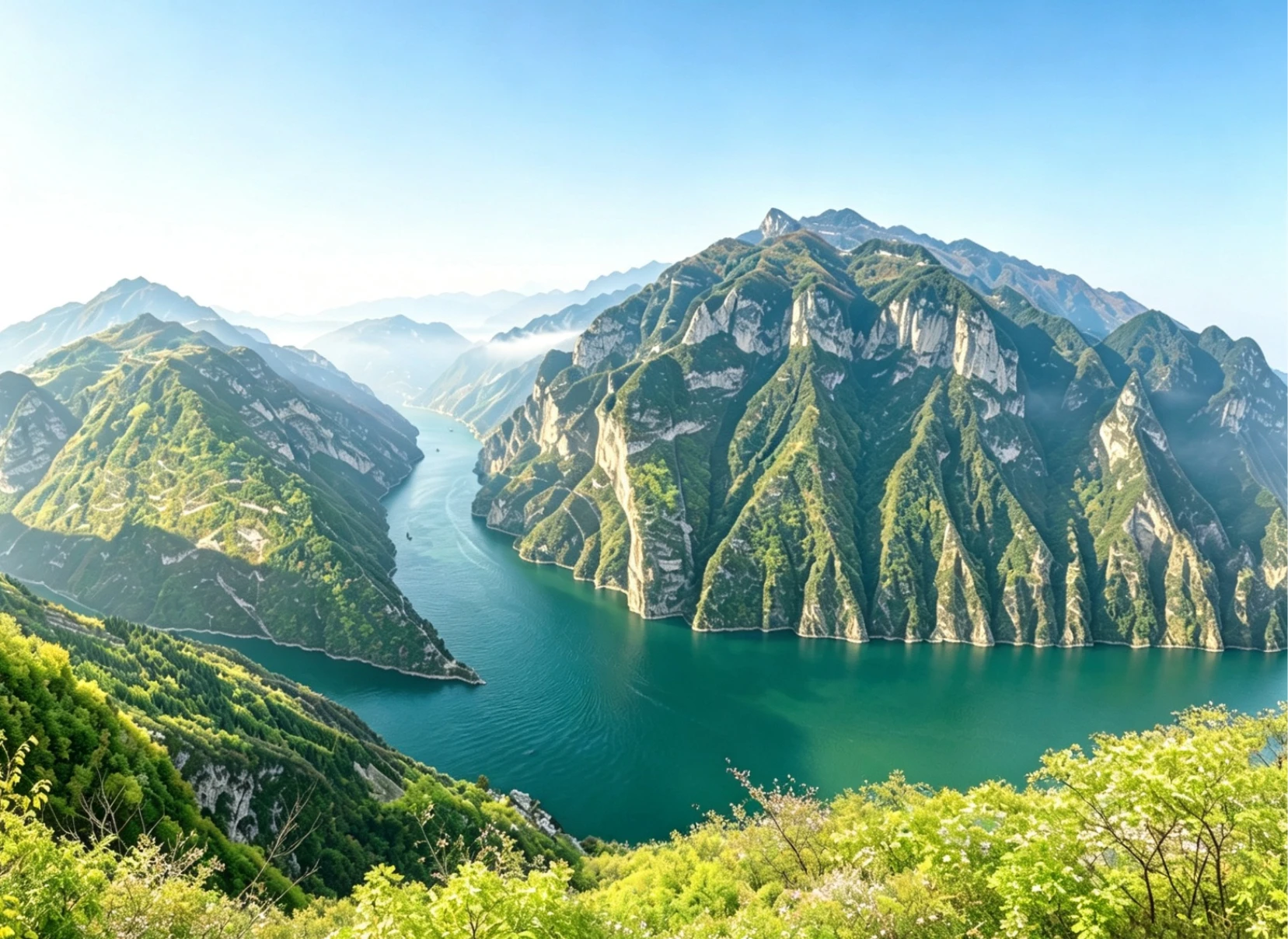
After dinner, we enter Xiling Gorge, the final and most celebrated chapter of the Three Gorges. Here, nature’s artistry reaches its zenith — every peak majestic, every shoal treacherous, every cavern mysterious, every valley serene.
Each season paints the gorge in different hues — spring blossoms, summer greens, autumn golds, winter silvers. Ancient plank-road traces are still visible on the cliff faces; the occasional bird’s flight or distant ape call adds a haunting resonance to the deep valley silence.
In the late evening, Yangzi Explorer transits the Three Gorges Dam Ship Lift (subject to operational schedules and maintenance periods). During the suspension of the Ship Lift, the vessel may be unable to pass through the dam, or may be rerouted to traverse it via the Five-Stage Ship Lock, which is the largest ship lock system in the world.
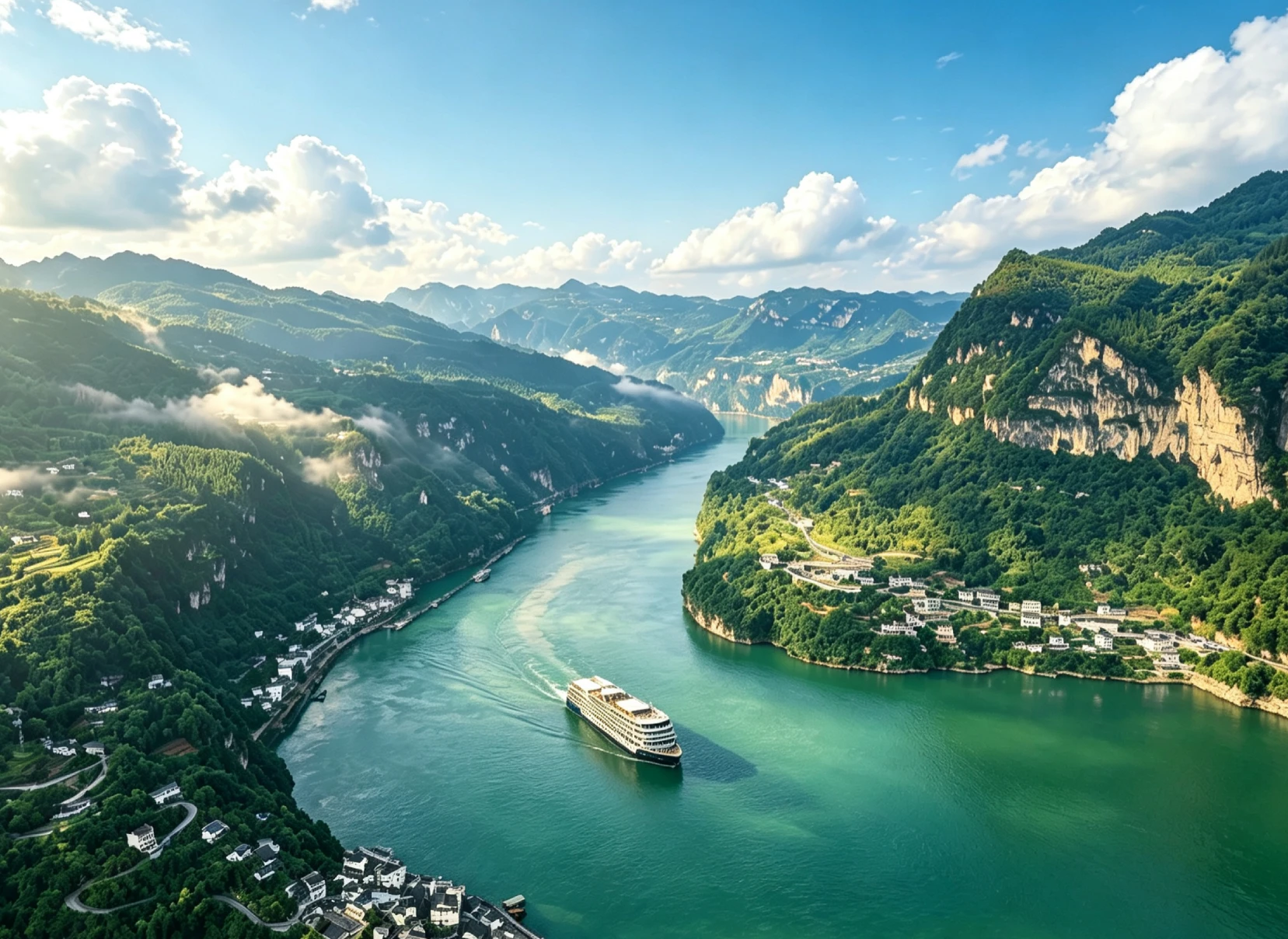
Dawn breaks as the river mist lifts. The sun crests the peaks. One by one, the mountains awaken — a new day unfolding.
We prepare for disembarkation. Check your suite carefully for any belongings. Keep documents, valuables, and essentials with you. Place larger luggage outside your door or at the reception — our crew will transport it to your drop-off point in Yichang.
Two options await you in Yichang this morning.
Day 8
Yichang | Disembarkation
Option A: Three Gorges Dam – VIP Experience
Three Gorges Project Museum
River Closure Park
Option B: Eastern Xiling Gorge – Onboard
Huangniu Gorge | Dengying Gorge
Huangmao Gorge
Nanjin Pass | Gezhou Dam
Lunch is at Juweng Taste, a Yichang institution. The centerpiece: Yangtze fat fish, one of the river’s four great delicacies — impossibly tender, rich with the river’s own character. A meal that lingers in memory.
After lunch, we escort you to Yichang Airport or railway station, with your luggage arriving alongside you. Or extend your stay in Yichang at your leisure.
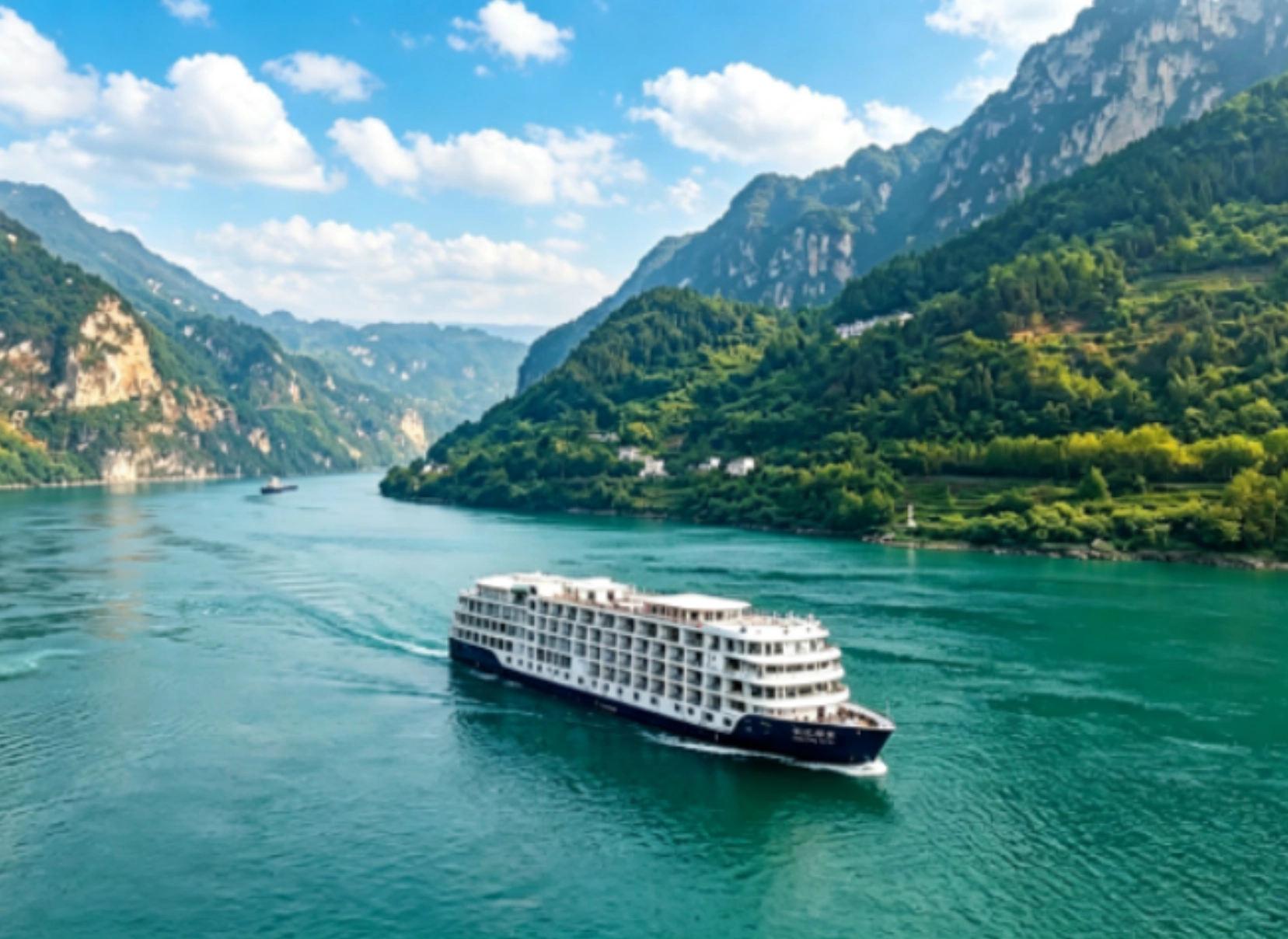
Your journey with Yangzi Explorer draws to a close. We look forward to welcoming you aboard again. May the wind always be at your back.
Frequently Asked Questions
What makes this Yangtze River cruise itinerary via Shennongjia unique?
This itinerary combines Yangtze River cruising with an overland expedition into the UNESCO-listed Shennongjia National Nature Reserve, offering rare access to one of China’s most biodiverse mountain ecosystems.