


 Shennongjia
 Fengjie
 Fuling & Zhongxian
 Wushan
 Shibao
 Badong
 Yichang


Yichang to Chongqing via Badong
Yangzi Explorer Itineraries
Upstream Journey
Yichang to Chongqing
This upstream journey from Yichang to Chongqing is a curated exploration of the Yangtze’s most spectacular viewpoints and timeless culture. It features an exclusive stop at Badong Wu Gorge Lookout, offering access to the breathtaking Three Gorges Summit in Fengjie for a bird’s-eye vista. The journey further enriches with visits to the cliff-side architectural marvel of Shibaozhai Pagoda or the ancient steps of Xituo Ancient Town, presenting a profound journey through both natural grandeur and enduring history.

Ports
 Badong
Fengjie
Shibao
Chongqing
Your Arrival and Pre-Boarding Experience
From the moment you land in Yichang, you’re in our care. A Yangzi Explorer representative greets you at the airport or railway station. A private car takes you to the pier. Your luggage travels separately — and arrives in your suite before you do.
Three afternoon options are available. You may choose one.
Option A: Three Gorges Dam – VIP Experience
This excursion requires you to arrive at the Yichang city meeting point before 3:00 PM. We recommend train arrivals before 1:30 PM, or flights before 1:00 PM.


Day 1
Yichang | Embarkation
The Three Gorges Dam broke ground in the winter of 1994 — and changed the river forever. Thirty years on, it stands as the world’s largest hydroelectric project. Not just concrete and steel, but a dialogue between human ambition and natural force.
The River Closure Park sits directly before the dam, where the colossal wall holds the river in check. The site preserves remnants from the construction era: coarse gravel walls, tetrahedral concrete blocks, and the 77-tonne trucks and flat-throwing vessels that once dominated the worksite. These iron titans rest in the river breeze, forming an open-air industrial epic.
The Three Gorges Project Museum — one of the world’s largest hydropower-themed museums — commands one of the finest panoramic views of the dam. Within its walls lie the complete chronicles of the project, from conception to completion. Rare artefacts, intricate models, historical footage, and immersive digital archives trace its planning, construction, and operation. Walking through its corridors, you grasp not only the engineering marvel but also the deeper narratives: the million relocated residents, the ancient heritage, and the river itself — forever changed.

Option B: Eastern Xiling Gorge – Onboard
This option departs from Yichang’s Yemingzhu Pier before 4:00 PM. We recommend train arrivals before 2:30 PM, or flights before 1:00 PM.
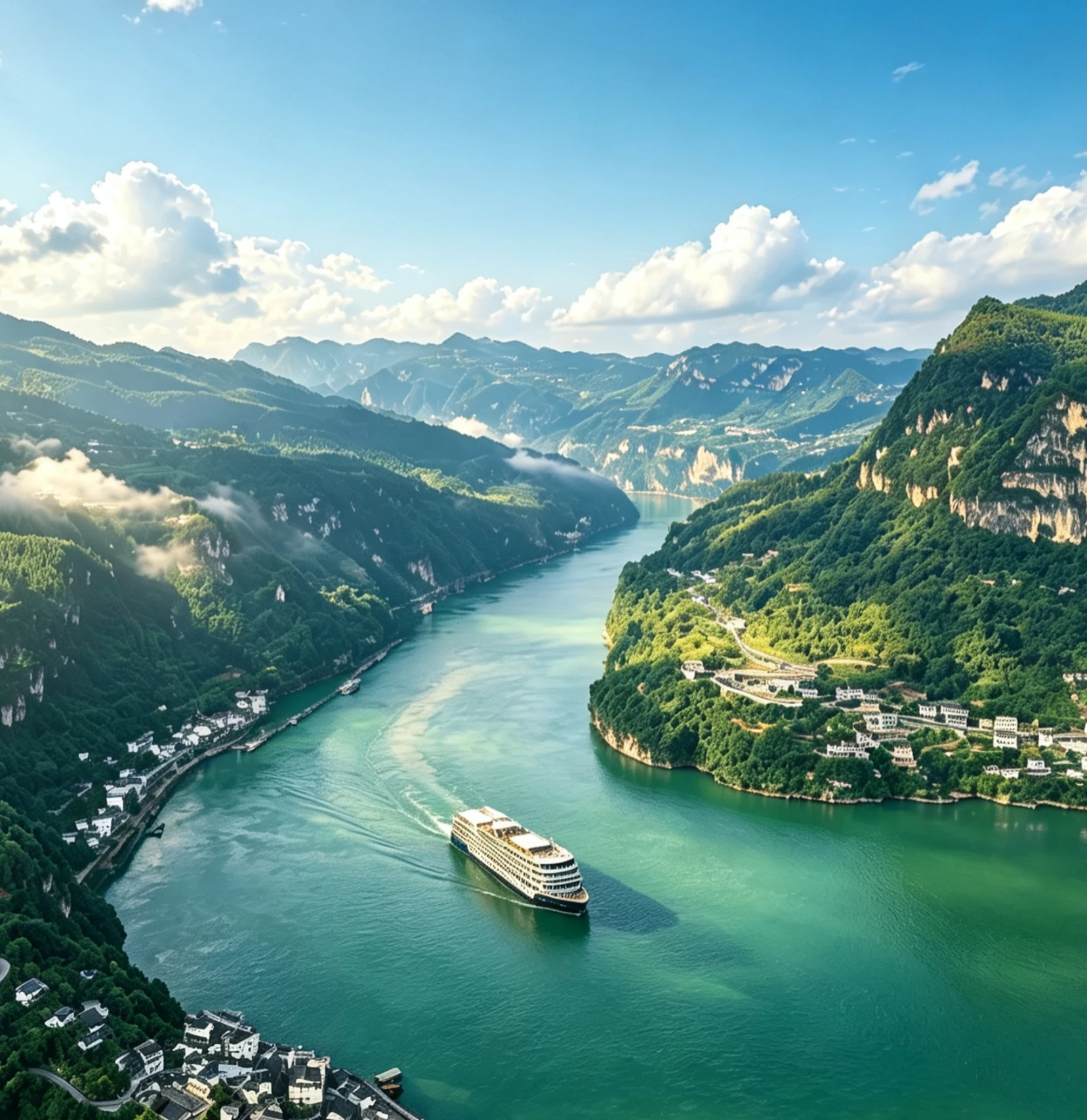
Departing from Yemingzhu Pier near the Gezhou Dam, the river opens wide. After 3,000 kilometres of carving through mountains, the Yangtze finally breaks free — widening from 300 metres to over 2,000. This is Nanjin Pass, the eastern gateway of the Three Gorges. The ancient name of Yichang — “Yiling” — captures it perfectly: “mountains become hills, waters become calm.”
Eastern Xiling Gorge unfolds in three distinct stretches. Huangmao Gorge narrows to a throat-like passage, emerald waters bursting through. In Dengying Gorge, four rocks along the riverbank cast shadow-puppet silhouettes at sunset — locals say they are the stone forms of the Tang Monk and his disciples. Huangniu Gorge rises to the cloud-piercing Huangniu Rock, said to be the divine ox turned to stone. An ancient folk song captures its winding waters: “Set out at dawn by Huangniu, rest at dusk by Huangniu.” The waters are calm now, but the cliffs still stand.
Option C: Direct Embarkation at Huangling Temple Pier
The ship is scheduled to dock at Huangling Temple Pier at 6:00 PM. If you prefer a relaxed start, join us directly on board. You may take a shuttle directly to Huangling Temple Pier.
During opening hours, you are welcome to visit Huangling Temple — simply register at the ship’s reception.
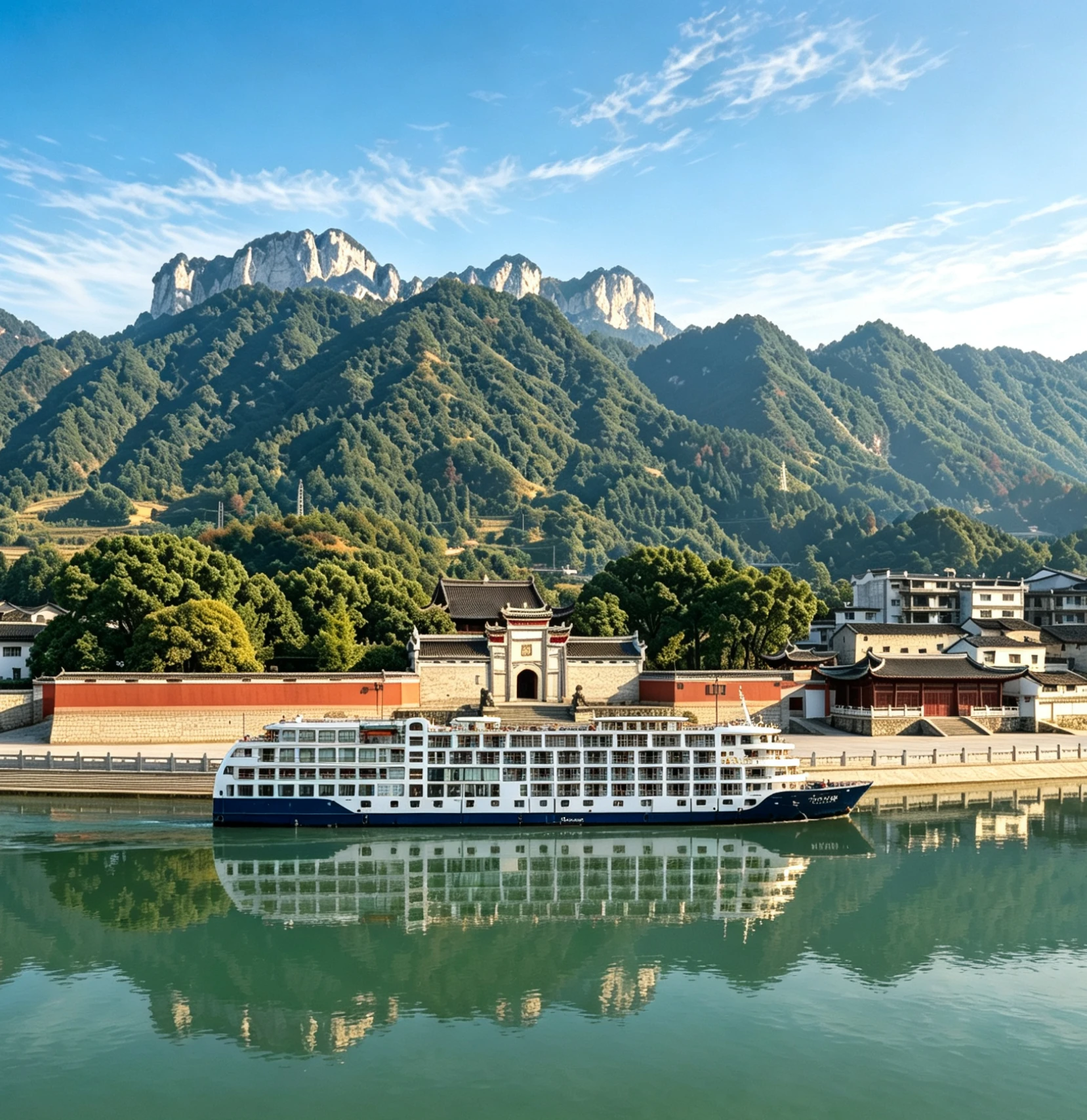
Beneath Huangniu Rock, Huangling Temple has stood on the riverbank for over a thousand years — one of the oldest and best-preserved ancient complexes in the Three Gorges region. Legend has it that the temple was built to honour the divine ox that helped Yu the Great tame the floods. Inside, the nanmu pillars of the Yuwang Hall still bear two distinct flood-level marks from the Qing Dynasty — data that later proved invaluable for the dam’s design. The ancient temple speaks in silence, its weathered pillars recording the river’s forgotten heights.
Dinner
As dusk settles, dinner is served aboard. The lights along the river slip through the windows — an unspoken first course. The whistle sounds.
Captain’s Welcome Reception
The Captain’s Welcome Reception sets the tone for the voyage. Join the captain and fellow guests in a glass raised to the journey ahead — to the river, and to the days that will unfold upon it.
Welcome aboard the Yangzi Explorer!
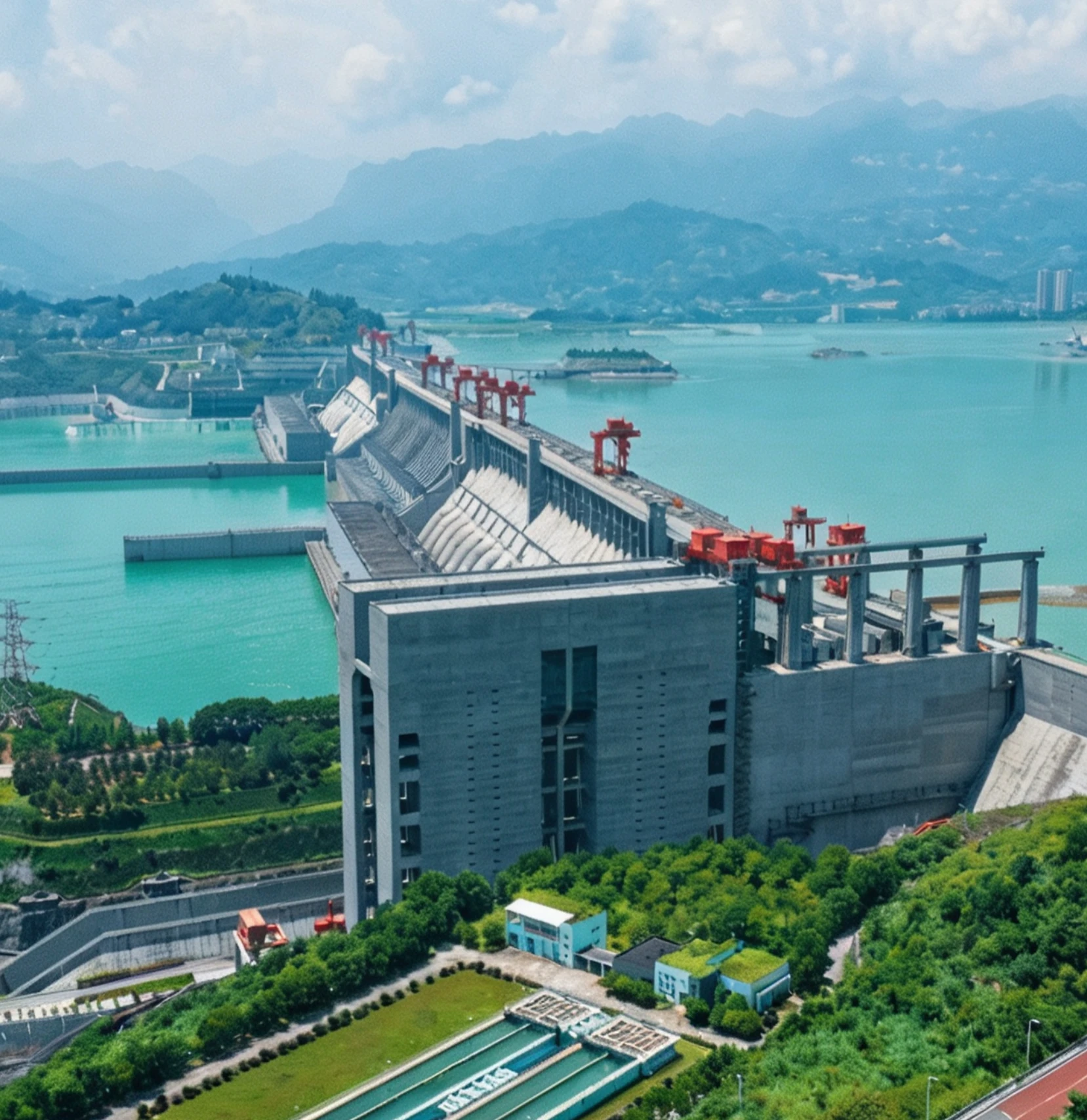
In the early morning, Yangzi Explorer transits the Three Gorges Dam Ship Lift (subject to operational schedules and maintenance periods). Known as the world’s largest ship lift, it is an engineering marvel — capable of lifting 15,500 tonnes to a vertical height of 113 metres, the equivalent of hoisting a 40-storey building into the air. Its scale and complexity are without parallel.
Yangzi Explorer, engineered to the Ship Lift’s maximum specifications, is the world’s first and largest cruise ship capable of making this transit. Her hull aligns with the lift chamber with near-surgical precision, as if she were born for this legendary passage. Unlike conventional tours — which require transferring to smaller sightseeing boats — aboard Yangzi Explorer, you simply step onto your private balcony or the open deck. From there, you witness the entire spectacle in unhurried comfort: the massive chamber rising, the cliffs descending beyond the ship’s rails, the river falling away beneath you — as though the world itself were being gently lifted.
Day 2
Yichang & Badong
During the suspension of the Ship Lift, the vessel may be unable to pass through the dam, or may be rerouted to traverse it via the Five-Stage Ship Lock, which is the largest ship lock system in the world.
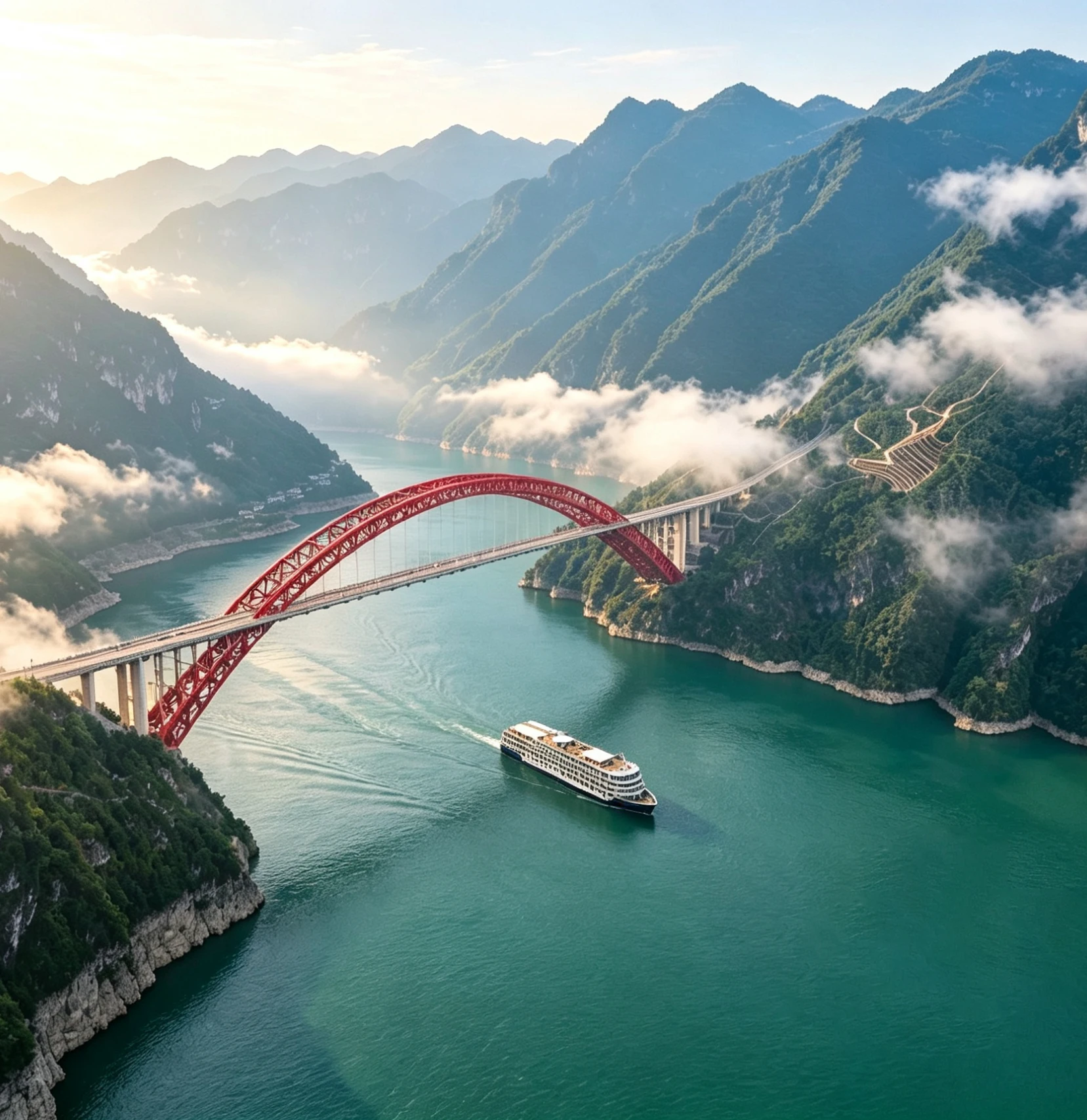
After transiting the Ship Lift, we enter the western reach of Xiling Gorge — the last and most celebrated of the three. Cliffs rise from the water on both sides, jagged and sheer. The river narrows and quickens, sweeping past hidden caves and hanging waterfalls. Here and there, ancient plank-road traces are still visible on the rock — footholds carved by hands long gone. The waters have calmed since the dam was built, but the gorge has not lost its edge.
Two shore excursions await you in Badong.
Option A: Mistvale Haven
Mistvale Haven lies in the heart of the Three Gorges — a landscape of gorges, caves, waterfalls, and ancient inscriptions, marking the boundary where Ba and Chu cultures once met. At its centre is Wuyuan Cave, formed over 350 million years ago. Its name — “Source Unknown” — comes from an old tale: explorers once ventured in with candles, burning seven and a half before turning back, still unable to find the end. Inside, stalactites cluster and an underground river flow — the only cave in the Three Gorges where you can row a boat. Here, the Song chancellor Kou Zhun left his poems carved in stone, and the Tang poet Li Shangyin’s verses still echo through the gorge. A live performance unfolds against the canyon walls — light and shadow playing across the rock, waterfalls providing the score — bringing these ancient words to life. A place where 350 million years of geology and a thousand years of poetry meet, waiting for those who come in search of verse.
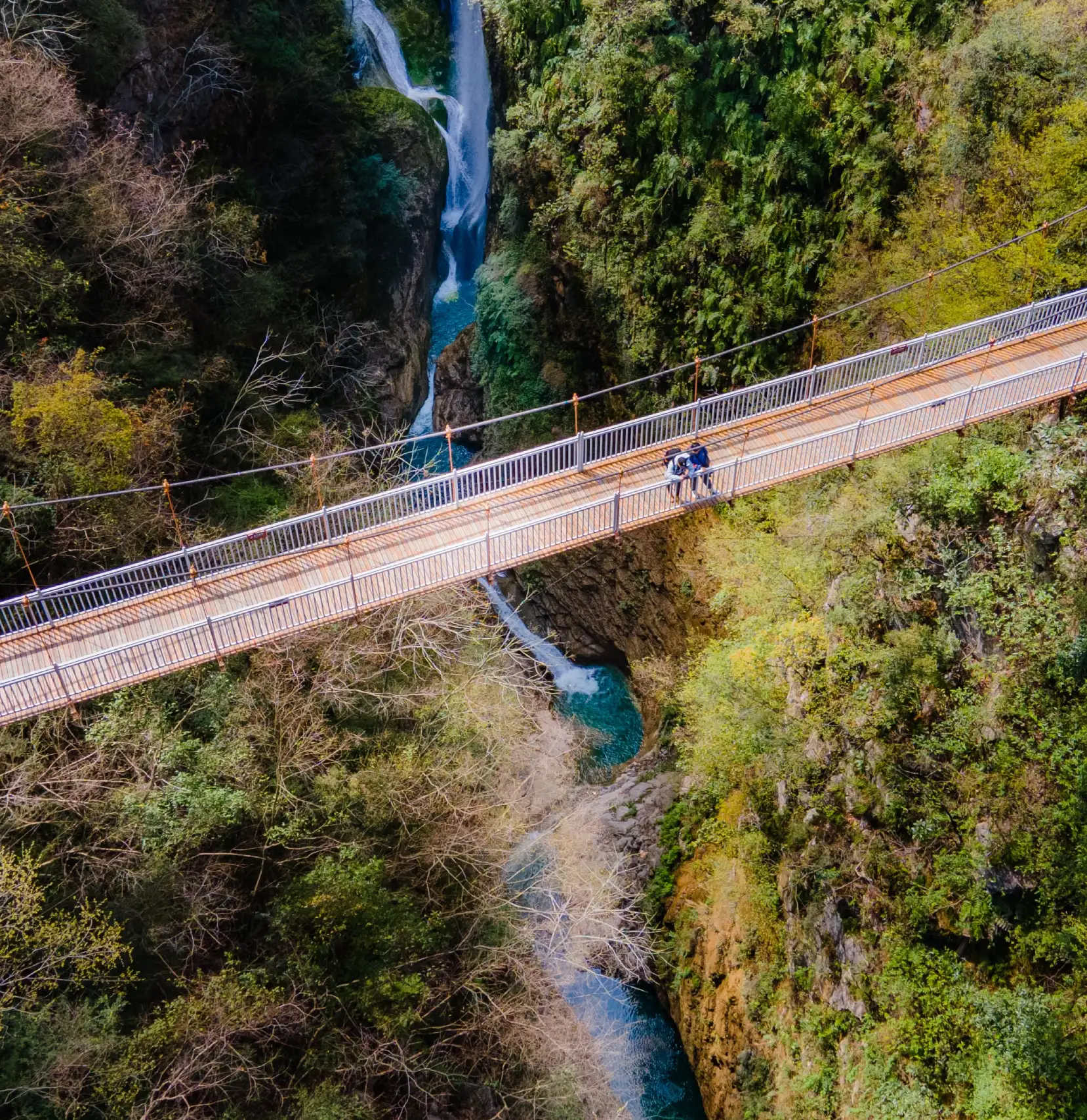
Option B: Shennong Stream
At the eastern mouth of Wu Gorge, a stream winds down from the southern slopes of Shennongjia and joins the Yangtze — this is Shennong Stream. It flows through three distinct gorges: Longchang, deep and narrow with sheer cliffs on both sides — the Tang poet Du Fu once drifted here and wrote of waters “twisting like a long snake.” Parrot Gorge rises with forested peaks where monkeys play among the trees. Bamboo Gorge takes its name from the dense bamboo that lines its banks. Along the cliffs, caves open and stalactites hang overhead. Look up — ancient hanging coffins still rest on the high ledges, and the marks of old plank roads are still visible in the stone. Some stories were never written down. They just hang there — still.
Evening Activity
After dinner, a guest expert shares stories from decades of observation — the wildlife of the Yangtze, the customs of the Three Gorges, and the lives of those who have called this river home.
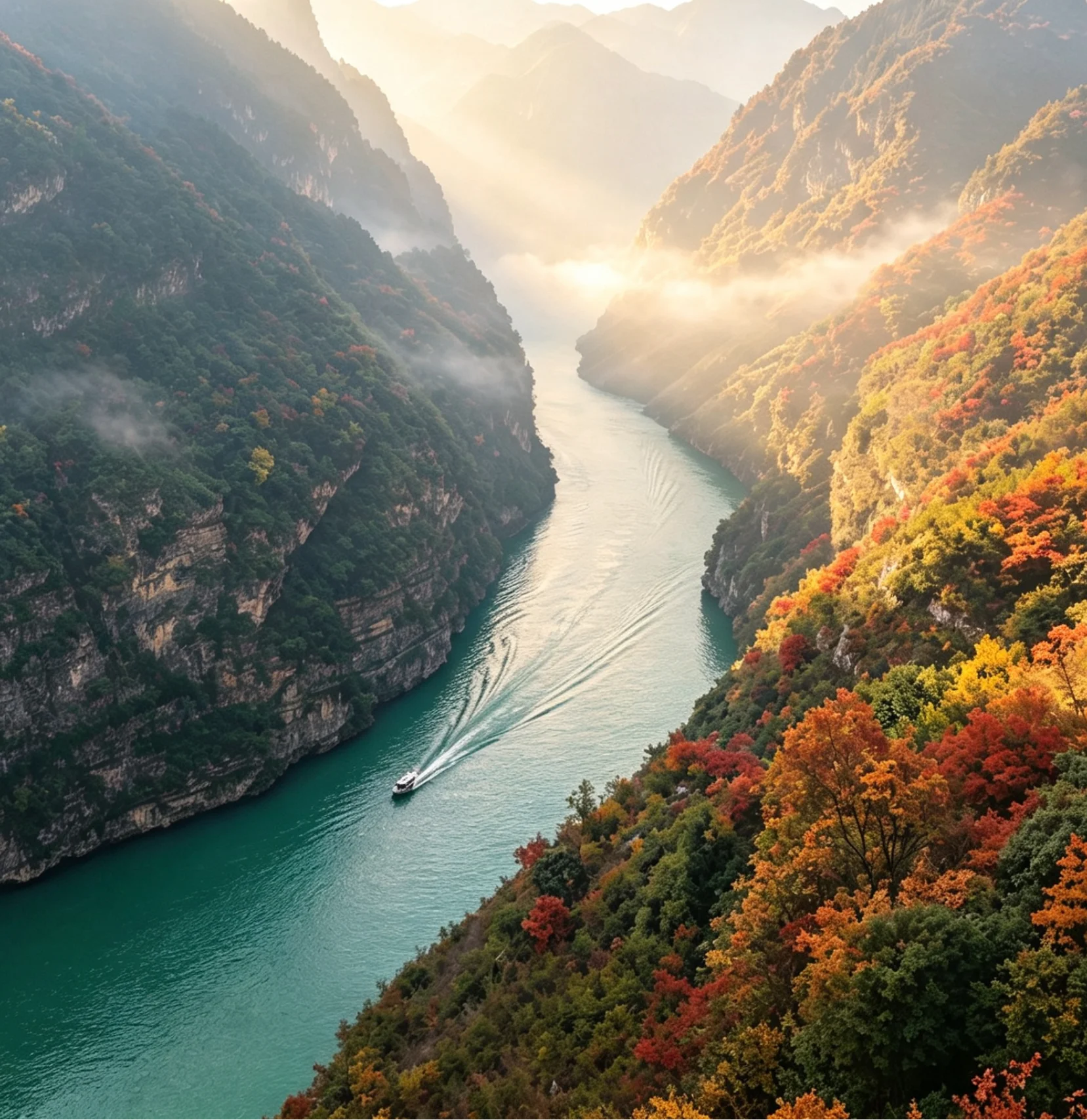
Morning Sailing through Wu Gorge & Qutang Gorge.
Morning light slips through the window as you wake to the gentle rhythm of the river. Drawing the curtains, you find the landscape has transformed — the rolling hills of yesterday now risen into sheer cliffs.
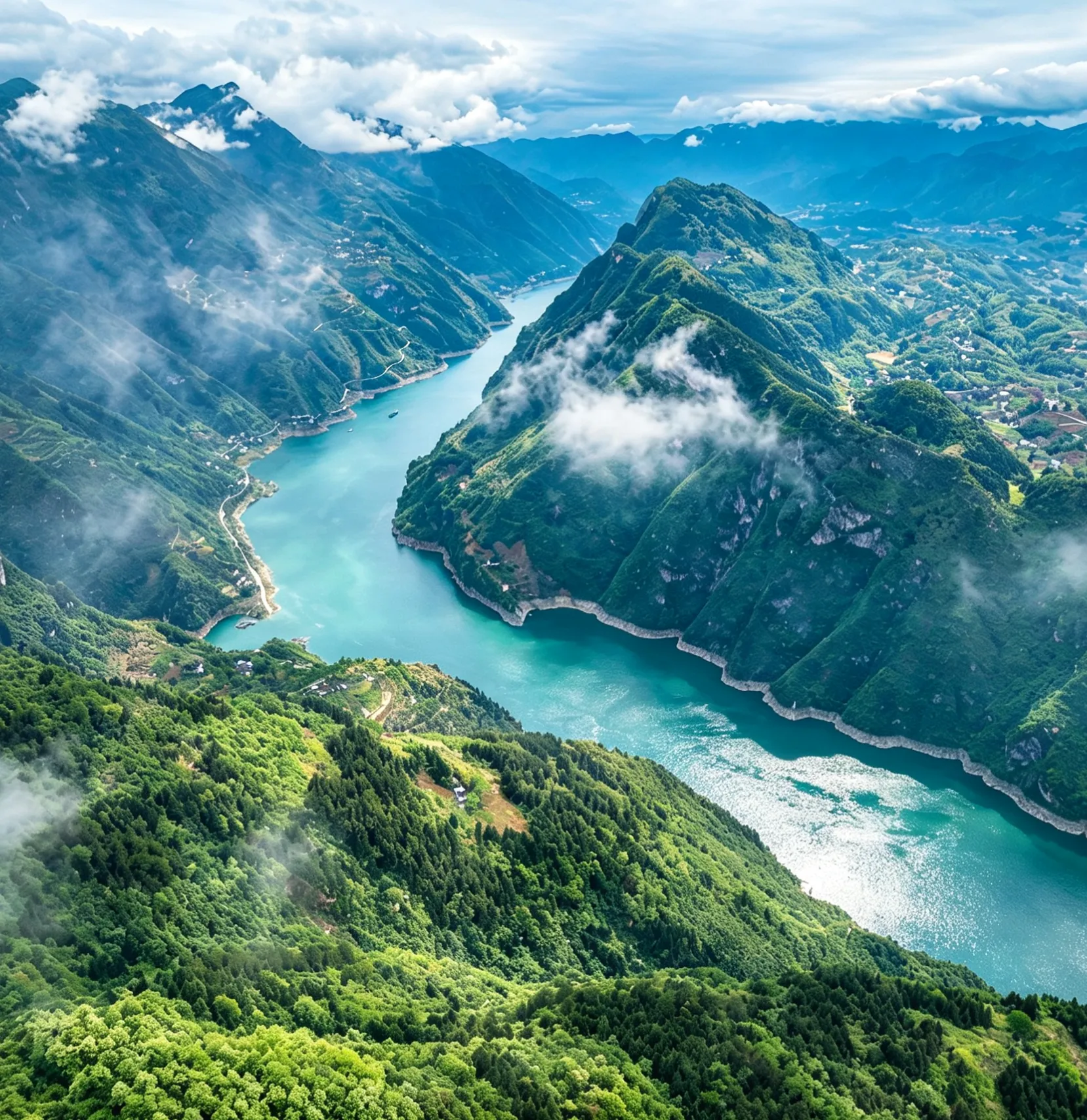
Wu Gorge is a realm of depth and endless turns — jagged peaks rise like swords and screens, range upon range veiled in drifting mist. The river coils and curves, revealing new vistas at every bend. The clouds here are not just scenery. They are part of the story, celebrated in verse for over a thousand years.
Sailing through, the green ramparts unfold like a landscape scroll. At times, a massive cliff seems to bar the way — then, with a turn, the view opens wide, sky and clouds mirrored in jade-green water. Such is the magic of this place: a shifting dreamscape where time itself seems suspended.
Day 3
Badong & Fengjie
The ship pushes upstream, past Wushan, into Qutang Gorge. Waves crash against the hull — the river resisting. The cliffs close in, narrowing the passage. The mountains on either side face each other like colossal gatekeepers, their thousand-metre walls cleaving the river’s course. Then, as suddenly as it began, the gorge opens — and White King Town appears on the heights, its eaves emerging through mist and memory.
In the afternoon, we dock at Fengjie.
Fengjie — known in antiquity as Yufu and Yong’an — has over 2,300 years of history. In 649 AD, Emperor Taizong gave it its present name, meaning “preserve integrity and uphold honour.” Perched at the western gateway of the Three Gorges, it became a vital crossroads for trade and travel. For over a thousand years, poets came, and left behind more than 10,000 verses. Li Bai wrote here; Du Fu wrote here — they called it the “City of Poetry.”
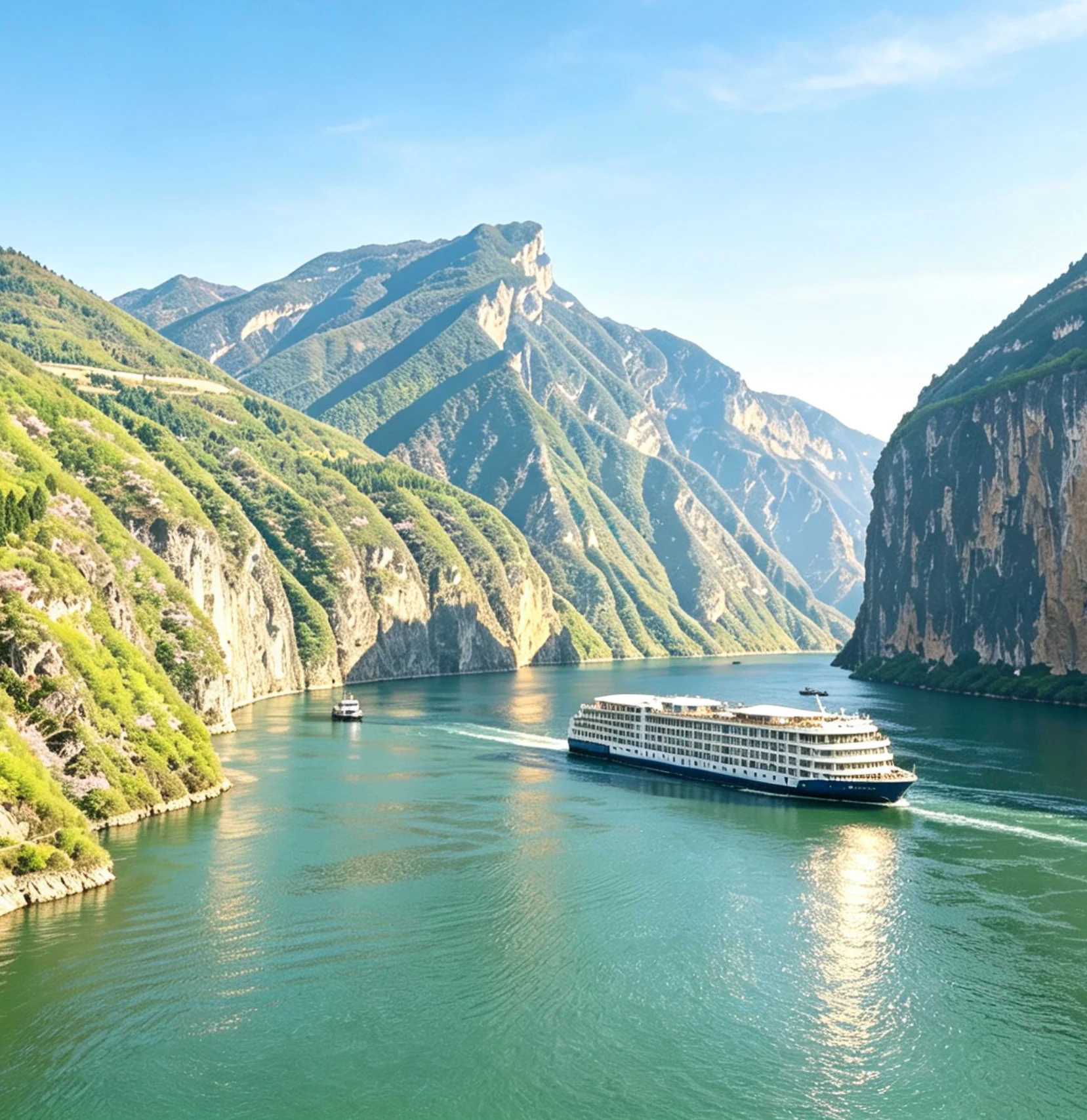


LEAVING THE WHITE KING’S TOWN AT DAWN
Leaving at dawn the White King crowned with rainbow cloud,
I have sailed a thousand miles through Three Georges in a day.
With monkeys’ sad adieus the riverbanks are loud;
My boat has left ten thought mountains far away.
By Li Bai (Translated by Xu Yuanchong)
Option A – White King Town
White King Town sits at the mouth of Qutang Gorge, on a hill surrounded by water. Red walls and grey tiles rise through the trees. To the east, Kui Men — the world-famed gateway where the Yangtze bursts between the mountains on either side. It’s the view on the back of China’s ten-yuan note. Stand on the city walls and watch — and you understand why poets wrote, why armies fought, why this place still commands the river.

Option B: Qutang Gorge – Light Hiking
From the ridge above the gorge, a trail climbs into the heart of Qutang. Moderate ups and downs — but the pace is yours.
The trail rises slowly, Kui Men opening beneath you — the same view printed on the ten-yuan note. On one side, cliffs drop straight to the river; on the other, the Yangtze flows east, ferries moving through the gorge like leaves. Across the water, ancient inscriptions are still visible on the rock face — poets from centuries ago, still speaking. Some views, you earn on foot.
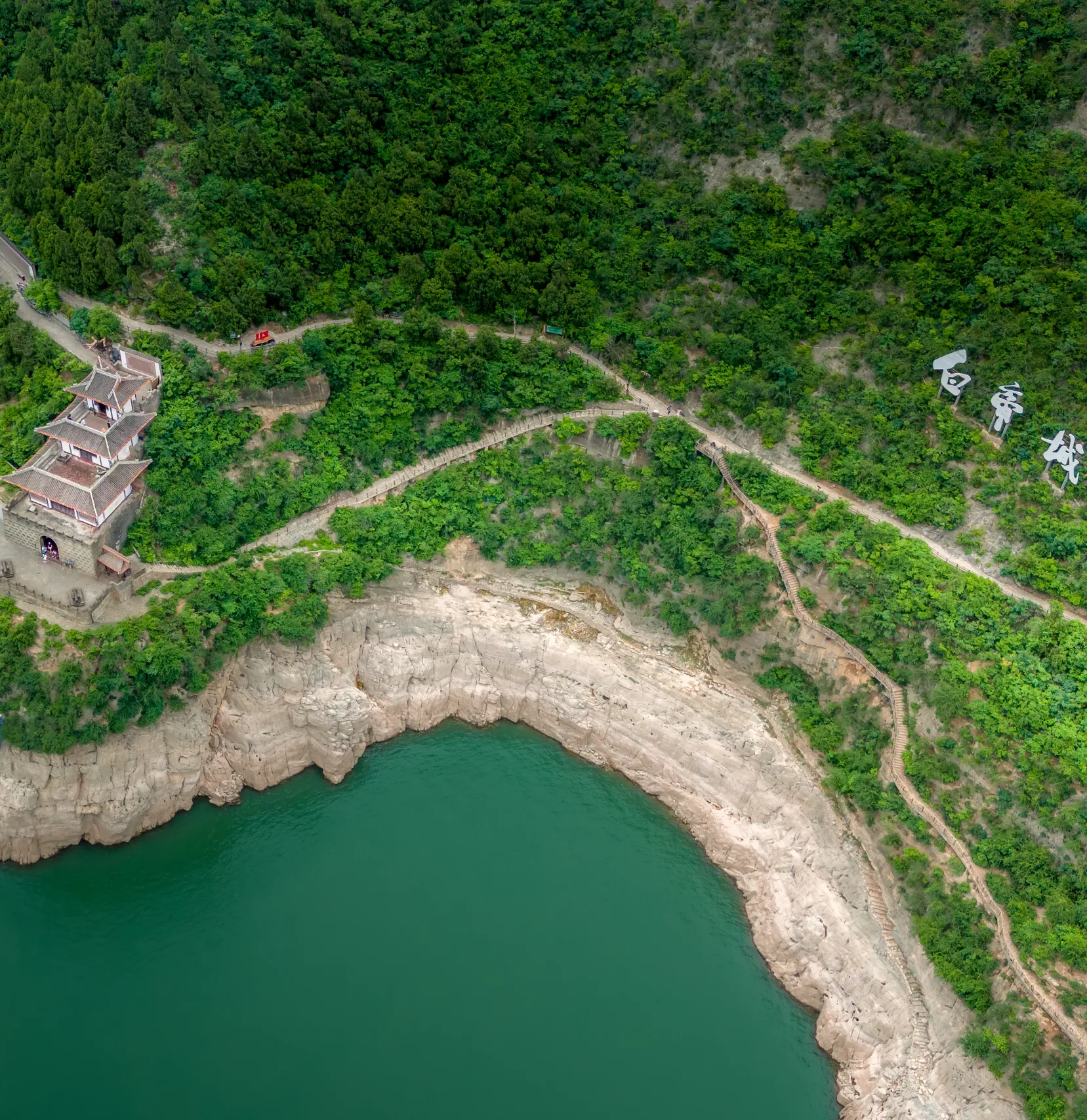
Option C: The Summit of the Three Gorges
From the Summit of the Three Gorges, at 1,388 metres, the entire 8-kilometre sweep of Qutang Gorge lies before you. Clouds drift below; peaks roll like waves in every direction. Below, the river threads through the mountains — a silk ribbon against the stone. To the west, White King Town floats among the treetops. Beyond it, the silhouette of Wushan rises like a screen.
The view is never the same — spring rhododendrons, autumn red leaves, winter snow. On a clear day after rain, clouds roll in from the valley like a tide. Every season has its own face.
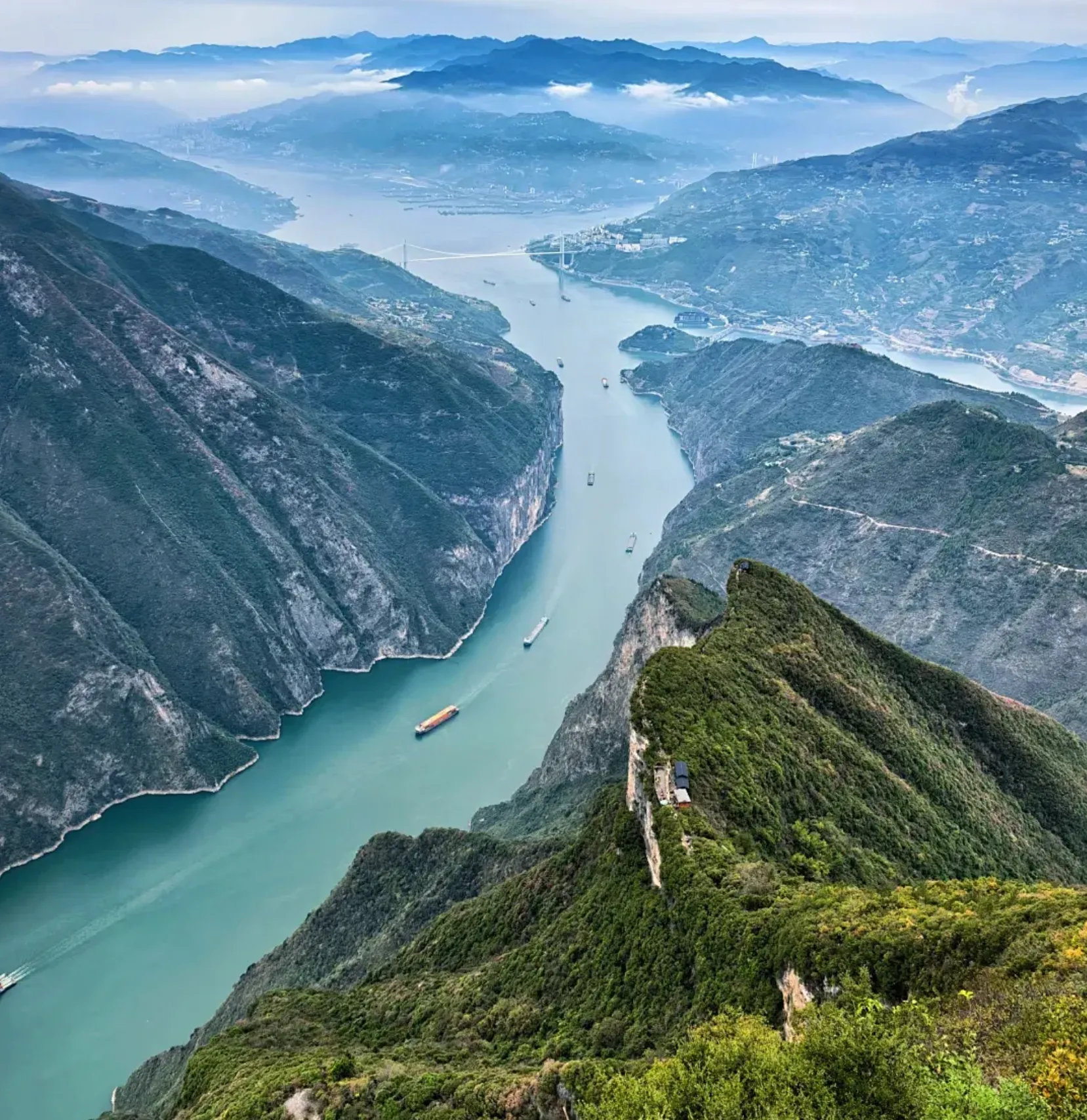
Zhongxian, known in antiquity as Linjiang, lies at the heart of the Three Gorges reservoir area. In 634 AD, Emperor gave it its present name — “Zhong” meaning loyalty — in honour of General Ba Manzi, who gave his life for his city. When the dam raised the waters, much of the old town went under. Zhongxian is one of the few half-submerged towns still standing.
Three shore excursions await you in Zhongxian.

Day 4
Shibaozhai (Zhongxian)
Option A: Shibao Village
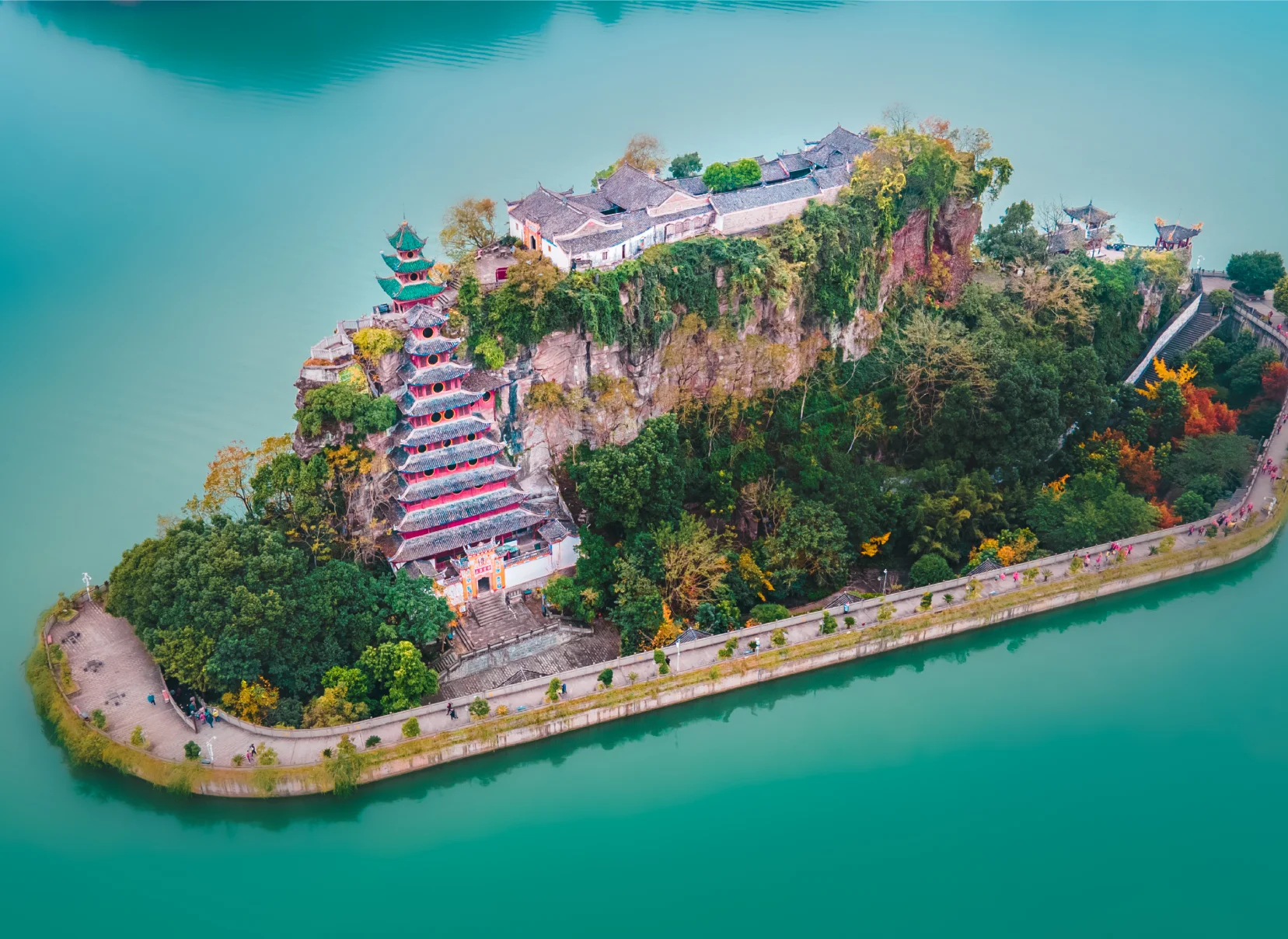
Shibao Village rises from the river — a wooden pagoda built against a solitary rock. Dating back to the Ming Dynasty, it clings to the cliff, tier upon tier, like a giant seal stamped in the water. Surrounded on all sides, it is known as one of the world’s eight most unusual buildings — and the largest “basin garden” on the river. Climb to the top. The wind comes off the water. Four hundred years of timber still stands.
Option B: Xituo Ancient Town
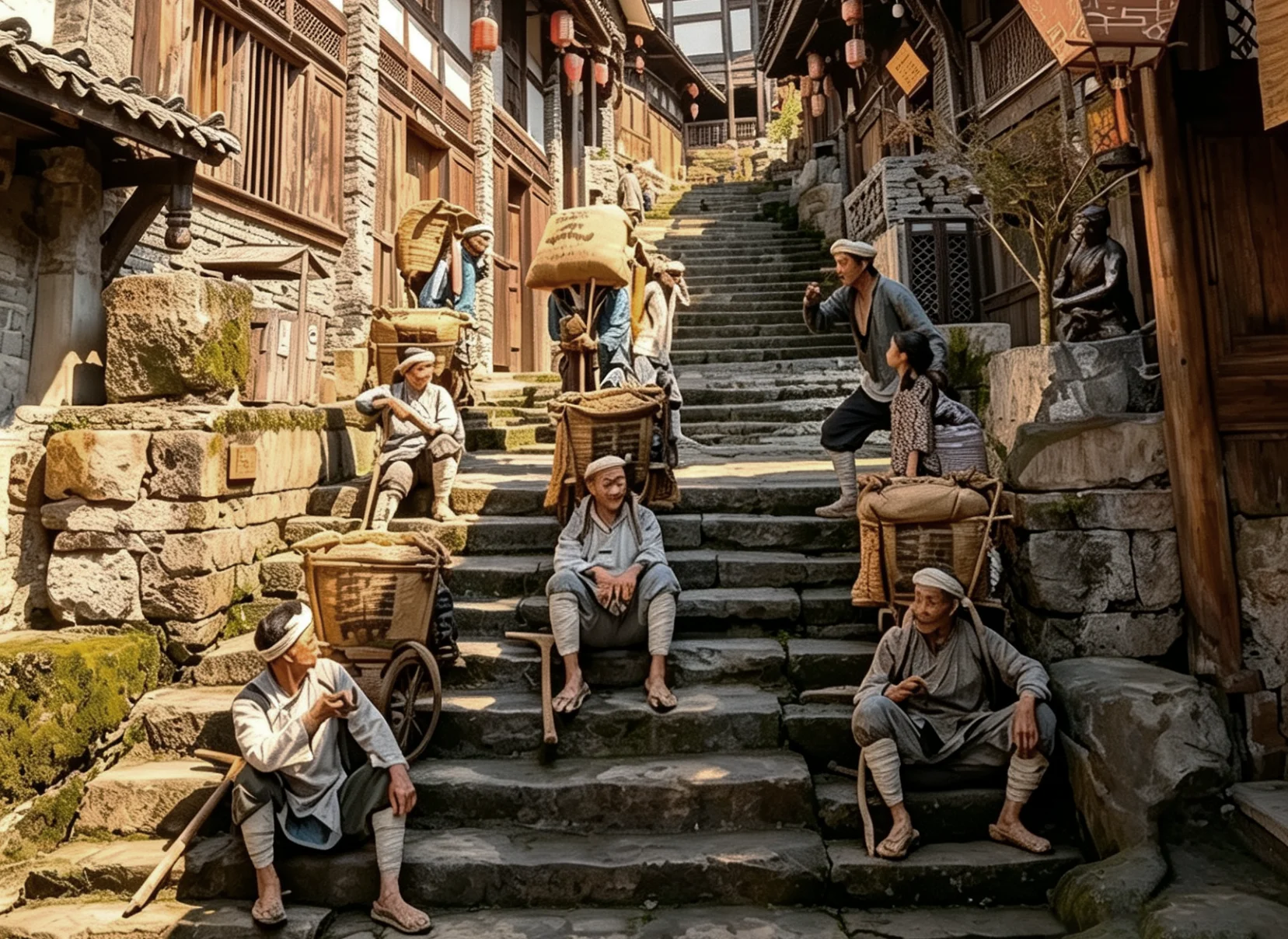
A local ferry carries you across the river — the same crossing locals have made for generations. On the other side, Xituo emerges through the mist. Stone steps rise from the riverbank all the way to the hilltop, like a ladder reaching for the sky.
This is Xituo — the Thousand-Step Cloud Ladder, where the ancient Ba Salt Road begins. The stones are worn smooth by centuries of bare feet. Salt porters once walked this path, bent under heavy loads, their labour songs echoing through the street. Xituo grew wealthy on this trade — salt ferried across the river, then carried on foot across the mountains. The steps are still here. So are the stories.
Option C: Huanghua Island
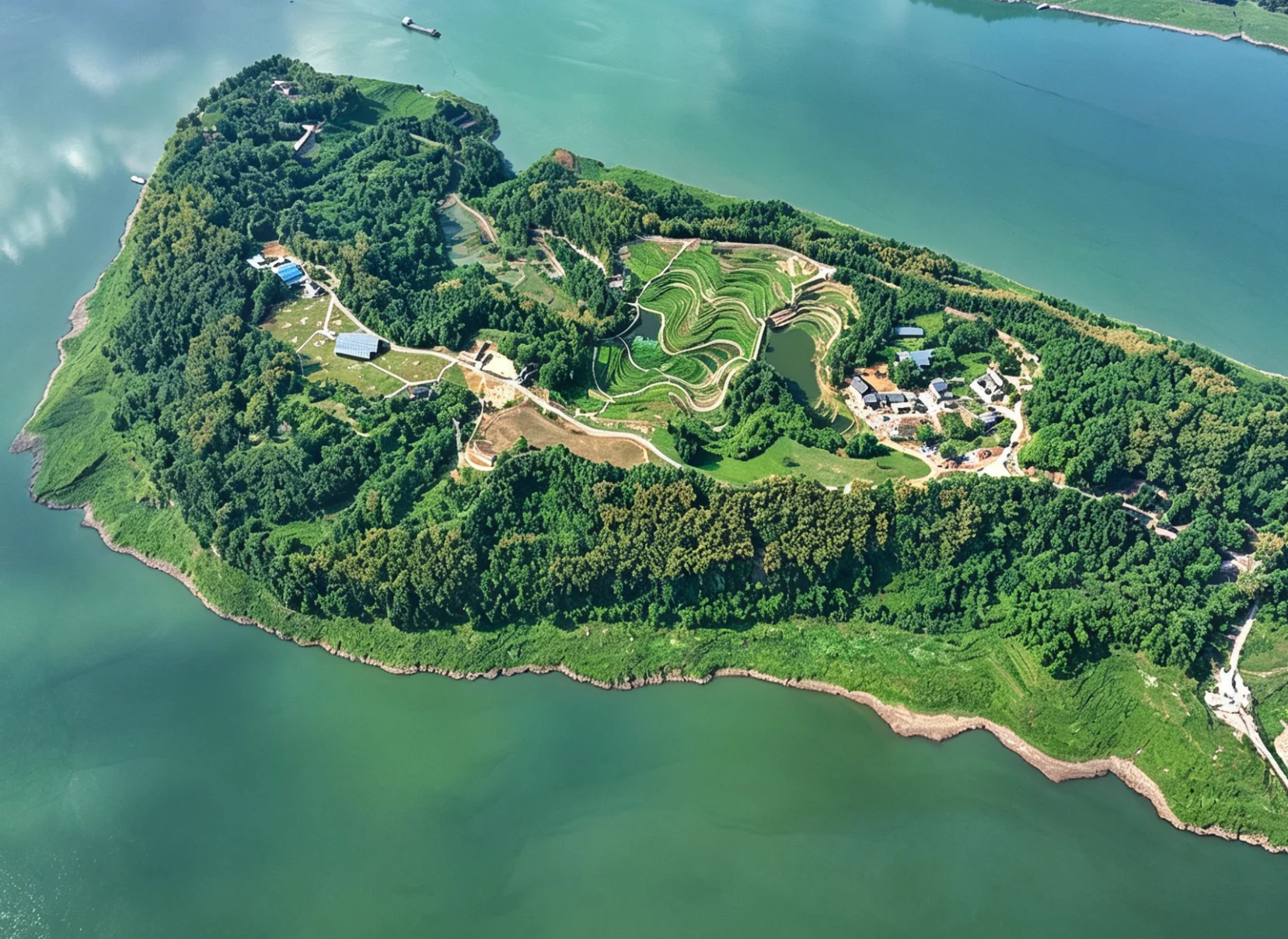
Huanghua Island lies at the geographic centre of the Three Gorges reservoir, surrounded by calm water. Fields and forests shift with the seasons. Rare plants grow here, including the “panda of the plant world” — the lotus-leaf fern. In 2016, the island became a national wetland park.
But Huanghua is more than trees and ferns. In the 13th century, it was a fortress — a rare island stronghold in a time of war. Most of it was destroyed. But the foundations, temple ruins, and cliff inscriptions remain beneath the soil, waiting. In 2026, a new museum opened, telling the story of that forgotten chapter.
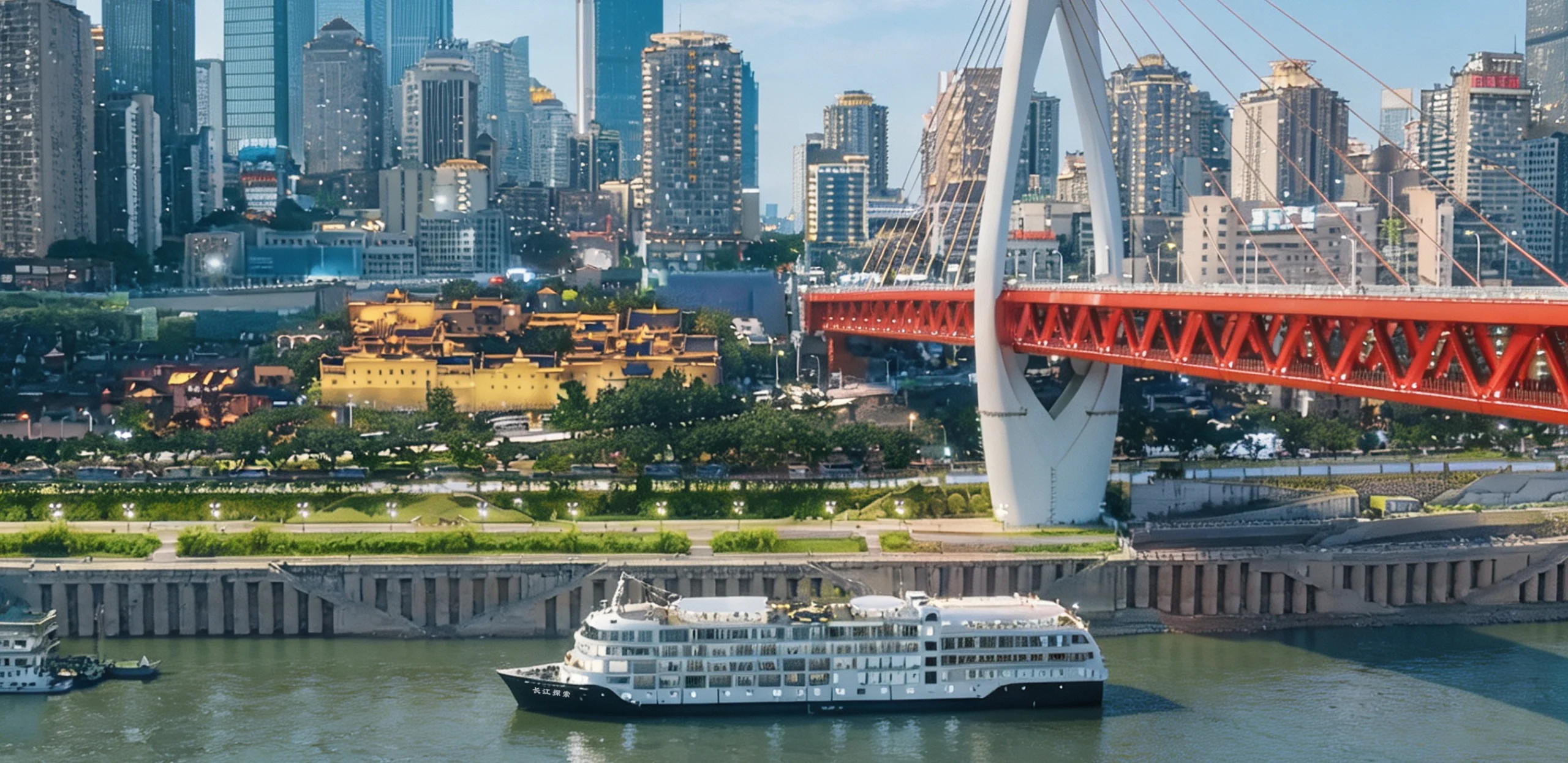
After breakfast, check your suite carefully. Place luggage outside your door or at the reception — our crew will transport it to your designated drop-off point in Chongqing. Keep valuables and documents with you. Your final morning, unencumbered.
Your journey with Yangzi Explorer draws to a close. We look forward to welcoming you aboard again. May the wind always be at your back.

Day 5
Chongqing | Disembarkation
Your journey with Yangzi Explorer draws to a close. We look forward to welcoming you aboard again. May the wind always be at your back.
Extending your stay?
Optional post-cruise excursions are available (at additional cost)
Option A: Chongqing City Walk — RMB 580/person (minimum 10 guests)
Option B: Dazu Rock Carvings — RMB 880/person (minimum 5 guests)
Option C: Anyue Grottoes — RMB 3,880/person (2-day tour, minimum 2 guests)
Frequently Asked Questions
What are the highlights of this Yangtze River cruise itinerary via Badong?
This Yangtze River cruise itinerary via Badong focuses on scenic cruising, cultural immersion, and exclusive shore experiences. This itinerary combines iconic Yangtze scenery, cultural immersion, and unique shore experiences along the middle reaches of the river. Highlights include passing through the Three Gorges Dam Ship Lift and cruising through the dramatic landscapes of Xiling Gorge. The journey continues with scenic cruising through the heart of the Three Gorges region, including Wu Gorge and Qutang Gorge, as the ship progresses toward Chongqing with curated cultural and landscape experiences along the way.

